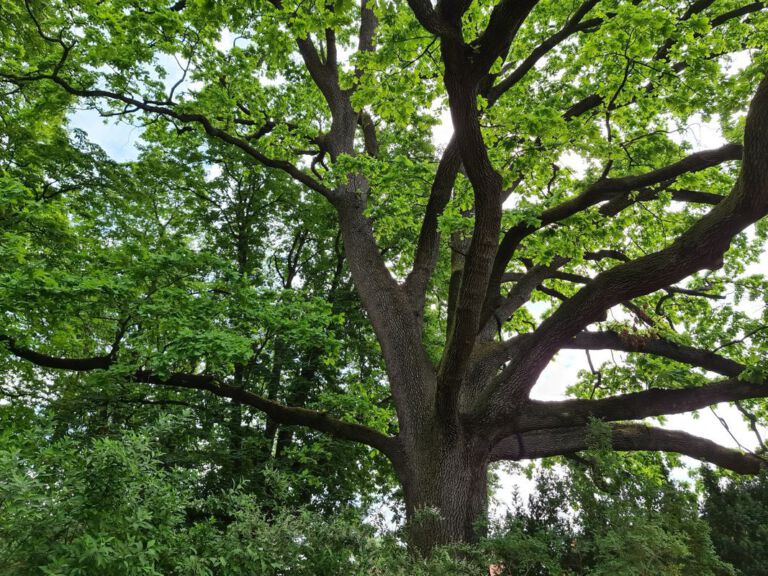
Bur oak

Bur oak

Quercus macrocarpa Michx.

Deciduous TreeWoody PerennialSpring bloomPollinator / wildlife value

Bur oak (Quercus macrocarpa Michx.) is a large, long-lived deciduous tree native to southern Canada and much of central and eastern North America. Its broad, spreading crown, drought resistance, wildlife-supporting acorns, and tolerance of varied soils make it useful for landscapes, shelterbelts, restoration plantings, and naturalized woodland or savanna settings.

Also known as: Quercus macrocarpa, bur oak, burr oak, mossycup oak

Plant at a glance

Plant typeDeciduous Tree
LifecycleWoody Perennial
SoilMoist But Well Drained, Seasonally Dry, Very Dry, Permanently Moist, Deep, Rich Bottomlands, Upland Limestone Soils, Grasslands, Shallow Soils Over Granitic Bedrock, Prairies, Open Woods, Sandy Ridges, Stream Edges, Valley Floors, Upland Woods, Rocky Hillsides, Clay Soils, Sandy Soils, and Organic Soils
Mature height1524–3962.4 cm
Mature width1219.2–2438.4 cm
BloomsSpring
Flower colourMonoecious and Male And Female Flowers
Wildlife valuePollinated By Wind, Wildlife Food, Acorns For Birds And Mammals, and Habitat Value
WaterArray
Care levelArray

What this plant is like

Bur oak is a woody perennial tree with a pyramidal, oval, or rounded crown, short branches, and a massive trunk. Mature trees are approximately 15.2–39.6 metres tall and 12.2–24.4 metres wide, although size varies with site and age. Male and female flowers occur on the same tree and emerge in spring with the leaves. The flowers are not showy and are pollinated by wind. Growth is generally slow, but the species is long-lived.

Where it grows best

It is highly adaptable across southern Canada, including Alberta, Manitoba, New Brunswick, Ontario, Quebec, and Saskatchewan. Canadian gardeners can consider it broadly suitable across this documented provincial range, but local site conditions matter more than province during establishment. Bur oak grows in deep, rich bottomlands; upland limestone, calcareous, clay, sandy, organic, or shallow soils; prairies, grasslands, open woods, sandy ridges, stream edges, valley floors, upland woods, and rocky hillsides. It tolerates acidic through highly alkaline conditions and moisture ranging from permanently moist to very dry, provided the site is not poorly drained or flooded.

Garden and wildlife value

Use bur oak as a large landscape or shade tree, shelterbelt tree, or in naturalized woodland, savanna, and restoration plantings. Its acorns provide food for birds and mammals, and the tree contributes habitat value. Drought resistance, tolerance of heat and pollution, and adaptability to sandy, clay, acidic, or alkaline soils support its use in urban and marginal sites.

Everyday care

Care is moderate, particularly while the tree is becoming established. Water during establishment and mulch to conserve moisture. Once established, its drought resistance supports a low supplemental-water requirement, but no detailed irrigation schedule is provided. Limit pruning in youth to what is needed for development, and protect the root zone from disturbance. Seed is the documented propagation method.

What to do through the season

In spring, expect inconspicuous male and female flowers to emerge with the leaves. During establishment, provide water and maintain mulch that helps conserve moisture. No source-grounded provincial difference in bloom months or seasonal management was captured; local moisture conditions and calcareous soils are more important than province alone.

Problems and symptoms

Bur oak is slow-growing and sensitive to root-zone disturbance. Flooding or poorly drained sites can damage the tree, despite its tolerance of a broad range of moisture conditions. Its mature size and wide crown can also make space a significant planning consideration.

Corrective and preventive care

Choose a well-drained site, avoid flooded locations, and protect the root zone from compaction, excavation, and other disturbance. Water new plantings during establishment and use mulch to conserve moisture. If a site remains poorly drained or flooded, recovery may be limited; no detailed recovery treatment is supported by the approved information.

Before you plant

Allow substantial room for a potentially 15.2–39.6 metre-tall tree with a 12.2–24.4 metre spread and a large, spreading crown. Match the planting location to its mature scale and protect the root zone from future disturbance. In southern Canada, the species is documented from Saskatchewan east to New Brunswick, including Alberta, Manitoba, Ontario, and Quebec, but successful establishment depends chiefly on drainage and local soil conditions.

Garden and landscape value

  • long-lived
  • drought resistant
  • tolerates drought, heat, pollution, sandy, clay, acidic, or alkaline soils
  • adaptable to urban sites
  • landscape tree
  • shade tree
  • shelterbelt tree
  • naturalized woodland/savanna planting

Where it grows naturally

  • eastern and midwestern United States
  • south-central Canada
  • Canada: AB, MB, NB, ON, QC, SK
  • southern Saskatchewan east to New Brunswick
  • Nova Scotia west to Manitoba south through Kansas to Texas

Personalize for your garden

Your garden conditions

Tell us a little about your garden to see how this plant fits your zone, light and growing conditions. No account is required.

These garden conditions stay in this browser for Gardening Calendar. Sign in to keep your garden information with your account.

How this plant fits your garden

Enter your conditions above to see matches, cautions, and seasonal guidance.

This plant can be found at

Sources used for this profile

Plant Definition last reviewed: August 11, 2026.