Bog Rosemary
Photo:
Qwert1234, CC BY-SA 3.0, via Wikimedia Commons
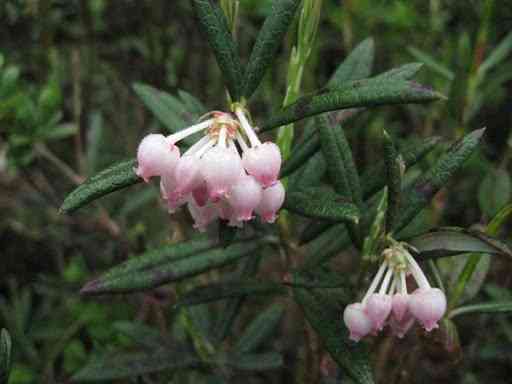
Bog rosemary is an arctic-tough, garden-pretty, small evergreen shrub. The leaves are narrow with white hairy undersides. A sharp tip on the leaves distinguishes this species from Kalmia polyfolia (bog sheep laurel), another small ericaceous shrub which can occur in the same habitat. Bog rosemary has pink, bell-shaped flowers.
It can be found in acidic bogs and wetlands in nature.
Quick Growing Guide
Botanical Name: Andromeda glaucophylla
En français: Andromède glauque
See More Plants in this Botanical Family:
Sun / Shade:
Water: Need constant moisture
Height:
Caring for Andromeda glaucophylla
Plant in a moist, well-drained, lime-free, humus-rich soil in a shady location. The plant is free of disease and insects. It does not require fertilisation or pruning. When grown in an appropriate location, plants spread slowly via suckers. This plant is a subspecies of A. polifolia, but it grows further south.
Toxicity
Andromeda glaucophylla contains grayanotoxin (or andromedotoxin), which is toxic to animals, so you’re not likely to see animals feeding on them! When ingested by humans, it can cause respiratory problems, dizziness, vomiting, or diarrhoea.
Comments

Gardening guidance for your area—and your garden
Join our newsletter for timely gardening guidance tailored to your area. Looking for a better value? Upgrade your newsletter for personalized plant-care guidance based on the plants growing in your garden.
Leave a Reply
You must be logged in to post a comment.