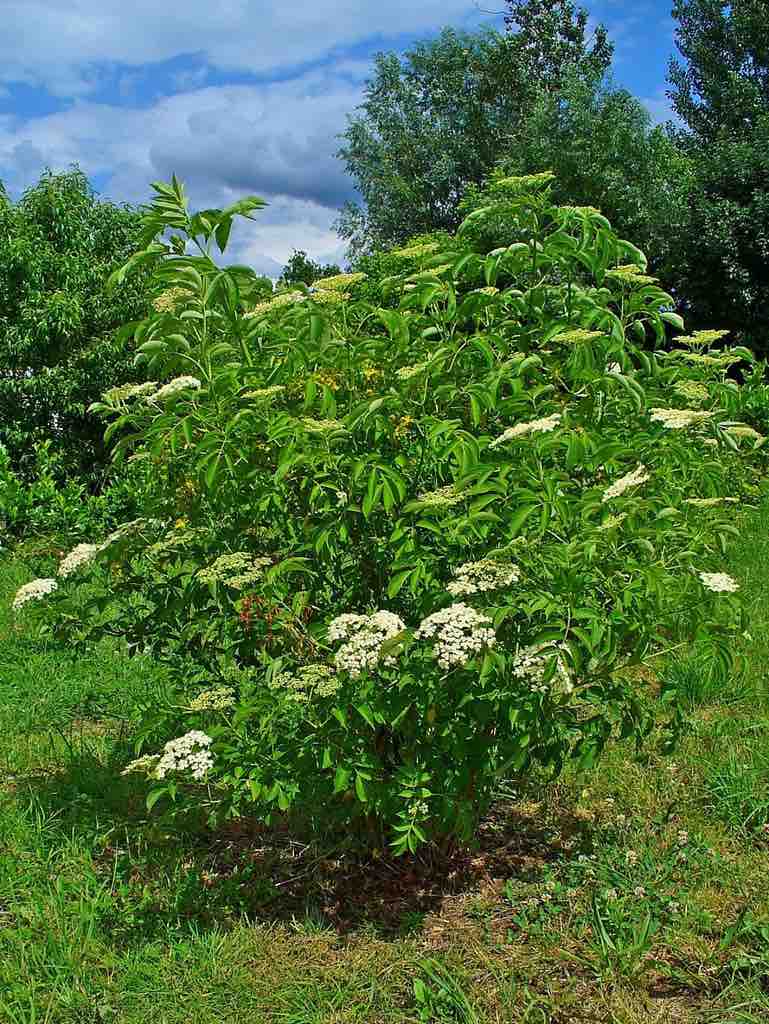
American Elder
Photo:
Cephas, CC BY-SA 4.0, via Wikimedia Commons
At least 50 species of songbirds, upland game birds, and small mammals relish the fruit of American elder during summer and early fall.
American Elder is fast-growing shrub is known for its large clusters of yellowish-white, star-shaped flowers. Grown as a border, it provides an incredible summer floral display. The dark purple elderberries are used to make jellies, pies, juice, and wine and also to attract a variety of different bird species. To ensure a good crop, plant more than one shrub.
Quick Growing Guide
Botanical Name: Sambucus canadensis
Also Called: White Elder, Common Elderberry, Sureau du Canada, Sirop blanc.
En français: Sureau blanc
Colour:
Sun / Shade:
Water: Need for lots of water.
Height:
Pollinators:
Best Soil: Does best in moist, humous soils, but will tolerate dry soils and is pH adaptable.
Its natural habitat: Low ground, thickets, edges of woods, roadsides, fence rows, rich moist lowlands..
Caring for American Elder
Transplants easily. Clusters of white flowers in July. Edible purple-black berries.
Companion plant suggestions include Shrub borders, roadside plantings, native plants
Comments

Gardening guidance for your area—and your garden
Join our newsletter for timely gardening guidance tailored to your area. Looking for a better value? Upgrade your newsletter for personalized plant-care guidance based on the plants growing in your garden.
Leave a Reply
You must be logged in to post a comment.