False Solomon’s Seal
Photo:
Krzysztof Ziarnek, Kenraiz, CC BY-SA 4.0, via Wikimedia Commons
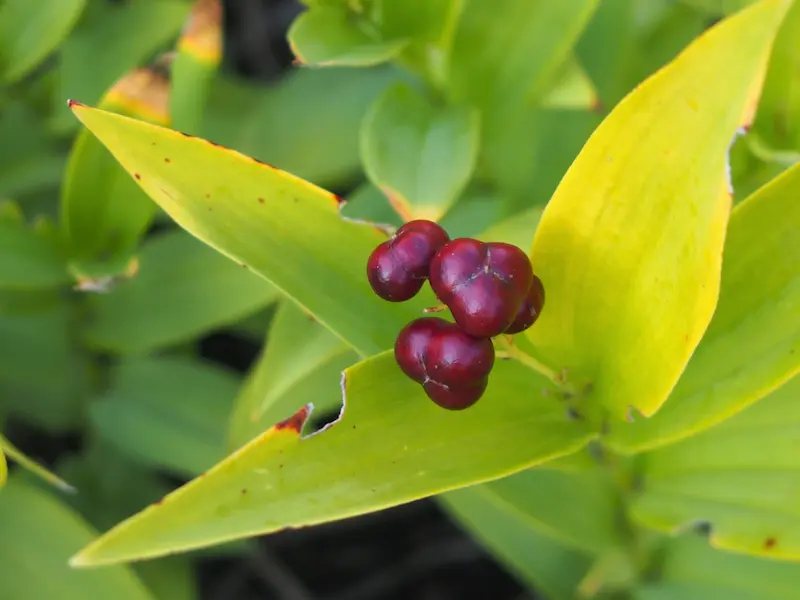
False Solomon’s Seal boasts beautiful white blossoms, scarlet fruit, and fragrant petals. It is native throughout North America. It grows from 30 to 75 cm tall and has light green alternating leaves and a zigzagging stem with a flower head or cluster of fruit at its tip, depending on the season.
You might be interested in learning more about the Smooth Solomon’s Seal or the Starry Flase Solomon Seal.
Quick Growing Guide
Botanical Name: Maianthemum racemosum
Also Called: Treacleberry, feathery false lily of the valley, Solomon’s plume, false spikenard
En français: Smilacine à grappes
See More Plants in this Botanical Family:
Colour:
Sun / Shade:
Water: Moist
Height:
Width:
Care:
Where to Plant
In nature, find it in open deciduous woods, borders. False Solomon’s Seal is best when massed in naturalized plantings, wild gardens, native plant gardens, or woodland gardens and is effective with hostas and ferns. It may also be grown in shady borders or in moist areas near streams or ponds. Some have suggested underplanting them with taller ornamental plants such as roses.
Credit Agnieszka Kwiecień, Nova, CC BY-SA 4.0 via Wikimedia Commons
Caring for False Solomon’s Seal
When planting, use mulch such as woodchips or flax straw to keep weeds at bay until the plants fill the space. Allow fallen leaves to stay on the plants in autumn to replenish the mulch every year. Pruning is not required.
Before a plant becomes established, roots do not like to be disturbed.
Propagation
In early autumn, propagate through division or seed. Seeds can be started in pots. It will naturally propagate through rhizomes forming colonies.
Edible and Medicinal Uses
False Solomon’s seal berries are edible but bittersweet. Careful not to eat too many because in quantity they can have a laxative effect. (Unless of course you want an laxative effect!). Young leaves are edible but not particularly tasty. Traditional medicine uses dried rhizomes to make tea to cure coughs and constipation. Clean rhizomes can be ingested in tiny amounts.
Crush the leaf or root and apply it to scrapes, rashes, small wounds, and bug bites as a soothing field poultice. Most people will find it to be somewhat anti-inflammatory and soothing to tissue discomfort. The bitter tasting, somewhat starchy, and mildly astringent root tea is gargled for sore throats and other oral irritations.
Comments

Gardening guidance for your area—and your garden
Join our newsletter for timely gardening guidance tailored to your area. Looking for a better value? Upgrade your newsletter for personalized plant-care guidance based on the plants growing in your garden.
Leave a Reply
You must be logged in to post a comment.