Pale Corydalis has a Delicate Flower
Photo:
Aaron Carlson, CC BY-SA 2.0 via Wikimedia Commons
Corydalis sempervirens is an attractive biennial native to rocky, shallow-soil sites and cooler climates. It is easy to start from seed and has light to dark pink tubular flowers with yellow tips and greenish-blue leaves. Being a biennial, it will have basal rosettes at ground level the first year and flowering plants the second year. It could fill in any bare spot in a sun or semi-shade garden quite quickly.
Pale Corydalis can be propagated through division and seeding and does best in dry, sunny to partly sunny areas of slopes, woodland edges, rocky or sandy soils, but where the air temperature is not overly hot, as this is a plant for cooler environments.
Quick Growing Guide
Botanical Name: Corydalis sempervirens
En français: Corydale toujours-verte
Blooms:
Sun / Shade:
Water: Average Water Needs; Water regularly; do not overwater
Soil:
Height:
Pollinators:
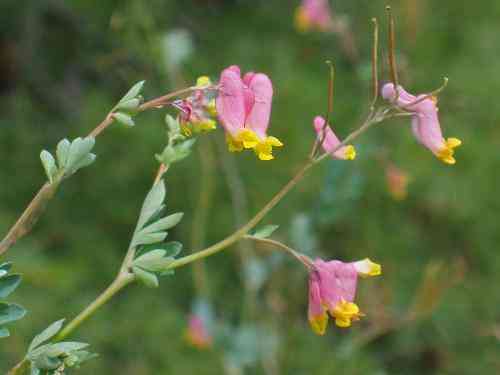
Its natural habitat consists of dry rocky deciduous woods and borders. It is most common in the New England states, the Great Lakes region, and south along the Blue Ridge Mountains into northwestern Georgia. It is widespread in Canada and can also be found in Alaska. Companion plant suggestions many spring ephermals, including Raspberry Splash Lungwort, Dutchman’s breeches, Trilliums, Trout Lilies, and Bloodroot.
Comments

Gardening guidance for your area—and your garden
Join our newsletter for timely gardening guidance tailored to your area. Looking for a better value? Upgrade your newsletter for personalized plant-care guidance based on the plants growing in your garden.
Leave a Reply
You must be logged in to post a comment.