Partners: Gardens

  • Le Volksgarten

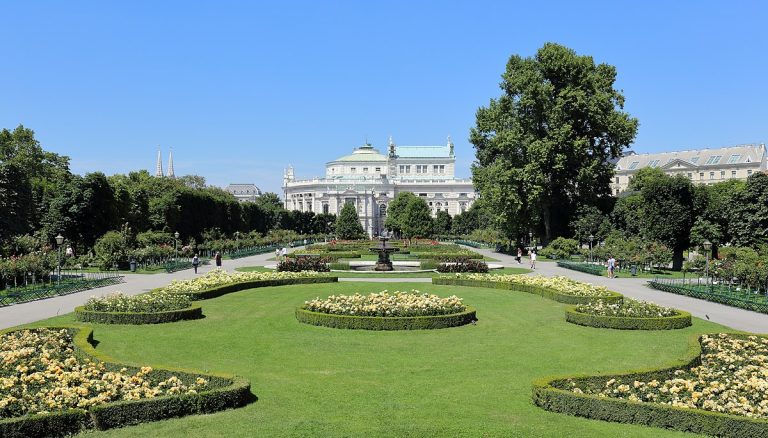
    Think roses. Are you thinking of roses? Good. Now think of even more roses.

    Huge beds of tiered roses fill the sides of the Rose Garden: tall bushes at the back and smaller standards and bushes near the front. And each a different variety.

    The flowers form a kaleidoscope of colour in the late spring and summer. And each rosebush carries a personal dedication to a lover, family member or similar.

  • Les Jardins de Hellbrunn (Schloss Hellbrunn Garten)

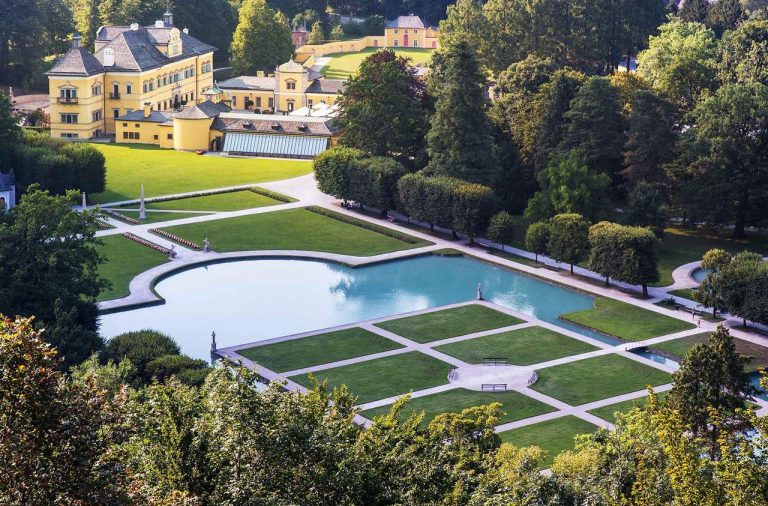
    You never know exactly what to expect in Hellbrunn. But one thing is certain: it never gets boring! Water machines, grottos and insidious spray fountains have been making faces wet and, above all, smiling for over 400 years. Explore Hellbrunn and embark on an entertaining journey through time to the era of Prince Archbishop Markus Sittikus. He built Hellbrunn as a place for entertainment and pleasure. And it has not changed until today.

  • Augarten Botanical Garden

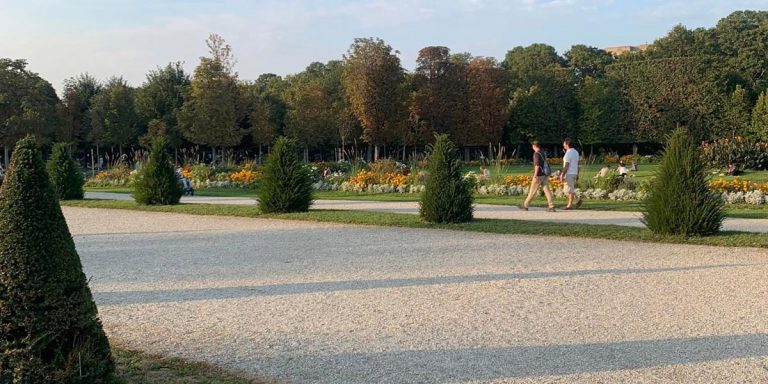
    The Augarten is a 52.2 ha public garden in the 2 nd district of the city and which houses the oldest Baroque botanical garden in Vienna. This French-style garden also offers large beds of magnificent flowers, large shaded paths of chestnut trees, elms, lime trees, ash trees and maples. However, as with almost all of the city’s public parks, access to the park is impossible at night, as the five park gates are closed. (from dusk to early morning – the times, which vary according to the season, are indicated on a metal panel in front of each of the doors.)

  • Schoenbrunn Palace Gardens

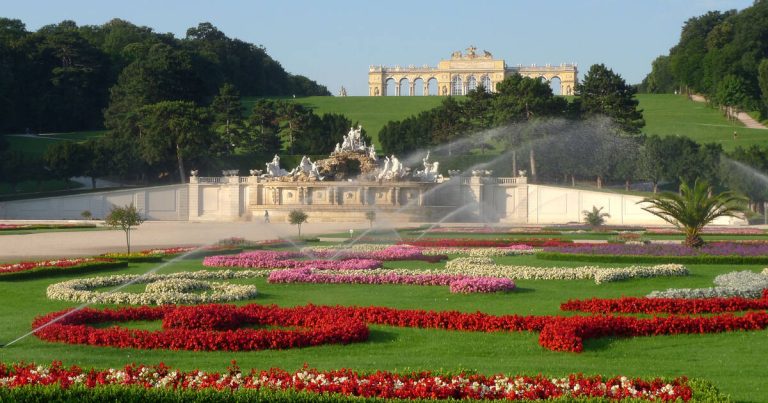
    The park at Schönbrunn Palace was opened to the public around 1779 and since then has provided a popular recreational amenity for the Viennese population as well as being a focus of great cultural and historical interest for international visitors. Extending for 1.2 km from east to west and approximately one kilometre from north to south, it was placed together with the palace on the UNESCO list of World Heritage Sites in 1996.

  • Mainau Island Gardens

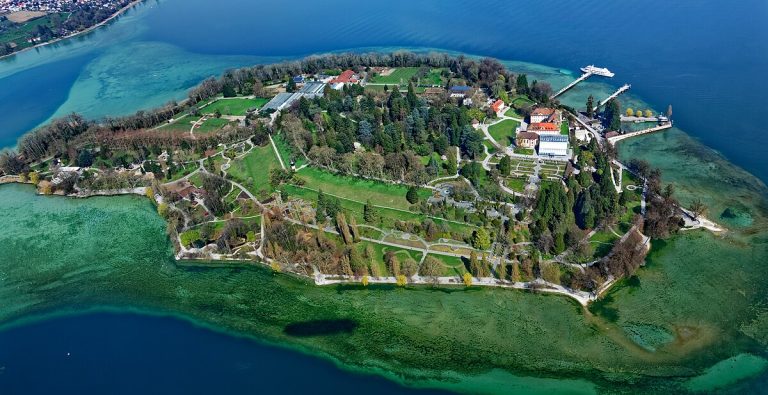
    Lush blooms all year round, a park with trees over 150 years old, the baroque splendor of the castle complex and church, plus the Mediterranean character – that is Mainau, the flower island in Lake Constance. Today Bettina Countess Bernadotte and Björn Count Bernadotte are at the helm of the company. The fourth Bernadotte generation following Count Lennart strives to continue the well-founded philosophy that has been developed since 1932 and to maintain an oasis of natural beauty, harmony and relaxation for visitors from all over the world, indeed to create it again and again. Forgetting the stress of everyday life and the over-engineered age for a few hours and finding relaxation in the “deceleration” should be the benefit for the Mainau guests when they visit the flower island in Lake Constance, which is favored by the climate and is unique in the world. 

  • Botanical Garden of the University of Würzburg

    The University of Würzburg has had a botanical garden since 1696 . It emerged from the medicinal plant garden (Hortus medicus) of the Juliusspital in today’s city center and is now, after its third relocation, on the southern outskirts of the city. In 1960 work began on the new system on the Mittlerer Dallenbergweg. The Botanical Garden is a central institution of the University of Würzburg. It serves various sub-disciplines of botany and other university institutions as an important aid in research and teaching. It is open to the public.

  • Les Jardins du château de Schwetzingen

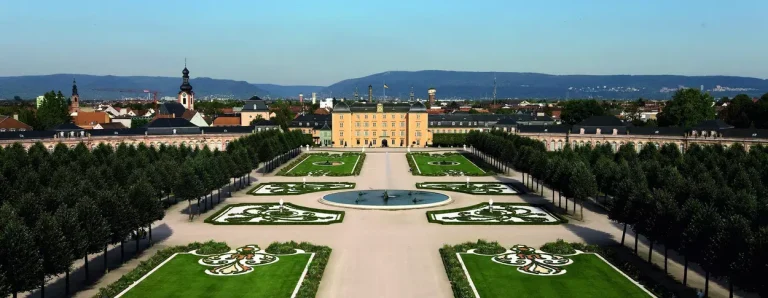
    The park of Schwetzingen Castle is a unique cultural monument in Europe: more than 100 sculptures adorn the park, which is both magnificent and surprising. Picturesque works of art lead visitors into distant and foreign worlds. The Temple of Apollo features the Greek god of light and the arts playing the lyre in a circular temple. Also worth seeing: the thermal baths, a small building for relaxation with a garden, designed on the plan of an Italian villa. The park’s Turkish garden houses the Nicholas de Pigage mosque, the largest building of its type in a German park. This late-baroque mosque, with many oriental elements, however, played a purely decorative and not religious role.

  • Sanssouci Park

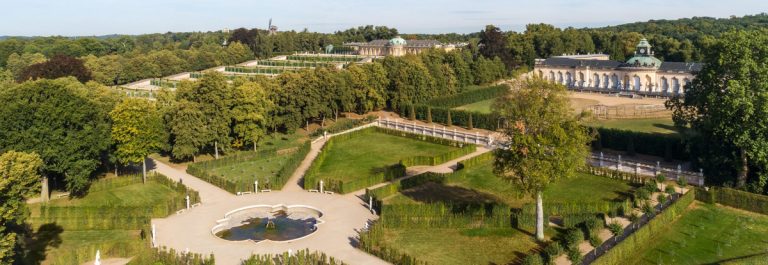
    Visitors can wander through the changing styles of exquisite garden art. The aesthetics and philosophy of the former residents of these palace complexes can be discovered in the perfectly formed garden areas, architecture, water features or in the more than 1,000 sculptures. The approximately 300-hectare Sanssouci Park stretches more than two kilometers from east to west. You should allow time for a detailed tour. Almost 60 gardeners lovingly tend beds, hedges, trees and extensive meadows. The magnificent parterre at the foot of Sanssouci Palace is decorated twice a year with over 230,000 plants based on historical models.

  • Nymphenburg Botanical Garden in Munich

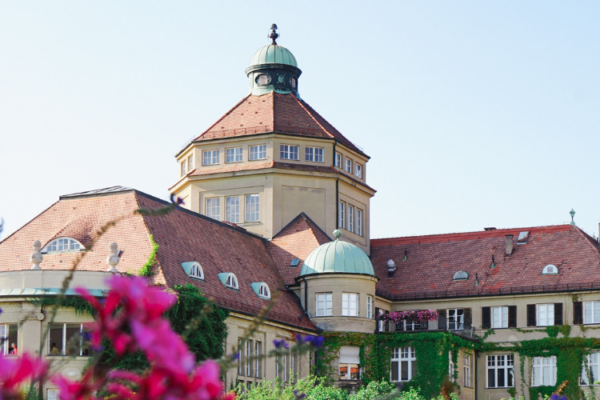
    Around 19,600 species and subspecies are cultivated in the Munich-Nymphenburg Botanical Garden, which covers an area of ​​21.2 hectares. Together with the outstation, the alpine garden on the Schachen (1,860 m²), the botanical garden is involved in national and international research projects, to which it supplies important material and observation data. It has the task of collecting, examining, cultivating and exhibiting wild and cultivated plants from all over the world and thus from different climatic regions according to scientific criteria. His collection of living plants is also used for research, for which the demand from all over the world is constantly increasing.

  • Botanischer Garten Frankfurt

    The future of the botanical garden and the possibilities of its preservation were discussed as early as the 1990s, with the planning of the complete relocation of the biological institutes to the Riedberg. Due to the physical distance, it could only be used to a limited extent for teaching and research at the university. However, the garden at this location had developed into a cultural asset worth preserving in the more than 50 years of development – with a valuable inventory of tree species and other plants from all over the world (over 5,000 species).

  • Botanical Garden of TU Dresden

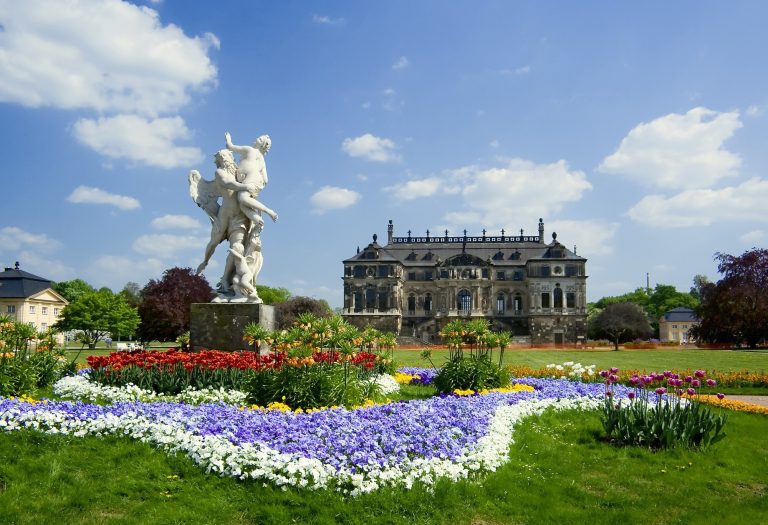
    In the heart of the city, the Dresden Botanical Garden invites you to explore the fascinating world of plants. About 10.000 plant species grow at the terrain at the edge of the Großer Garten, the biggest and oldest park in the city-centre. The origin of the plant collection dates back to the year 1815. Today, the Botanical Garden Dresden is a central academic unit of Technische Universität Dresden and as such is integrated into research and academic education in numerous ways. Moreover, we offer various possibilities for the public and school classes to learn more about plants.

  • Botanischer Garten und Botanisches Museum Berlin

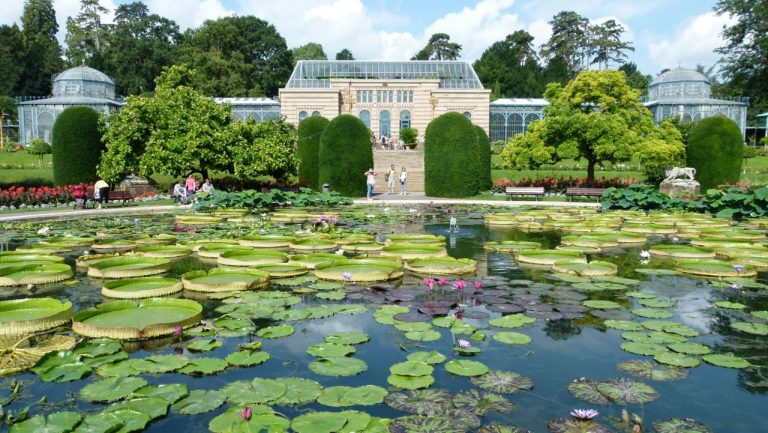
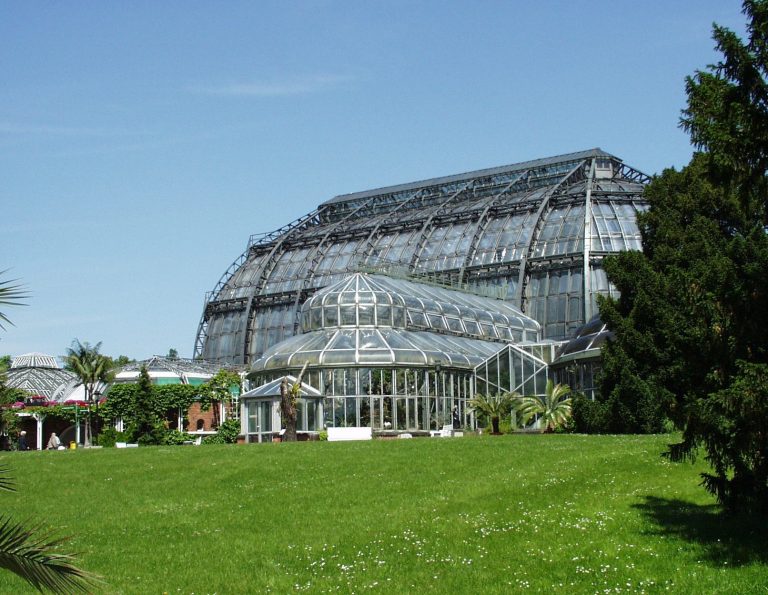
    The Botanic Garden is a magical place that speaks to all your senses. Plunge in this green oasis, relax at the lakeside, walk along picturesque trails – in our Garden nature always has a season. Our Botanic Garden counts as one of the largest and most important botanical gardens in the world. This is not only due to its surface, but also to the variety of its plants, that count over 20,000 types.

  • Bucaco National Forest

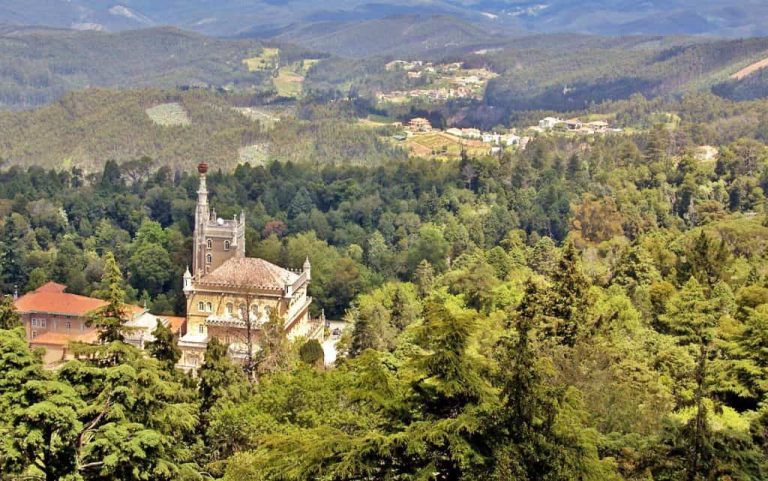
    The National Forest of Bussaco is a heritage of incalculable value, unique in Portugal and in the world. It currently occupies 105 hectares and has one of the best dendrological collections in Europe, with around 250 species of trees and shrubs with notable specimens. It is one of the richest national forests in natural, architectural and cultural heritage, and can be divided into three landscape units: Arboretum, Gardens and Vale dos Fetos and Relic Forest. Classified as a Property of Public Interest, the monumental complex of Bussaco mobilizes an exceptional heritage wealth. In addition to the central nucleus formed by the Palace Hotel do Bussaco and the Convent of Santa Cruz, the hermitages, the chapels of devotion and the Steps that make up the Via Sacra, the Fence with the Doors, the Military Museum and the commemorative monument of the Batalha do Bussaco, the crosses, the fountains (the Fonte Fria with its monumental staircase stands out) and the cisterns, the viewpoints (the one at Cruz Alta offers a privileged view over the entire region between Coimbra and Serra do Caramulo) or the forest houses.

  • Les Jardins du palais du Marquis de Fronteira (Palace of the Marquises of Fronteira)

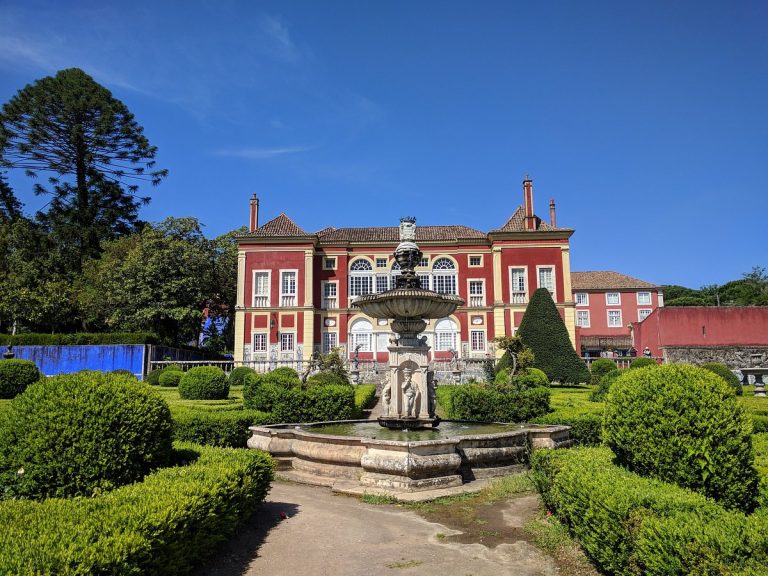
    The Foundation of the Houses of Fonteira and Alorna, was established by Dom Fernando Mascarenhas (1945-2014), who was the representative of three important noble Houses (Fronteira, Alorna e Távora). Dom Fernando Mascarenhas inherited the Condado of Torre and the Fronteira Palace from a great-great Aunt. Since he had no children, he decided to use this unique opportunity to reinforce the connection between his heritage and the family who is historically linked to it, while keeping in mind the public good.

  • Faial Botanical Garden

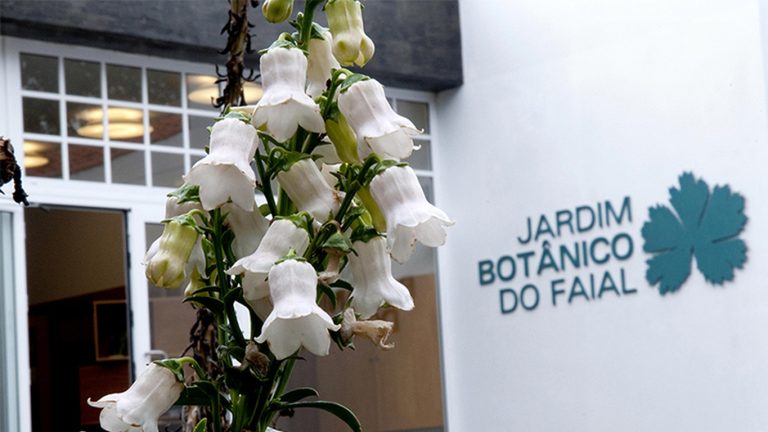
    Open to the public since 1986, the Botanical Garden of Faial consists of the altitude pole, in Pedro Miguel, and the central pole, in the parish of Flamengos, where the Seed Bank of the Azores is located. Its mission concerns the conservation and study of the natural flora of the Azores, scientific dissemination and environmental education. The Botanical Garden was distinguished, in 2011, by Turismo de Portugal with an honorable mention in the “Requalification of public project” award.

  • Lisbon Botanical Garden

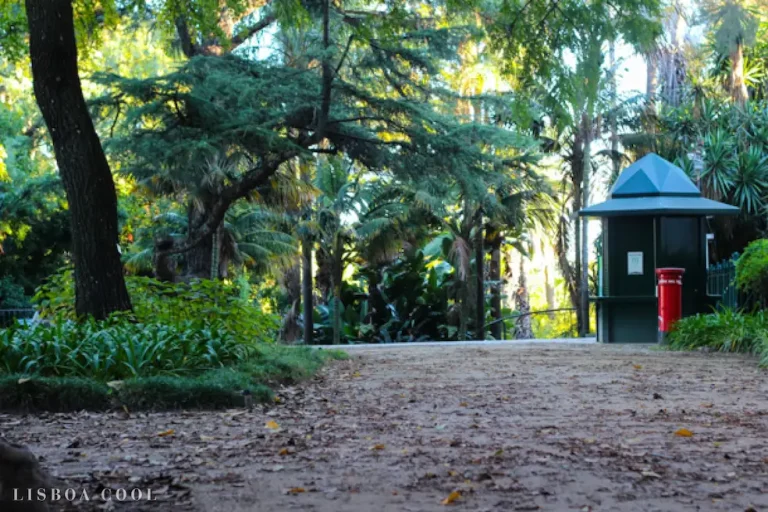
    The Lisbon Botanical Garden (JBL) is classified as a national monument and is part of the historical centre of the Portuguese capital. Its 4 hectares are a treasure trove of plant specimens from different parts of the world, featuring cycads, gymnosperms, palm trees, tropical fig trees, and much much more. In terms of heritage, JBL is home to collections of natural objects, a xylotheque, a herbarium with more than 220,000 leaves, and also includes a seed bank with over 1200 species as well as a DNA bank with 1 to 5 samples of each endangered Portuguese flora species. In JBL you can also visit the Butterfly Garden, the first greenhouse made for breeding butterflies of the Iberian fauna.

  • Lanzarote Cactus Garden

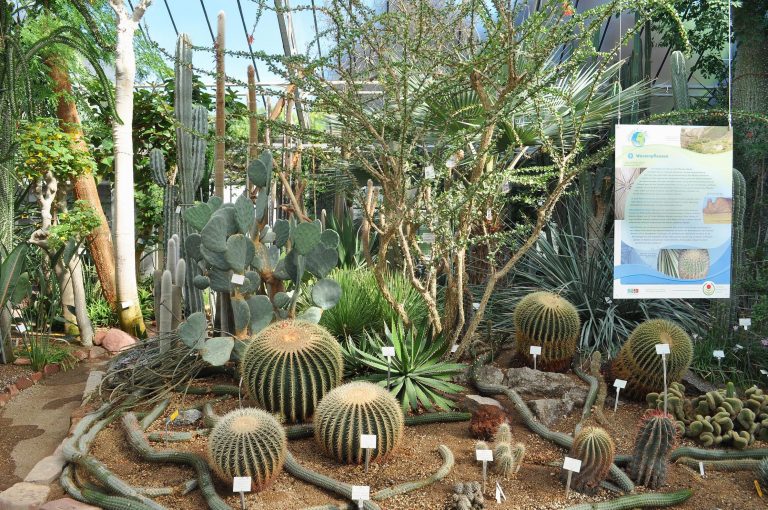
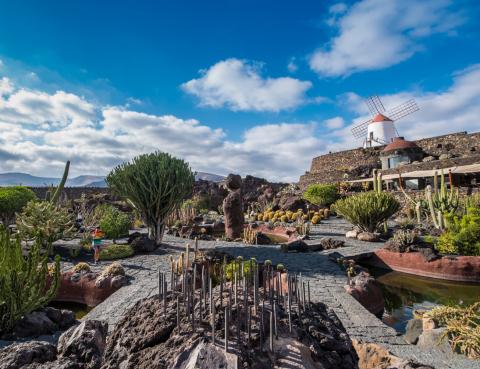
    Located in Guatiza, municipality of Teguise, El Jardín de Cactus is the last great work of César Manrique in Lanzarote , a fascinating creation that houses around 4,500 specimens of cacti of some 500 species from the five continents. The artist chose an old rofera (canteen, for the Canaries) used as a dump in an agricultural area with extensive prickly pear plantations dedicated to the cultivation of cochineal, thus assuming the rehabilitation of an area of ​​great scenic value on the island in a state of abandonment. After 20 years of creation, the work gives life to an architecture full of decorative and sculptural elements that integrate with the environment, further enhancing its natural beauty. The presence of volcanic stone and basaltic monoliths turned into sculptures stands out, resulting from the time when earth was extracted; but it is the liveliness and exoticism of the cactus that intoxicates the visitor in an authentic poetic setting of shapes, textures and colors.

  • Pazo de Oca

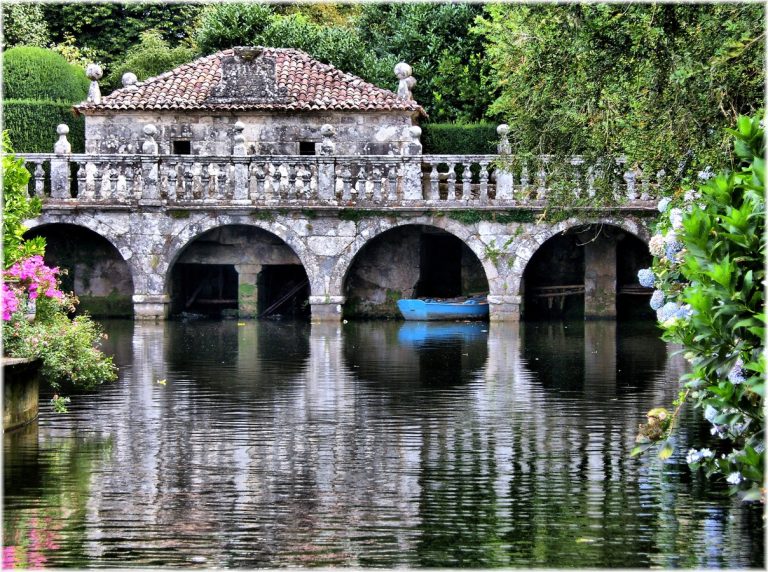
    The Ducal House of Medinaceli Foundation is a private cultural institution established on the initiative of Her Grace Victoria Eugenia Fernández de Córdoba y Fernández de Henestrosa, the Duchess of Medinaceli, with the aim of conserving, restoring, reintegrating, studying, promoting and disseminating the historic assets, both tangible (immovable, movable and documentary) and intangible (traditions, cults, rituals.), that have come to be linked to the House over time. Initially endowed with the founder’ s historic heritage-which was donated at the time of its establishment-throughout its over twenty-five years of existence it has grown both through the acquisition of property with historical ties to the House of Medinaceli and through mergers with other foundations of which the Ducal House held the trusteeship. The Foundation currently manages historic and artistic property scattered across nearly all the Spanish regions.