Wood Lily is Elegant
The wood lily (Lilium philadelphicum) is an elegant plant that grows on a single stem and can reach 1 to 3 feet in height. The leaves are in a whorled pattern around the stem, and the top of the stem can carry up to five flowers.
The Wood Lily is also known as The Red Lilly and Prairie Lily. The bulbs are said to have a unique flavour. They are edible and have been collected by many indigenous groups for food and medicinal purposes. This plant’s seeds and flowers can also be eaten, but keep in mind that not all lily varieties are edible. They also attract birds, butterflies, swallowtail butterflies and bees.
Quick Growing Guide
Botanical Name: Lilium philadelphicum
Also Called: Red Lilly, Prairie Lily, Western Red Lily
En français: Lis de Philadelphie
See More Plants in this Botanical Family:
Blooms:
Sun / Shade:
Water: Moist
Height:
Protected Floral Emblem
In 1941, the western red lily was chosen as the floral emblem of the province of Saskatchewan, and is on the flag of Saskatchewan. As the Saskatchewan provincial floral emblem, it is protected under the Provincial Emblems and Honours Act, and cannot be picked, uprooted or destroyed in any manner. If you are going to pick them, make sure you aren’t in Saskatchewan! In all seriousness though, Native Plant Trust reports that it’s population has been is serious decline principally due to being favoured by whote tailed deer as a food source.
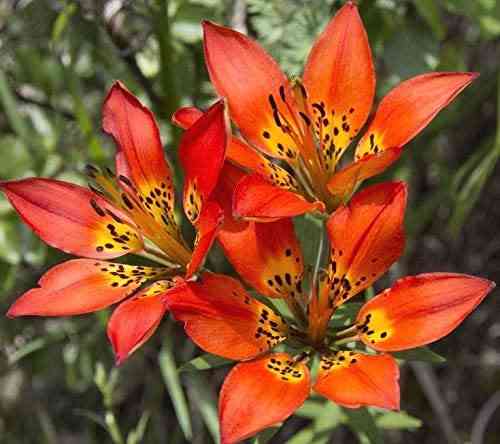
Wood Lilies grow in either shade or sun. Make sure the soil is well drained, as puddles can cause the bulbs to rot.
Companion Plants
In nature, find Wood Lilies in meadows, damp woods with dappled light, grasslands, sandplains. The main considerations in planting Wood Lily companion plants are available space, desired colour combinations and complementary blooms at different times of the year. Plants should not be crowded together. Consider combining Wood Lily with spring blooming plants such as crocus and snowdrops and later blooming plants such as hydrangea and roses.
Wood Lily is red-orange with dark purple spots and blooms 1 to 5 cup shaped flowers at the top of a single stem. It is a perennial that blooms from July to August.
Caring for Wood Lily
In the growing season, water frequently and apply fertilizer every 2 weeks. Apply a thin layer of compost and mulch in the spring to retain moisture and control weeds. As flowers fade, cut back stems to the base of the plant.
Propagating Lilium philadelphicum
Transplanting Bulbs
It is possible to grow Wood Lilies but you must get your bulbs from a reputable source who specializes in rare plants and who can provide local lilies. It is best to prepare the soil with lots of compost. In the fall, bury the bulbs about 3 times their thickness and they will bloom come spring.
One way to propagate your Wood Lilies is to dig up the bulbs when the foliage has died down. Store the bulbs until the fall. Split the bulblets from each bulb and plant in a seperate location.
By Seed
Another way to propagate is by seed. Let the flowers dry out until they’re brittle. Snap off the seed pods and store them in an envelope. Place in a bag in the refrigerator until late fall. Keep them in a warm spot throughout the winter. Plant in spring.
Other
White-tailed deer and rabbits are attracted to Wood Lily and it may require protection.
Wood lily is toxic to cats.
Wood Lily used to be more common but has diminished due to tourists visiting the mountains and picking them.
Comments

Gardening guidance for your area—and your garden
Join our newsletter for timely gardening guidance tailored to your area. Looking for a better value? Upgrade your newsletter for personalized plant-care guidance based on the plants growing in your garden.
Leave a Reply
You must be logged in to post a comment.