
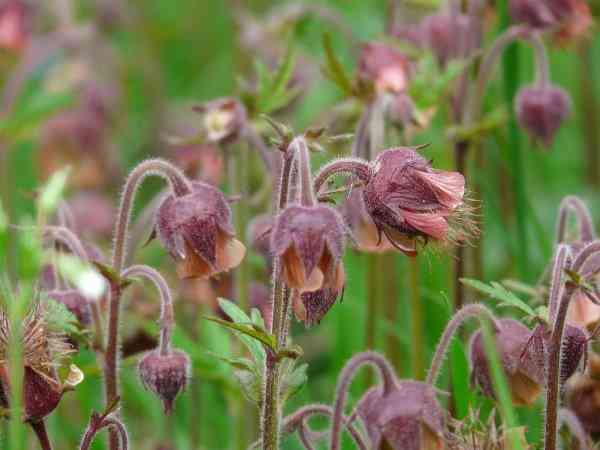
Water Avens are good ground cover for cool, wet areas where many plants often struggle. It is a perennial that blooms in late spring or early summer. They are also known as drooping avens, water flowers, and Indian chocolate. Water avens contain pinkish, purple, or yellow bell-shaped flowers and dark red or dark purple stems that contain many hairs.
If boiled, its roots yield a liquid that tastes faintly like chocolate. The roots can also be made into an effective remedy for diarrhea when taken with milk and sugar.
Quick Growing Guide
Botanical Name: Geum rivale
Also Called: Drooping avens, water flowers, and Indian chocolate
En français: Benoîte des ruisseaux
See More Plants in this Botanical Family:
Blooms:
Sun / Shade:
Water: Average water requirement, but keep soil moist throughout growth and bloom season.
Soil:
Height:
Pollinators:
Natural habitats include stream banks, pond edges, damp deciduous woodlands, and hay meadows. Plant it in masses in borders or rock gardens. After blooming, the foliage makes an attractive ground cover. It thrives in bogs, attracting bees, butterflies, and dragonflies, which in turn attract toads, frogs, and other hungry animals. It is deer resistant. Hybrids are becoming increasingly popular.
Propagating Geum rivale
Propogate by division in spring or autumn.
Companion plants suggestions include Campanula, Delphinium, and Daylily.
Caring for Water Avens
Prefers moist, fertile soils in cool climates. Likes boggy and swampy conditions. Not always reliably winter hardy in areas north of Zone 5.
Pruning Benoîte des ruisseaux
Deadheading spent flowers will encourage additional bloom. Just cut the faded shoots off when they start to show and the perennials will flower beautifully. To keep it from self-seeding, it’s best to remove the seed heads
Other
Although they are mostly pest-free, keep an eye out for leaf miners, saw flies and powdery mildew.
Native Americans used the tea made from the roots to treat cough and colds. Powdered root was once used as astringent for hemorrhage and fevers.
Comments

More From Gardening Calendar
Tomato Blight: Identification and Treatment
Tomato blight refers to a family of pathogens caused by fungi which spreads through foliage. We discuss how to recognize and control it.
Bitternut Hickory
Discover how the Bitternut Hickory tree thrives in various environments and provides sweet rewards for wildlife in shady locations.
Wildflower and Native Plants: Are they the same?
Discover the distinction between native plants and wildflowers, and how choosing the right seeds can create a low-maintenance, biodiverse meadow garden.
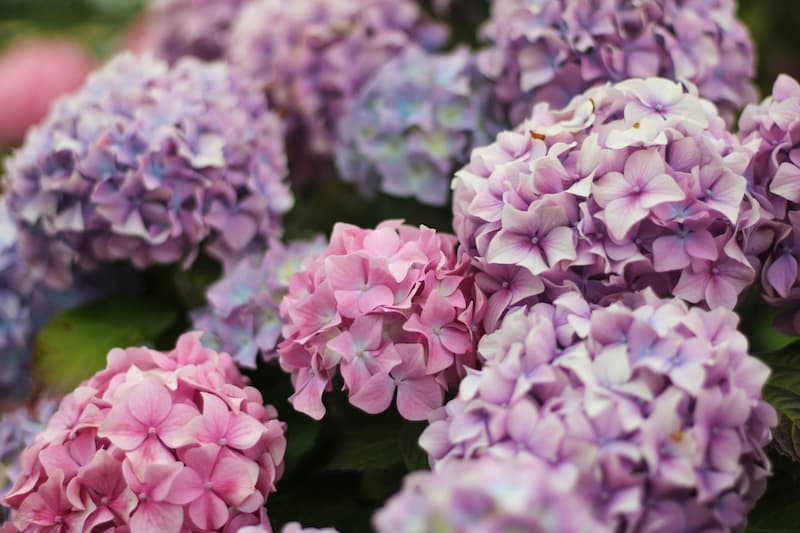
Ideas for Long Blooms in Small Spaces
Discover a variety of plants that bloom for weeks, from hydrangeas to clematis, perfect for adding color to your garden all year round.
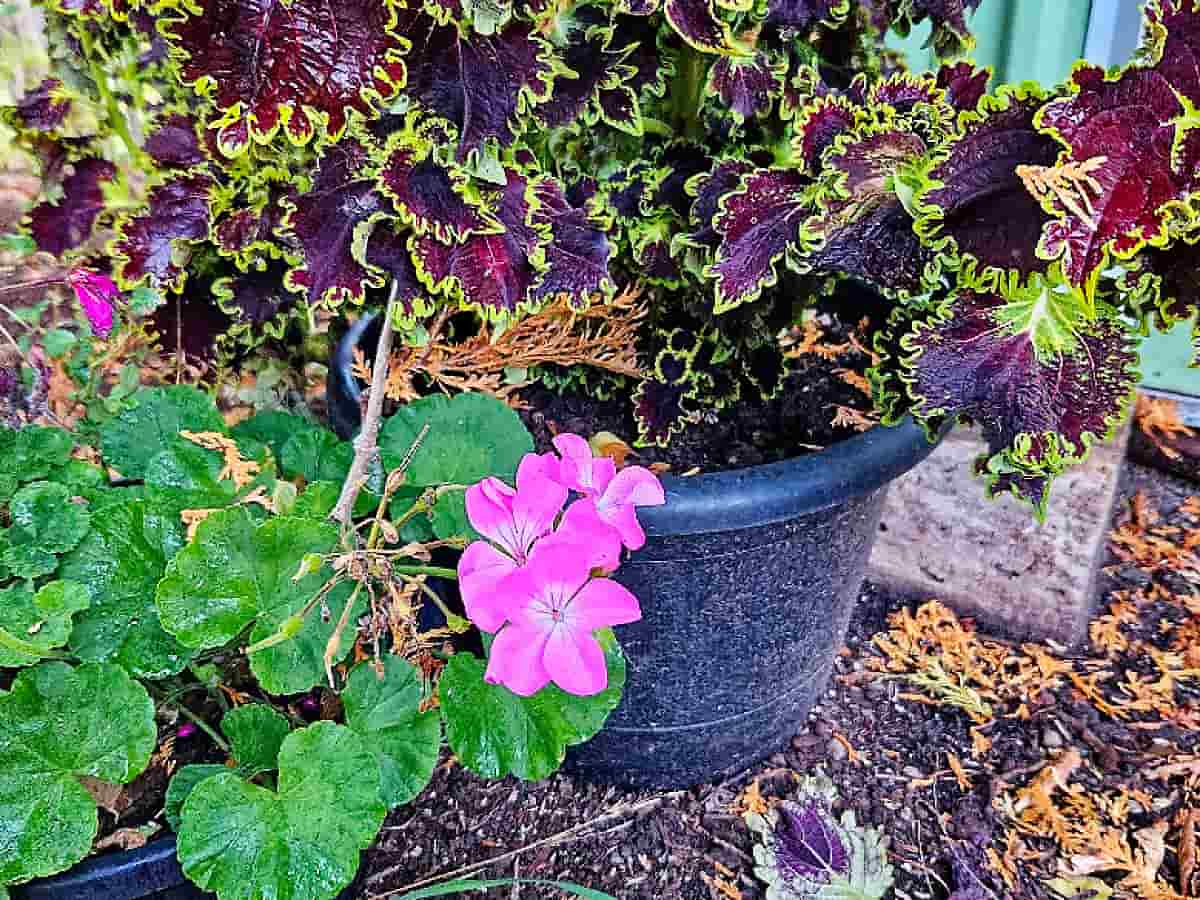
Annuals: Why We Love Them and Tips for Success
Learn why annual plants are essential for your garden, from their beauty and versatility to how they attract beneficial insects to boost your garden's health.
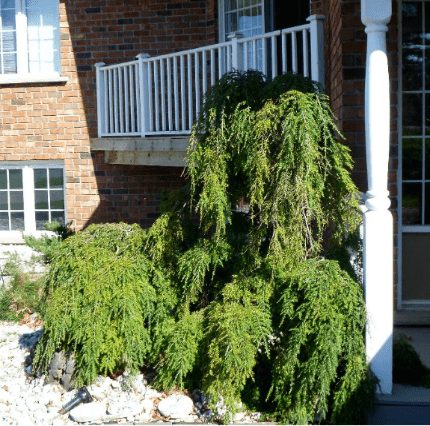
10 Weeping Evergreens for Winter Interest
Admire the stately beauty of weeping trees in your garden any time of year! Get to know our top 10 varieties for cold climates, from the Weeping Alaskan Cedar to the Weeping Colorado Spruce. Perfect for creating a peaceful focal point in your garden.
Leave a Reply
You must be logged in to post a comment.