Starry False Solomon’s Seal
Photo:
Walter Siegmund, CC BY-SA 3.0, via Wikimedia Commons
Starry False Solomon’s Seal has attractive foilage, flowers, and berries that form a dense groundcover once established. The narrow oval-shaped leaves are about 3-12 cm long (2”-5”) and arranged alternately in 2 rows along the stem. A showy flower with bright white flowers and green, oval-shaped leaves that attract birds. It is paired well with hostas and ferns.
You might be interested in learning more about the Smooth Solomon’s Seal or the False Solomon’s Seal.
Quick Growing Guide
Botanical Name: Smilacina stellata or Maianthemum stellatum
Also Called: Star-Flowered Lily Of The Valley
En français: Smilacine étoilée
See More Plants in this Botanical Family:
Colour:
Sun / Shade:
Water: Water inthe spring
Height:
Care:
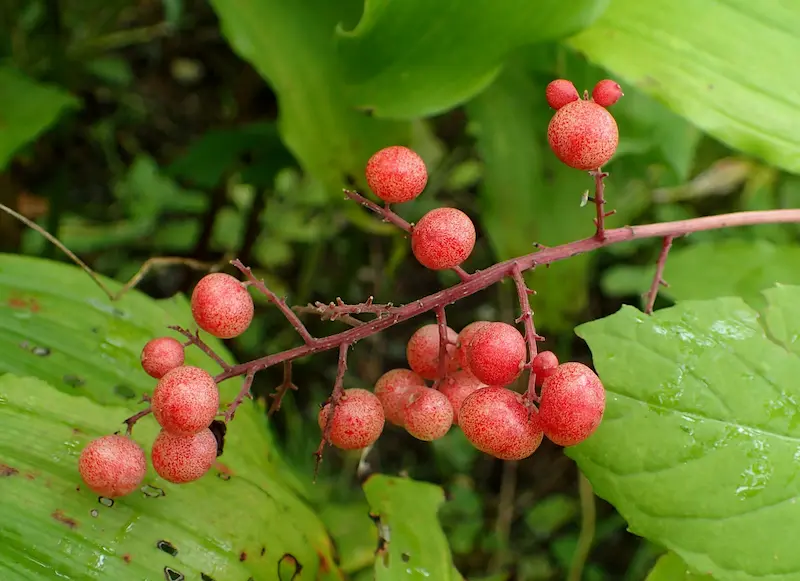
Also known as the “starry false lily of the valley,” white star-shaped flowers appear at the tips of leafy stems in June. They are followed by greenish berries with black stripes which ripen to dark red. The berries are eaten by woodland songbirds, including various woodland thrushes and the veery bird. These animals help to distribute the seeds. The berries are edible when ripe.
Where to Plant
In nature, Starry False Slomon’s Seal grows in clearings, borders, woods, savannas, prairies and moist areas. It prefers full to partial sun and moist to slightly dry soils. It will tolerate shade but flower production will be less. Companion plant suggestions include Native Ferns, Wild Ginger and other shade loving plants
Caring for Starry False Solomon’s Seal
Put mulch down such as woodchips or flax straw when planting to keep the weeds down until the plants fill the space. In autumn, let the falling leaves remain on the plants to top up the mulch every year.
Pruning Smilacine étoilée
In early autumn, propagate through division or seed. Rhizomes spread to produce colonies but are not considered invasive.
Edible and Medicinal Uses
The fruit, which is approximately the size of a pea, has a pleasant bitter-sweet flavour. The fruit is high in vitamin C and has been used to prevent scurvy. When eaten raw, the fruit is claimed to be laxative in big quantities, especially if you are not used to eating it, however thorough heating reduces this laxative effect.
Credit: Krzysztof Ziarnek, Kenraiz, CC BY-SA 4.0 via Wikimedia Commons
As the new shoots sprout in the spring, they can be utilised as an asparagus alternative. Young shoots and leaves are cooked and eaten like greens.
The roots were used to flavour foods. The roots were chewed raw or used in syrups or teas to ease coughing.They were also used to treat burns and swelling as cataplasms. Native American cultures employed the roots of this species to heal stomach ailments, menstrual difficulties, and venereal disease.
Other
No serious diseases or pest issues.
Comments

Gardening guidance for your area—and your garden
Join our newsletter for timely gardening guidance tailored to your area. Looking for a better value? Upgrade your newsletter for personalized plant-care guidance based on the plants growing in your garden.
Leave a Reply
You must be logged in to post a comment.