Spring Care for Forsythia, Daphne and Rose Bushes
Photo:
Forsythia in bloom, Courtesy Judith Cox
Greetings fellow gardeners
Life has been changing and moving along like a roller-coaster. My basement still hums with a dehumidifier-fan, and I am hoping the restoration will begin soon. Unfortunately, I found a tick burrowing into me and that was not pleasant. I was able to get antibiotics from the pharmacy, which is so much easier than having to go to the doctor. Outside I keep finding trees that need attention and so much that needs to be done. But oh my! There is so much colour! The daffodils have started to bloom, and the bees are already buzzing.
Planting and Pruning Forsythia
To me, one of the first signs of spring is the bright yellow blooms on my forsythia bushes. I depend on the large forsythia in my driveway to act as a windbreak during the winter and it has served me well. I grew this forsythia from a branch given to me by my mother years ago. She took a lower branch from her forsythia which was close to the ground. A stone was placed on top of the branch so that it maintained contact with the ground and roots formed after a few weeks. The branch was cut from the bush and a new forsythia bush was ready to plant. Remember, do not prune your forsythia until after it has finished blooming.
(see photo above)
Daphne for Early Pollinators
Another wonderful blast of colour comes from my Daphne (in the family Thymelaeaceae). This can be a very delicate shrub, but it has done well for me with very little protection. It is also a favourite of early pollinators.
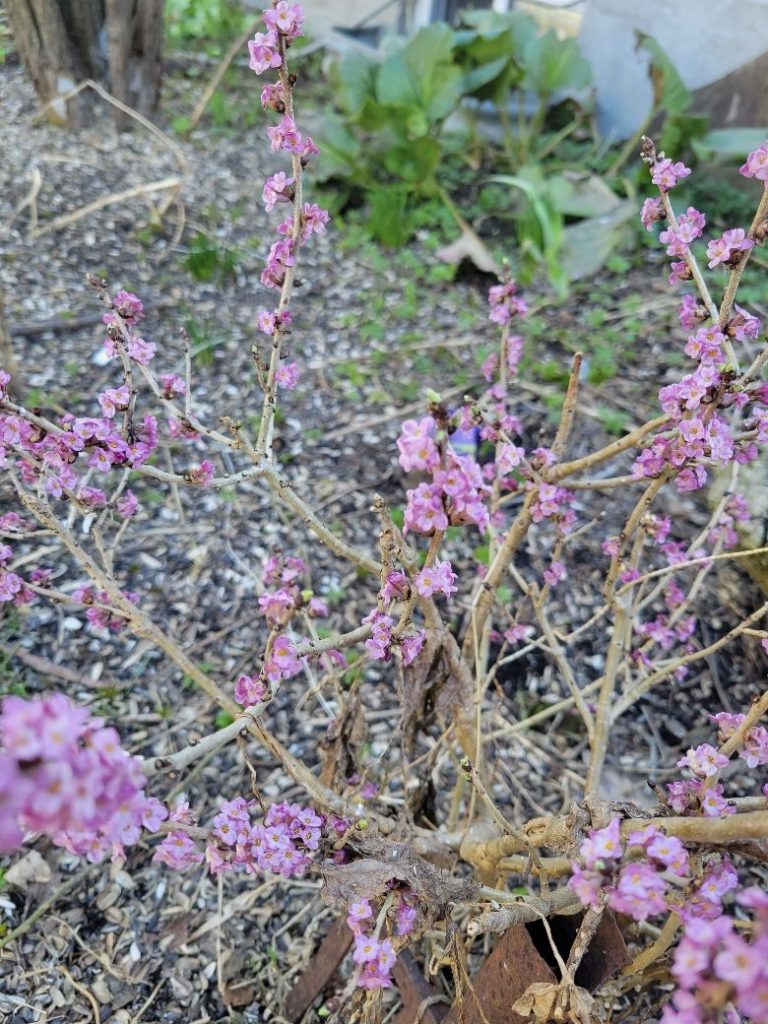
After that burst of heat last week, today started out with snow! I can’t use the furnace because of the air in the basement, so I have had the woodstove going all day. The warm air from the stove has meant that the too-many cats are draped on every surface and are very content. I was able to get a few things done outside this morning. The large tarp on the rhubarb side of the chicken coop is off and the tangled mess that used to be my little greenhouse sits pathetically by the road. There are so many branches down and stuff to fix that it is kind of overwhelming.
Spring Care for Roses, and Pruning Advice
I took a deep breath, and holding tight to my bypass pruners, I started to prune some roses. I don’t prune all of my roses; just those that look like they could use a little help. The first thing I do when I start a rose is to remove anything dead. Next, I look for broken or split branches and cut them back to a healthy spot. I look for branches that cross each other and cut the branch that grows inward. When I cut a branch, I cut to a bud that is facing outward. Try not to prune more than a third of the plant. In a week or so I shall give each rose a healthy dose of compost and fertilizer.
Youmigh be interested in the International Rose Test Garden or the Gardens at the America Rose Center.
The world will be warm and dry soon. I will take each moment as it comes, enjoy the songs of the birds and frogs, be so happy to see each new bloom and watch for ticks. Enjoy your week. Judith. (Email: sghorticultural@gmail.com) Veggie Bites are available at https://sghorticultural.wixsite.com/website or https://gardeningcalendar.ca/category/veggie-bites/
About the Author
Comments

Gardening guidance for your area—and your garden
Join our newsletter for timely gardening guidance tailored to your area. Looking for a better value? Upgrade your newsletter for personalized plant-care guidance based on the plants growing in your garden.
Leave a Reply
You must be logged in to post a comment.