Rose of Sharon
Photo:
Pasja1000 via PixaBay
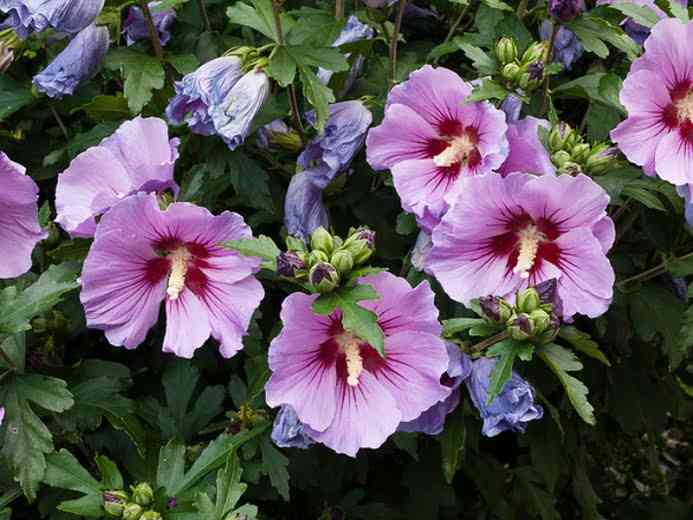
Rose of Sharon (Hibiscus Syriacus), a popular garden addition, is frequently planted to provide a burst of late-season colour after other trees and shrubs have finished blooming. Hibiscus Syriacus is a traditional choice for landscape focal points. This plant makes an excellent specimen, foundation, or border plant. This is ideal for larger patio containers.
Rose of Sharon has flowers that are bright white, red, pink, blue, and purple. It may also contain a combination of colours. It’s a simple way to add long-lasting summer colour to any garden.
Quick Growing Guide
Botanical Name: Hibiscus Syriacus
En français: Rose de Sharon
Blooms:
Sun / Shade:
Water: Keep well-watered with efficient draining
Height:
Pollinators:
Rose of Sharon attracts many pollinators, birds and butterflies. It blooms from mid-summer to fall, when most other shrubs are finished for the season. The seed pods that develop provide winter food for goldfinches, cardinals and wrens.
In the Bible, the Rose of Sharon symbolizes beauty and is used to describe the beauty of King Soloman’s lover.
Propagating Hibiscus Syriacus
Rose of Sharon can be planted in fall or spring, as long as there is no risk of frost.
It is more popular to plant potted plants than to start seeds indoors and then to transplant them. When transplanting, dig a hole twice the width of the pot. Set the plant in, cover and water well.
Caring for Rose of Sharon
The rose of Sharon requires full sun to part shade. Ensure to plant in an area that has good air circulation and provide protection from damaging winds or scorching sun that may burn the foliage.
The Hibiscus syriacus requires little attention and thrives even when neglected. A thin layer of organic compost or mulch can be beneficial, and mulch should be applied in the spring. Do not fertilise in late summer because it can stimulate new growth, which the plant will focus on rather than developing strong roots.
Pruning Rose de Sharon
Control size and maintain a vase shape silhouette by pruning back hard in early spring. Remove any diseased branches (leaf spot, rust). It may reseed abundantly, so be prepared to remove any unwanted plants appearing in other areas, which can be relocated or shared.
Companion Plants
Companion plant suggestions include Yew, Weigela, Ornamental Grass
Other
Hibiscus is susceptible to many pests such as ants (which bring aphid eggs to the plant), aphids, Japanese beatles and whiteflies. It can also be susceptible to wilt disease, dieback disease and leaf fungus.
The Rose of Sharon is native to China and India. While it is native to eastern Asia, it grows well in North America.
Comments

Gardening guidance for your area—and your garden
Join our newsletter for timely gardening guidance tailored to your area. Looking for a better value? Upgrade your newsletter for personalized plant-care guidance based on the plants growing in your garden.
Leave a Reply
You must be logged in to post a comment.