Dahlias Store Energy in their Tubers
Photo:
Timo C. Dinger
Propagating Dahlias
Dahlia plants store food and energy on their roots and underground stems called tubers. Oblivious individuals might even mistake these clumps of tubers for sweet potatoes. I was stupidly convinced about how the plants could only be grown using tubers during my early years. However, unlike many regular flowering plants, Dahlias can be grown using seeds as well as Dahlia tubers.
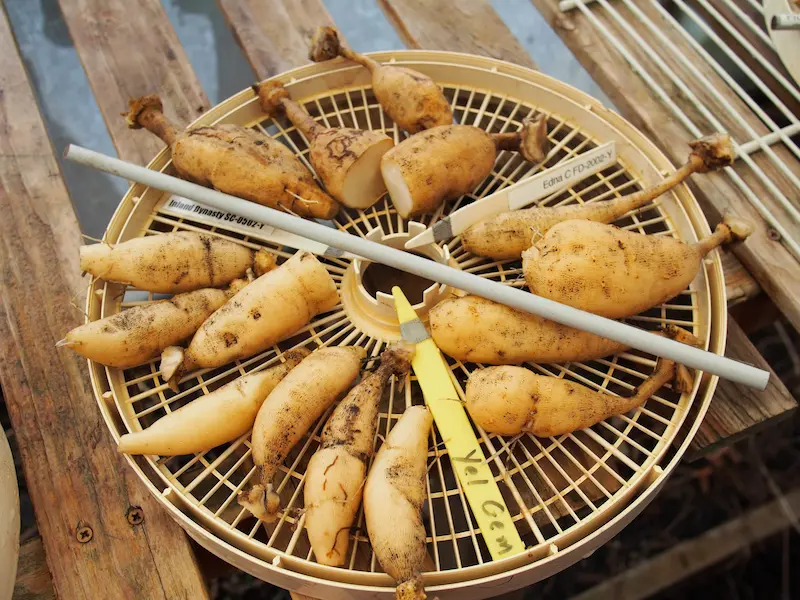
Credit F. D. Richards, CC BY-SA 2.0 https://creativecommons.org/licenses/by-sa/2.0, via Wikimedia Commons
When grown in a nursery, we avoid planting the Dahlia Tubers on cold soil during winter. Dahlias that are medium to dwarf-sized work well in containers as well. When the soil is warm during late spring, prepare the soil with a mixture of fertilizers and lightly water the mixture. Dig a 5 to 8-inch deep hole on the pot’s soil. Plant the tubers and fill the hole with 1 to 2 inches of soil.
Before planting, the tubers need to be cut from the clump’s base and should not be rotten or wrinkled. Wait until the sprouts appear above the soil before watering the tubers. Watering them too soon encourages rot. When they sprout, fill the rest of the hole for a healthy plant.
After about five weeks, it is time to transfer the plant. Dahlias require well-drained and rich soil. If the soil is dense or heavy, mixing it with aged manure would help the growth. Taking the stemmed Dahlias and planting them 10 to 14 inches apart would be appropriate when repotting.
It is important to choose a location with enough sunlight and to water Dahlias consistently. The use of Nitrogen-rich fertilizers during their growth can make Dahlia leaves grow at a much faster rate, delaying flower development. If done properly, you should have healthy and beautiful Dahlia flowers blooming in no time.
Dahlias – Annual or Perennial?
Dahlias can be grown as annuals in zones 2-7. They grow as perennials in zones 8-11 where they need little or no winter protection.
Overwintering Dahlia Tubers
Dahlia tubers must be preserved by opportunist gardeners because to their inability to survive in cold winter soil for an extended period of time. To overwinter Dahlia tubers in winter hardiness zones, dig up and clean the tubers properly before applying fungicide. Afterward, store them in a packing bag, styrofoam ice chest, or large plastic bag with sand, cedar chips, or peat separating them.
Collection Dahli Seeds
Master gardener Judith Cox reveals an interesting way to collect dahlia seeds in a recent article.
Companion Plants
Plant Anise, Artemisia, or Coriander with Dahlia to provide them with a cordial appearance. Not only do they go well with Dahlias, but they also promote healthy growth by repelling aphids and slugs. Complementary ornamentals such as Salvia, Geraniums, Roses, lilies, or Monarda mix well with Dahlia flowers during the growing as well as blooming season.
Comments

Gardening guidance for your area—and your garden
Join our newsletter for timely gardening guidance tailored to your area. Looking for a better value? Upgrade your newsletter for personalized plant-care guidance based on the plants growing in your garden.
Leave a Reply
You must be logged in to post a comment.