Virginia Waterleaf Helps Stop Soil Erosion
Photo:
H. Zell, CC BY-SA 3.0, via Wikimedia Commons
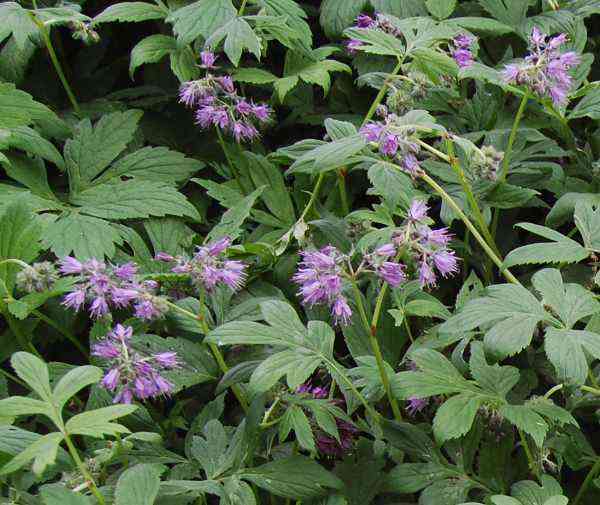
Virginia waterleaf, Hydrophyllum virginianum, is an excellent choice for shady areas and woodland gardens. It can spread quickly from rhizomes and fill open areas, where some gardeners use it as a groundcover.
Where to find Virginia Waterleaf
Virginia waterleaf is a perennial typically found in low woods, thickets, ravine bottoms, bluff bases, river flood plains and stream valleys. It is a perennial native to moist and wet woods in northwestern North America, ranging from Quebec to Manitoba in Canada and south to North Carolina and Tennessee.
Quick Growing Guide
Botanical Name: Hydrophyllum virginianum
Also Called: Eastern Waterleaf
En français: Hydrophylle de Virginie
Blooms:
Sun / Shade:
Water: medium to moist
Height:
Pollinators:
Recognize it by five (5) long narrow sepals with feathery edges under the flower head. One plant has 1 or 2 clusters on a stem, and may have multiple stems. It will bloom in white or violet colours, from May to June. Seeds occur in July and/or August. Virginia waterleaf presumably gets its name from the water-like spots on its leaves.
Pollinators
Bumble bees, carpenter bees, and other bee species enjoy it as well.
Caring for Virginia Waterleaf
It is best grown in consistently moist, well-drained soils in a light shady spot. They can grow aggressively in optimum conditions.
Propagating Hydrophyllum virginianum
Hydrophyllum virginianum is recommended for covering bare spots and to help stop soil erosion. It is also good for planting where buckthrorn has been removed. It can be planted in the spring or early fall. For best results of seed propagation, sow outdoors immediately after collection. It is not recommended for small gardens as it spreads aggressively.
Flowers are followed by seed capsules. When ripe the capsules split open to release the small seeds. It self-seeds readily and division is the best method to propagate. The best time to divide these plants is in the fall, after it has gone dormant. Ensure there are buds and some roots on each split portion.
Companion Plants for Hydrophylle de Virginie
To make a great woodland garden, combine Virginia Waterleaf with Polemonium reptans (Jacob’s ladder), Phacelia bipinnatifida (Fernleaf Phacelai), Erythronium americanum (Trout lily), Podophyllum peltatum (Mayapple), Dryopteris intermedia (Wood Fern), and/or Caulophyllum thalictroides (Blue Cohosh). It grows well around sugar maples, white ash, American beech, and yellow birch.
Culinary Uses
Virginia waterleaf is edible. Use its young leaves in baked dishes and smoothies, or in salads and on sandwiches. Roots can be used to make tea. It is an astringent, used in treatment of mild diarrhea. Indigenous peoples ate the young plants and leaves after cooking.
Other
It has few pests, but sometimes deer may browse the foliage.
Comments

Gardening guidance for your area—and your garden
Join our newsletter for timely gardening guidance tailored to your area. Looking for a better value? Upgrade your newsletter for personalized plant-care guidance based on the plants growing in your garden.
Leave a Reply
You must be logged in to post a comment.