
Author: Amanda Carrigan, Master Gardeners of Ottawa-Carleton; published with permission
I like roses but grow only two hardy kinds – cinnamon rose (Rosa majalis) and rugosa rose (Rosa rugosa). Neither is affected by disease, yet every year my roses get attacked by caterpillars. Two different types turn up in May and June and wreak havoc on the rose buds and leaves. I was curious to learn about them—even if I was planning on squishing them—since they didn’t look like the common rose slugs and others that my garden books describe.
European Rose Sawfly
The first type has a jarring, distinctive appearance: aqua green and orange-yellow with black spots. They hatch in late May or early June and, by mid-June, are easily seen. I discovered these are the larvae of a European rose sawfly (Arge ochropus). Their first North American sighting was in Ontario.
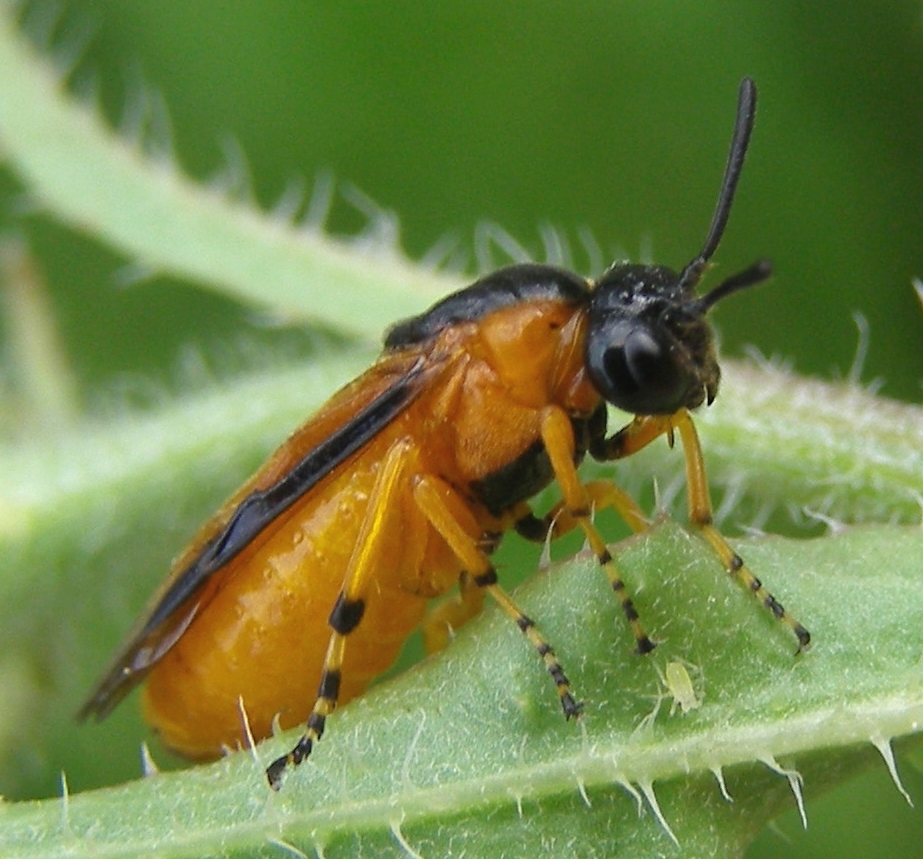
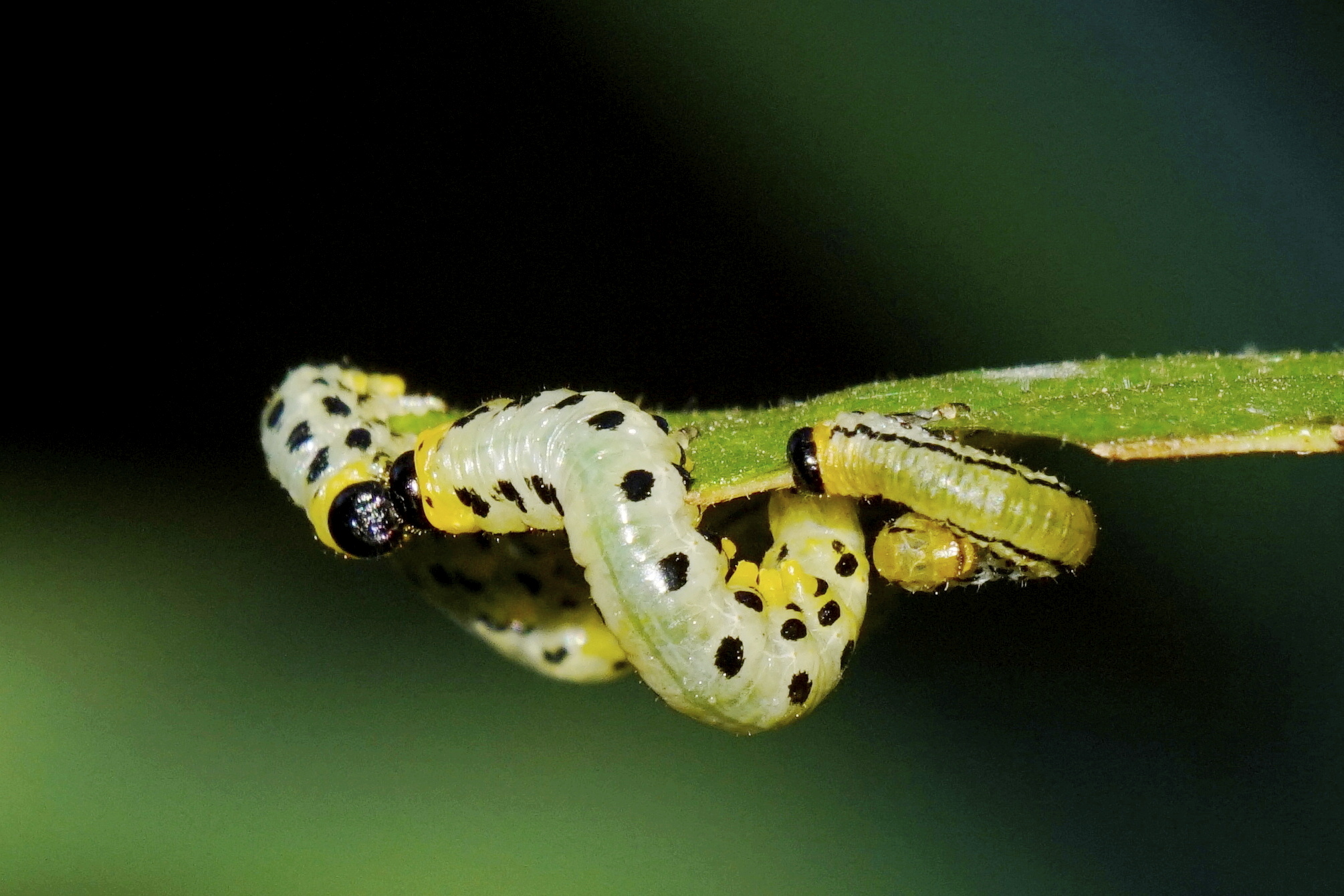
The adult looks rather like a fly, but with a yellowish abdomen. However, it is most closely related to ants and wasps, not flies. The common name, sawfly, comes from their saw-like ovipositor. They use it to make slits in the young rose canes, and then lay their eggs in the slits. The eggs hatch into caterpillar-like larvae that feed in groups and can quickly defoliate a rose bush. The larvae may grow to an inch long and have a characteristic back-bent C- or -shaped defensive pose – like they’re doing a headstand on the edge of the leaf. They pupate in cocoons in the soil before emerging as adults. They may have two generations per year with a second generation of adults emerging in July and their larvae causing damage in late summer through fall. One infestation of sawflies usually won’t kill a plant. Repeated rounds will weaken it and perhaps kill it. Of course, the defoliated rose looks awful.
You can look for the slits in the canes, then scrape out the eggs or prune off the infested tops of the canes and treat it in time. If, like me, you only remember when the leaves start vanishing, the best remedy is probably to check the roses regularly, then squish or remove any caterpillars you find. Insecticidal soap spray can also be used, but it needs to come into direct contact with the larvae to work. Some birds and ground beetles may eat sawfly larvae; however, they do have chemical defenses that will deter most predators from eating them.
Rose Plume Moth
As if the sawflies weren’t enough, pests known as rose budworms or leafrollers turn up on my roses as well. These caterpillars are the larvae of the nonnative rose plume moth (Cnaemidophorus rhododactyla). They also like eating my rosebuds. They are hard to spot at a glance, as they use webbing to keep a flower bud covered with nearby leaves. Pull open that leaf packet, and you see little black dots of frass (caterpillar excrement), webbing, a partly eaten rosebud, and a small, greenish caterpillar that blends in with the leaf.
We offer more information on larvae control balanced by comments beneficial insects.
Comments

More From Gardening Calendar

When to Plant Trees – Spring vs Fall
When to plant trees? Should it be spring, or should it be fall? It’s a question many new gardeners ask themselves. And with good reason.
Succulent Ideas for your Desk
Succulents are good choices for your desk. They are simple to grow with a little care and knowhow, typically water them about every 10 days.
Seed Saving: An Act of Revolution
Discover the benefits of saving your own seeds, from cost savings to preserving biodiversity. Learn how and when to save seeds for a successful garden.
5 Colourful Fall Flowers for an Easy Care Autumn
the more light they get, the bigger they can grow and the brighter their colours become. But they’re not picky, so they’ll grow in just about any soil that’s well draining. Providing a cheery autumn backdrop in your garden, the daisy-like blooms come in cheerful shades of yellow, pink, orange, purple, and white. And once you let the flowers go to seed, the birds will thank you for giving them a snack. Strawflower Finale When deciding which plants to add to your garden, keep in mind ease of care. With a few of these low maintenance options from blooms come fall, you'll have a colorful and inviting garden to enjoy. Add a beautiful pop of color to your fall garden with these low maintenance, yet vibrant flowers! Shrub roses, toad lilies, turtleheads, and strawflowers are just some of the natural options
A Winter Garden for Birds
Discover how to attract and keep birds in your garden with the right mix of bird feeders, shrubs, and trees for a thriving winter habitat.
Veggie Bites – Peonies and Borage
Oh, Borage, I love this herb! I am hoping that you will try planting it next year in your garden or in pots.
Leave a Reply
You must be logged in to post a comment.