Gardening for Birds: Planting for Ruby-Throated Hummingbirds
Photo:
Photo by Chris F via Pexels
Author: Julianne Labreche, Master Gardeners of Ottawa-Carleton; published with permission
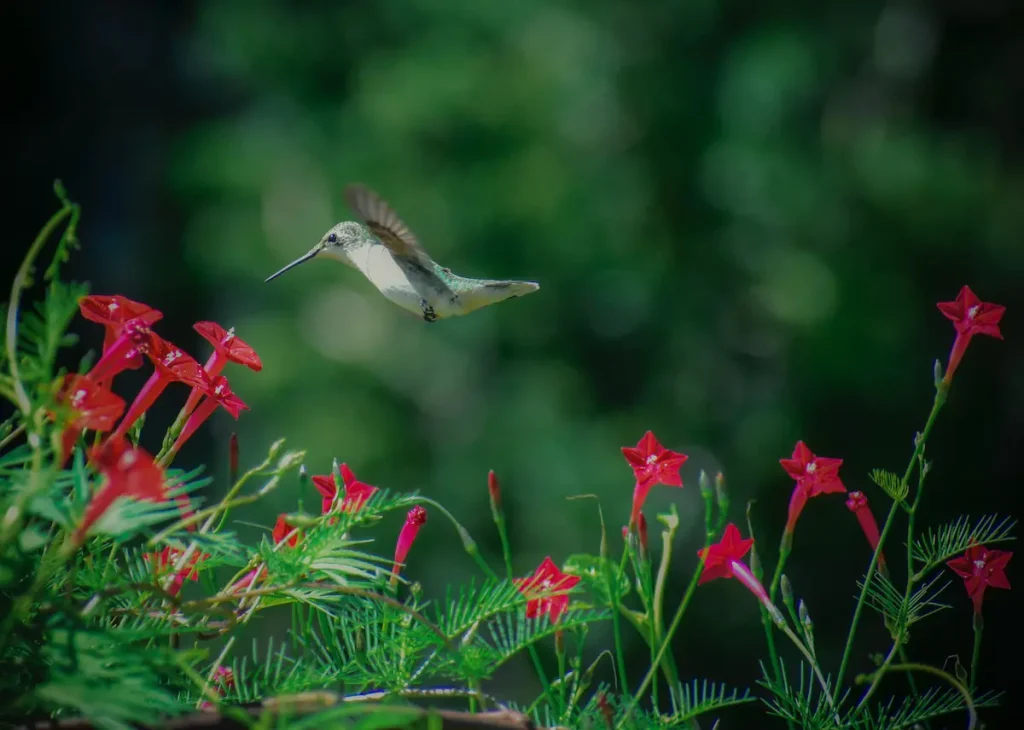
Twenty-three different kinds of hummingbirds have been identified in North America, but the rubythroated hummingbird is the only one that visits our Ottawa and Ontario regions.
Ruby-throated hummingbirds are not only beautiful but truly remarkable. Weighing less than a nickel, these tiny birds migrate north all the way from Mexico and parts of Central America to eastern North America each spring.
Hummingbird Diet
Because of their high energy level, nectar is about 90 percent of a hummingbird’s diet. They also depend on live insects, including aphids, gnats, fruit flies, mosquitoes, and small bees and spiders, which are regurgitated by the mother bird to feed her young. That’s why it’s good to welcome insects into your garden too. They help to feed the birds, especially their babies.
Gary Thomas Hall
Change Nectar in your Hummingbird Feeder
Some people put out hummingbird feeders to attract hummingbirds. If you do, it’s important to change the nectar solution regularly, especially during the hot, humid days of summer. Otherwise, the solution will spoil and could harm the small birds. Also, remember to carefully follow the directions for making nectar syrup. The usual recipe is a mixture of four parts water and one-part white sugar, boiled and then refrigerated. Don’t substitute honey, brown sugar, or sugar substitutes, as these can harm the birds. Never add red dye, which is potentially fatal.
Plants for Hummingbirds
A more natural way to attract hummingbirds, and my personal preference, is to create a garden including plants suited to them. Hummingbirds benefit from many different native and non-native plants but are especially attracted to red, tubular-shaped flowers. A few non-native plants that attract hummingbirds include canna lilies, zinnias, scarlet runner beans, and honeysuckle.
Take care, however, not to plant invasive nonnative honeysuckle species that can spread aggressively in the garden and into the natural landscape. Among the 16 honeysuckle species found in Ontario, four are considered invasive. Since their introduction in the 1800s, the bells, amur, morrow, and Tatarian honeysuckles have invaded parts of Canada.
To encourage hummingbirds to visit your garden, try growing these native plants:
Cardinal flower (Lobelia cardinalis)
The Cardinal flower is a magnet for hummingbirds. In fact, the first hummingbird to fly into my backyard garden arrived just after several cardinal plants had been planted. This showy, short-lived perennial with its bright red flowers prefers full sun. Soil can be clay, loam, organic, or sand, but whatever the soil type, it needs to be well drained and moist, especially in the spring. The plant dies back to the ground in winter and can easily be split in the fall or spring.
Spotted jewelweed (Impatiens capensis)
Hummingbirds are attracted to these tiny, orange-colored flowers, which they rely upon for nectar during their long migration flight. Jewelweed can be found growing in moist ditches and along creeks in the wild. It is a native plant appropriate for our zone. This self-seeding annual grows in sun and partial shade, preferring moist, well-drained soil.

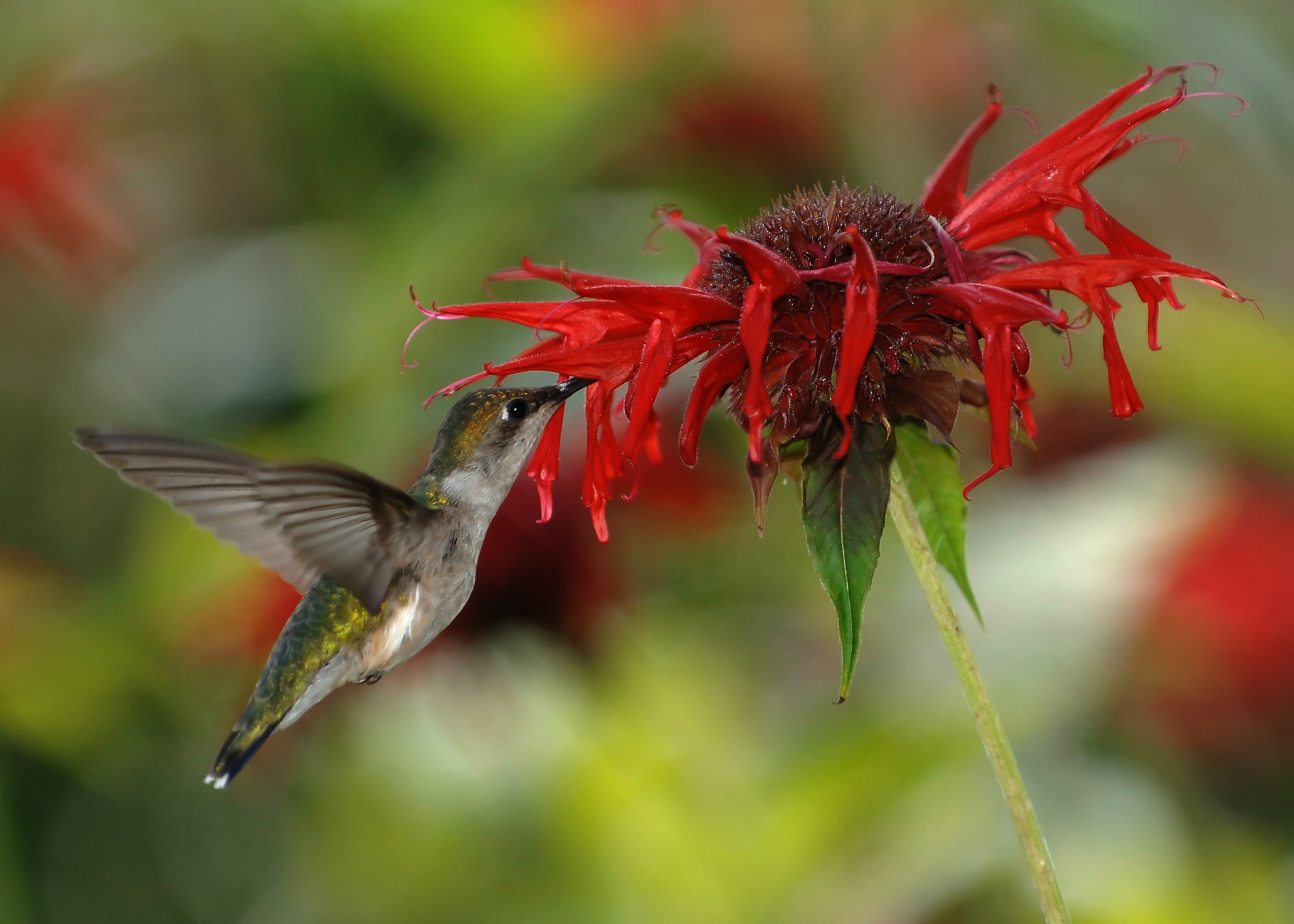
Scarlet beebalm or Oswego tea (Monarda didyma)
This summer-blooming herb has lovely red flowers that attract hummingbirds. It grows well in the sun or in partial shade. It too prefers moist, well-drained soil.
Tip: Gardening in hot weather
- Garden in the early morning,
- Start in the full sun and move to shadier areas as the day heats up.
- Use the earlier time for the heaviest tasks and move to lighter tasks as the day advances.
- Drink lots of water.
- Use a wet scarf or cloth on the neck for cooling
- If you feel overheated, are breathing heavily or feel unwell, go indoors to cool off
- Avoid working outside when the temperature (with humidex) is over 32°C.
The Sound of a Rubythroated Hummingbird
Click here to listen to the sound of the rubythroated hummingbird.
About the Author
Comments

Gardening guidance for your area—and your garden
Join our newsletter for timely gardening guidance tailored to your area. Looking for a better value? Upgrade your newsletter for personalized plant-care guidance based on the plants growing in your garden.
Leave a Reply
You must be logged in to post a comment.