Common Sneezeweed
Common Sneezeweed looks gorgeous when planted en masse and mixes wonderfully with decorative grasses or other perennial plants. It has daisy-like blooms that often attract bees and butterflies. Their blooms have characteristic wedge-shaped, brilliant yellow rays and conspicuous, dome-like, yellow centre discs. The three-lobed petals of all sneezeweeds differentiate them from Rudbeckia and other yellow coneflowers. They yield rust-colored fruits in the autumn. It’s ideal for cut flowers and butterfly gardeners.
They are widely known as ‘Sneezeweed’ because its dried leaves were once used to make snuff, which was breathed to aid with sneezing and to rid the body of bad spirits.
Quick Growing Guide
Botanical Name: Helenium autumnale
En français: Hélénie automnale
See More Plants in this Botanical Family:
Colour:
Sun / Shade:
Water: Twice weekly once established
Soil:
Height:
Pollinators:
Care:
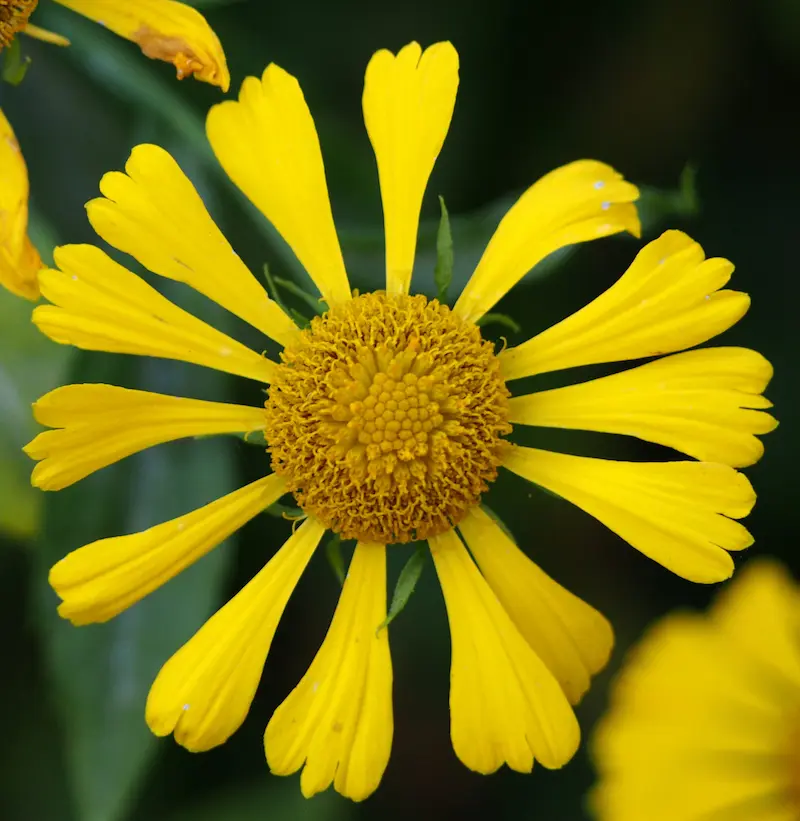
Credit: Agnieszka Kwiecien, Nova, CC BY-SA 4.0 https://creativecommons.org/licenses/by-sa/4.0, via Wikimedia Commons
Pollinators
The most common visitors to the flowers are long-tongued bees. Other visitors include sweat bees, wasps, flies, butterflies, and beetles. Most of these insects suck nectar, although some bees also collect pollen, and some beetles feed on the pollen.
Companion Plants
In addtion to decorative grasses, include common sneezeweed in your pollinator garden with great blue lobelia, verbena, wild bergamot and more.
Where to Plant
Flowers bloom from late summer through autumn (sometimes until the first frost) and can bring pleasant colour in late summer and fall when many other flowers have faded. Helenium autumnale thrives in perennial borders, grasslands and meadows, and around ponds and streams.
Pruning
Although not required, plants may be cut back in early June (at least six weeks before normal flowering) to reduce plant height and to encourage branching, thus leading to a more floriferous bloom, healthier foliage and less need for support. Deadheading will extend the flowering season. Once flowering has ceased and the plant has died back the stems should be cut down.
Toxicity
Though they are deer resistant, common sneezeweed leaves, flowers, and seeds are poisonous to humans if eaten in large quantities, causing gastric and intestinal irritation. (Maybe deer know that!)
Despite its common name, Common Sneezeweed presents no problems for most allergy sufferers. Its pollen is distributed by insects, not wind. The common name is based on the former use of its dried leaves in making snuff, inhaled to cause sneezing that would supposedly rid the body of evil spirits.
Comments
One response to “Common Sneezeweed”

Gardening guidance for your area—and your garden
Join our newsletter for timely gardening guidance tailored to your area. Looking for a better value? Upgrade your newsletter for personalized plant-care guidance based on the plants growing in your garden.
Leave a Reply
You must be logged in to post a comment.