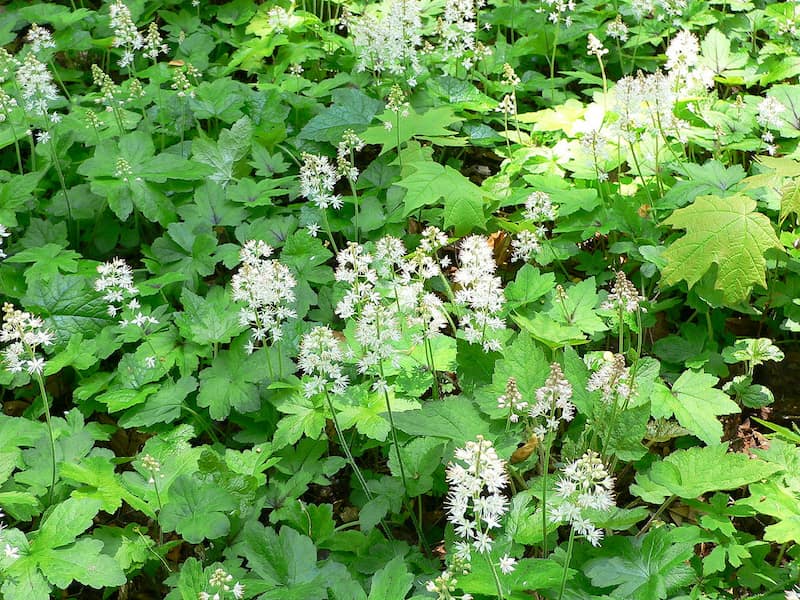
Foamflower Shows Well in Groups
Photo:
Public Domain
Foamflower can be a great addition to many gardens. It has an interesting, attractive leaf when not in flower. It also produces masses of lovely, lightly-scented white star-shaped flowers that rise above the foliage. Shell pink flower buds appear from mid-spring to mid-summer. It is most effective for visual effects when planted in groups. Green is the summer colour of its lobed leaves, which turn a stunning deep purple in the fall.
Foamflowers are a source of food for Canadian wildlife. Their seeds and leaves help birds, such as the ruffed grouse, while their flowers offer pollen and nectar to local pollinators.
Quick Growing Guide
Botanical Name: Tiarella cordifolia
Also Called: False Miterwort
En français: Tiarelle cordifoliée
Blooms:
Sun / Shade:
Water: Keep moist
Soil:
Pollinators:
In nature, find foam flower in deciduous woods and borders.
Caring for Foamflower
This plant will require occasional maintenance and upkeep, and is best cleaned up in early spring before it resumes active growth for the season. Deer don’t particularly care for this plant and will usually leave it alone in favor of tastier treats.
Comments

Gardening guidance for your area—and your garden
Join our newsletter for timely gardening guidance tailored to your area. Looking for a better value? Upgrade your newsletter for personalized plant-care guidance based on the plants growing in your garden.
Leave a Reply
You must be logged in to post a comment.