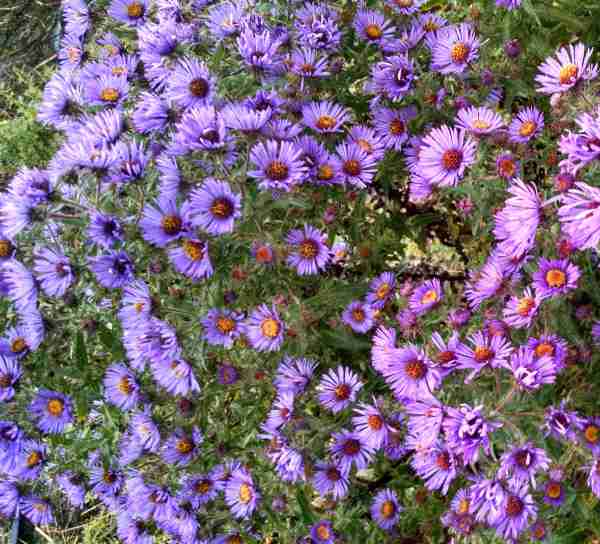
New England Aster

New England Aster

Symphyotrichum novae-angliae

Herbaceous PerennialPerennialFull SunLate Summer and Fall bloomPollinator / wildlife value

New England aster (Symphyotrichum novae-angliae) is a tall, upright-clumping herbaceous perennial native to eastern and central North America. Hardy in zones 3–8, it provides purple, pink, rose, lavender or magenta flowers from late summer into fall. Grow it in sun and evenly moist, well-drained soil.

Also known as: New England aster, Aster novae-angliae, Symphyotrichum novae-angliae, Hardy aster

Plant at a glance

Plant typeHerbaceous Perennial
LifecyclePerennial
Hardiness3–8
LightFull Sun and Part Shade
SoilMoist, Medium, Well Drained, Moderately Drained, Sandy, Loamy, and Clay
Mature height90–180 cm
Mature width45–60 cm
BloomsLate Summer, Fall, August, September, and October
Flower colourPurple, Pink, Rose, Lavender, and Magenta
Wildlife valueBees, Butterflies, Moths, Pollinators Generally, Birds, Native Bees, and Larval Host Value Is Not Established In The Supplied Sources
WaterArray
Care levelArray

What this plant is like

New England aster is an upright, clumping perennial that typically reaches 90–180 cm in height and 45–60 cm in width. Its densely grouped flowers bring late-season colour in shades ranging from purple and pink to rose, lavender and magenta. The species grows in full sun or part shade, although full sun is preferred where possible. It is suited to moist, medium-moisture conditions and well-drained to moderately drained soils. New England aster is a moderate-care plant: it benefits from consistent moisture, good airflow and occasional division. Without early-season cutback, stems may become tall or floppy.

Garden and landscape value

New England aster extends garden colour from late summer into fall, often blooming from August through October and continuing until frost. Its native range includes southeastern Canada and much of eastern and central North America. Use it in pollinator gardens, native plant gardens, meadow or prairie plantings, rain gardens, naturalized areas and other designs needing strong autumn colour. It is especially useful where a late-season pollinator resource is desired, provided the planting site does not become dry.

Where it grows best

Plant New England aster in full sun where possible; part shade is also tolerated. Provide rich, moist but well-drained soil. Sandy, loamy and clay textures are documented, but the root zone should not remain waterlogged. Keep soil evenly moist, watering when the top few centimetres begin to dry, particularly during extended dry periods. The plant is not drought tolerant. In early summer, cut stems back by roughly half to encourage bushier, shorter growth. After flowering and once foliage dies back, cut stems to ground level. Divide clumps every few years in early spring or fall to maintain vigour and help reduce powdery mildew risk. Good airflow is important, especially in warm, humid conditions.

Ecological and wildlife value

Flowers appear from late summer into fall in purple, pink, rose, lavender or magenta shades. New England aster is widely documented as a late-season nectar source for bees, butterflies, moths and other pollinators. Birds may also use the plant, including its seed. The supplied sources do not establish a specific larval host role, so its clearest wildlife value is as a nectar plant and seed source.

Regional guidance

New England aster is native to southeastern Canada, with the supplied range extending from Manitoba east to Quebec and the Maritimes. Its hardiness range is listed as zones 3–8, making it suitable for a broad area of Canadian gardens within that range. It is well matched to native plantings, moist open sites, rain gardens and late-season displays. Frost sensitivity is noted, and bloom continues into fall until frost.

Everyday care

  • Keep soil evenly moist but not waterlogged. Water when the top few centimetres of soil begin to dry, especially during extended dry periods, and ensure good drainage around the root zone.
  • In early summer, cut stems back by roughly half their height to promote bushier, shorter growth. After flowering and once foliage dies back, cut stems to ground level and apply a layer of mulch once the soil is frozen.
  • seed
  • division
  • softwood or stem cuttings

Before you plant

  • poor drought tolerance
  • susceptible to powdery mildew in warm humid conditions
  • can become floppy/tall without pinching or cutting back
  • may require good airflow

Where it grows naturally

  • eastern and central North America
  • southeastern Canada
  • from Manitoba to Quebec and the Maritimes
  • south to the eastern and central United States

Personalize for your garden

Your garden conditions

Tell us a little about your garden to see how this plant fits your zone, light and growing conditions. No account is required.

These garden conditions stay in this browser for Gardening Calendar. Sign in to keep your garden information with your account.

How this plant fits your garden

  • August is included in this profile’s recorded flowering months. Actual timing can vary with local conditions.

Related Gardening Calendar articles

Sources used for this profile

Plant Definition last reviewed: August 7, 2026.