Nannyberry

Nannyberry

Viburnum lentago

ShrubDeciduousFull SunMay bloomPollinator / wildlife value

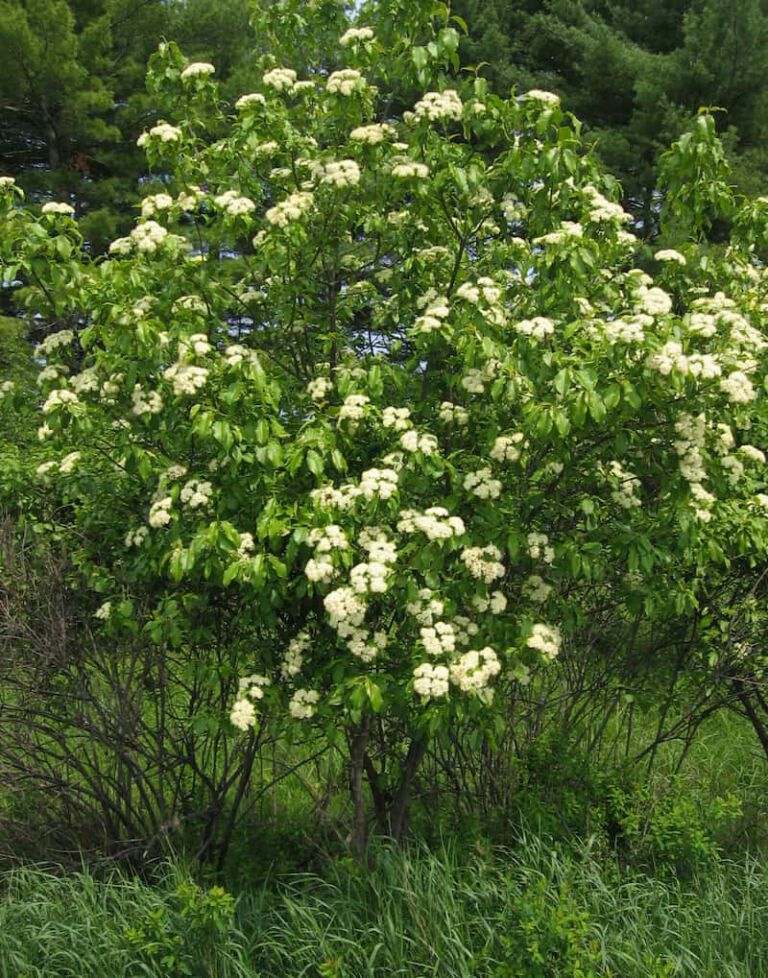
Nannyberry is a hardy native shrub for Canadian wildlife gardens, hedgerows and naturalized plantings. It produces white flowers in May, edible ripe fruit for people, and useful cover and food for wildlife. Its large mature form suits spacious sites, but avoid locations exposed to road salt or deicing spray.

Plant at a glance

Plant typeShrub
LifecycleDeciduous
Hardiness2–7
LightFull Sun and Partial Sun
SoilMoist, Average, Moderately Drained, Well Drained, Loam, Clay, Rich Moist Soils, and Average Garden Soil
Mature height600–900 cm
Mature width300–500 cm
BloomsMay
Flower colourWhite
Wildlife valueFood For Birds, Food For Mammals, and Cover For Wildlife
WaterMedium

What this plant is like

Viburnum lentago is a deciduous, upright, multi-stemmed shrub that can sucker and develop into a broad screening plant. It is a low-maintenance choice for gardeners who want a native shrub with a substantial presence rather than a compact container plant.

Where it grows best

Plant it in full sun or partial sun with moist to average, moderately drained or well-drained soil. It tolerates loam, clay, rich moist soil and average garden soil, with a soil pH from 5 to 7.5. It suits much of eastern and central Canada and is rated hardy from Canadian Zone 2 through Zone 7.

Garden and wildlife value

Nannyberry works well in wildlife gardens, naturalized plantings, hedgerows, windbreaks and screening. Its May flowers support pollinators, while the fruit feeds birds and mammals and the shrub provides wildlife cover. Ripe fruit is edible for humans, making it suitable for edible landscaping.

Everyday care

Water regularly during the first year after planting. Once established, water only during extended drought, because this shrub has limited drought tolerance. Its low maintenance needs make it useful where a large native planting can be allowed to develop with minimal routine attention.

What to do through the season

In spring, check that new plantings receive regular water as they establish. During summer drought, provide water when dry conditions are prolonged. Monitor shaded foliage during the growing season, especially where air movement and light are limited.

Problems and symptoms

Powdery mildew may affect foliage when the shrub receives too much shade. Road salt and deicing salts are another important risk, particularly beside treated roads, driveways and walkways. Wildlife browsing is generally expected to cause low damage.

Possible concern: Powdery mildewWhat to watch for: White, powdery growth on leaves, commonly associated with shaded sites.

Check first

  • Inspect leaves for white, powdery growth, especially in shaded areas.

What to do

  • Site or maintain the shrub in full sun to partial sun with adequate air circulation.
  • Improve light and air circulation where practical by selective pruning or relocation of surrounding vegetation; avoid routine overhead wetting.

When to get help

Escalate if symptoms spread rapidly, cause substantial premature defoliation, or recur despite improved light and air circulation.

Possible concern: Leaf spotWhat to watch for: Angular to irregular reddish, brown, or grayish dry spots that may enlarge or merge.

Check first

  • Inspect leaves for angular or irregular dry, sunken spots.

What to do

  • Space plants appropriately and avoid overhead irrigation where practical.
  • Remove and dispose of heavily affected fallen leaves; improve air movement and reduce leaf wetness.

When to get help

Escalate if spotting is extensive, causes significant defoliation, or affects new growth across multiple seasons.

Possible concern: Viburnum crown borerWhat to watch for: Gnarled or scarred stems near the soil line followed by localized stem dieback.

Check first

  • Inspect lower stems near the soil line for wounds, gnarled or scarred bark, and dieback.

What to do

  • Avoid unnecessary wounds at stem bases and maintain plant vigor with appropriate siting and watering.
  • Prune out and dispose of clearly dead or structurally compromised stems where feasible; avoid creating unnecessary wounds and monitor the stem bases.

When to get help

Promptly consult a provincial extension or plant-diagnostic service if progressive stem dieback, girdling, or whole-plant decline is observed.

Corrective and preventive care

Choose a site with adequate sun and avoid high-salt locations before planting. If foliage shows mildew symptoms, review whether the shrub is receiving too much shade. During extended drought, water established plants; do not rely on this shrub to tolerate prolonged dryness without help.

Before you plant

Allow room for a large shrub and possible suckering; it is not suited to small spaces or containers. Confirm that the site is not exposed to heavy deicing salt. Ripe fruit is edible for people, but the plant is mildly toxic to pets, so plan accordingly.

Seasonal actions

  • Canada: Across Canada, use local soil conditions and plant dormancy to time work. Favor early spring before leaf-out in colder areas; use fall planting or late-fall seed sowing only while soil remains workable and winter conditions allow establishment.
TransplantingMove established plants while limiting root disturbance and transplant shock.

Timing: Early spring before leaf-out; alternatively, fall during dormancy while soil remains workable.

When to act

  • The plant is dormant or has not yet leafed out.
  • The new planting site is ready before digging.
  • The root ball can be kept intact and protected from drying.

How: Prepare the new site first, retain as much intact root system and soil as practical, replant at the former depth, and protect the root zone from drying during establishment.

Caution: Direct nannyberry-specific transplant research is limited. Do not transplant during frozen soil, active heat or drought stress, or when the root ball is dry.

Regional note: In colder Canadian areas, favor early spring before leaf-out. In milder areas, dormant-season fall transplanting may also be practical where soil remains workable and winter moisture is reliable.

Pruning and cutting backRemove damaged or crossing growth and maintain a manageable structure without unnecessarily reducing flowering or fruiting.

Timing: Dead or damaged wood: during dormancy when it is easy to identify. Shape or size correction: soon after flowering, before next season's flower buds develop.

When to act

  • Dead, broken, diseased-looking, or crossing branches are visible.
  • The shrub has finished flowering and selective size correction is needed.
  • The canopy is becoming structurally crowded rather than merely large.

How: Remove dead, damaged, or crossing branches with clean cuts. For size or shape, make selective cuts soon after flowering; retain healthy framework and avoid indiscriminate shortening.

Caution: Heavy pruning can remove flower and fruit-bearing wood. Avoid routine shearing and do not remove large amounts of live growth without a clear structural or safety reason.

PropagationProduce new nannyberry plants from seed or cuttings.

Timing: Seed: after fruit ripens or in late fall. Softwood cuttings: early summer. Dormant cuttings: during dormancy.

When to act

  • Fruit has turned dark blue-black and is fully ripe.
  • New shoots are still flexible and current-season growth is available for softwood cuttings.
  • The shrub is dormant and healthy stems are available for dormant cuttings.

How: For seed, collect fully ripe dark fruit, clean the seed, and use either late-fall outdoor sowing or a documented moist, cool stratification protocol. Softwood cuttings may be taken in early summer under high humidity; dormant cuttings are also reported as a method, but results may….

Caution: Seed dormancy is complex and germination may require extended treatment; the precise treatment reported by different sources is not consistent enough to present as a single universal protocol. Cutting success….

Regional note: Outdoor late-fall seed sowing can use natural winter conditions in suitable Canadian locations; protected propagation allows controlled stratification but requires longer planning. No province-specific success differences were directly supported.

Garden and landscape value

  • extreme cold hardiness to USDA Zone 2
  • provides food and cover for wildlife
  • edible fruit for humans
  • tolerant of a variety of soils
  • wildlife garden
  • naturalized plantings
  • hedgerow and windbreaks
  • edible landscape

Where it grows naturally

  • eastern Canada
  • central Canada
  • northeastern United States
  • midwestern United States

Personalize for your garden

Your garden conditions

Tell us a little about your garden to see how this plant fits your zone, light and growing conditions. No account is required.

These garden conditions stay in this browser for Gardening Calendar. Sign in to keep your garden information with your account.

How this plant fits your garden

Enter your conditions above to see matches, cautions, and seasonal guidance.

References

Plant Definition last reviewed: October 9, 2026.