Ligularia (Leopard plant)
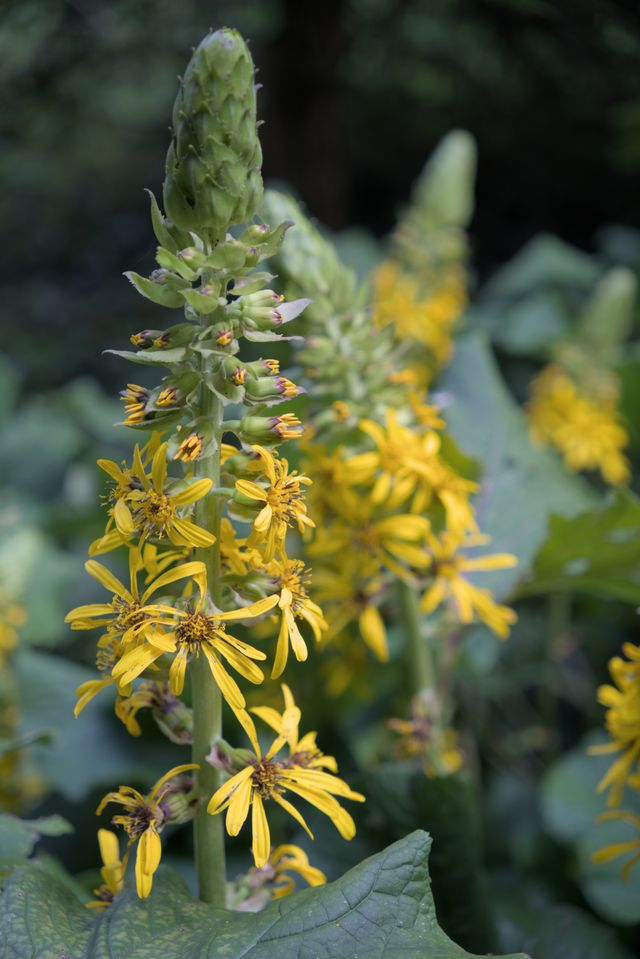
Ligularia (Leopard plant)

Ligularia spp.

Herbaceous PerennialPerennialPart SunLate Summer and Early Autumn bloomPollinator / wildlife value

Ligularia, or leopard plant, is an upright, clump-forming perennial valued for bold architectural leaves and tall yellow to golden-yellow flower spikes. It grows best in cool, moist shade, where soil remains consistently moist but well drained. Protect it from hot afternoon sun, summer drying and waterlogged conditions.

Also known as: ligularia, leopard plant, ligularia (leopard plant)

Plant at a glance

Plant typeHerbaceous Perennial
LifecyclePerennial
Hardiness4–8
LightPart Sun
SoilMoist, Wet, Not Waterlogged, and Well Drained But Moisture Retentive
Mature height120 cm
BloomsLate Summer and Early Autumn
Flower colourYellow and Golden Yellow
Wildlife valueBees, Butterflies, and Hummingbirds

What this plant is like

Ligularia spp. is a herbaceous perennial that forms an upright clump of large leaves, followed by tall flower spikes. Depending on the species or cultivar, flowers appear from late summer into early autumn in yellow or golden-yellow shades. Plants die back in autumn and can reach about 120 cm in height; a reliable mature width is not established in the approved information. Leopard plant suits ornamental shade gardens, moist woodland settings and waterside plantings. It is hardy in Canadian conditions corresponding to zones 4 through 8, provided its moisture and shade requirements are met.

Garden and landscape value

Grow Ligularia for its bold foliage, architectural leaves and strong presence in cool, moist shade. Its upright clumping habit adds structure to shaded planting areas, while late-season yellow or golden-yellow flower spikes provide colour from late summer into early autumn. It is particularly useful where soil stays reliably moist, including moist woodland or waterside settings. Its main limitations are equally important: it requires consistent moisture, may wilt or scorch in excessive sun and is less suited to hot summers.

Where it grows best

Plant Ligularia in partial to full shade. In cooler climates, morning sun may be suitable, but avoid hot afternoon sun. Use moist, well-drained, moisture-retentive soil and do not allow the root zone to dry out. At the same time, avoid waterlogged or poorly drained conditions. Water new plants once or twice weekly, and water established clumps deeply as needed, especially during summer dry spells. Potted plants have a moderate to high risk of drying quickly and must not be allowed to dry out. Deadhead spent flower spikes, then cut back foliage after dieback or in…

Ecological and wildlife value

Ligularia generally flowers in late summer and early autumn, producing yellow to golden-yellow flowers on tall spikes. Exact timing and flower shade can vary among species and cultivars, so these should be treated as general rather than universal characteristics for the genus. The approved source information does not establish a specific pollinator value for Ligularia beyond the presence of showy flowers.

Ligularia has clear ornamental landscape value in cool, moist shade and waterside settings, but the reviewed sources do not establish stronger ecological or wildlife-service claims.

  • Ornamental Siting Value: Useful as a bold ornamental perennial for moist shade, woodland edges, and waterside plantings.
  • Ecological Service Evidence Limit: Ecological value is documented mainly as ornamental structure and seasonal display; pollinator or specialist wildlife value is not established in the reviewed sources.

Regional guidance

No supported province-specific differences in bloom timing, propagation or pruning were identified. Across Canada, the best-supported approach is to provide cool, moist, shaded conditions consistent with the base profile. In cold climates, apply winter mulch over the crowns and remove it gradually in spring. During summer, maintain reliable moisture and protect plants from hot afternoon sun to help reduce wilting and leaf scorch.

Everyday care

MulchProtect crowns in cold Canadian conditions and help conserve soil moisture.

Timing: Before winter; remove gradually in spring.

When to act

  • Cold-climate overwintering protection is needed.
  • Crown protection is desired in winter.

How: Place winter mulch over the crown in late fall and remove it gradually in spring.

Caution: Apply mulch over the crown lightly enough to avoid trapping excessive moisture against the plant.

Regional note: Directly supported only in cold-climate general guidance; no province-specific variation was established.

WateringReduce heat and moisture stress during summer and dry spells.

Timing: During active growth, especially in summer and when rainfall is insufficient.

When to act

  • Soil begins to dry.
  • Plants show heat or drought stress.
  • Summer dry spell occurs.
  • Plant is newly planted or in a container.

How: Water deeply enough to maintain even soil moisture, especially for new plantings and during dry periods.

Caution: Avoid allowing the root zone to dry out, but do not keep soil waterlogged.

Regional note: No supported province-specific watering difference was found; the main determinant is site moisture loss and local summer conditions.

Seasonal actions

  • Canada: Across Canada, prioritize moisture management through summer, deadhead faded spikes after flowering, cut back dead foliage after dieback or before spring emergence, and mulch crowns for winter protection where cold exposure is a concern.
DeadheadingTidy plants and prevent unnecessary seed set after bloom.

Timing: After flowering, when spikes have faded.

When to act

  • Spent flower spikes are visible.
  • Bloom has finished.

How: Cut off faded flower spikes once flowers finish.

Caution: Remove only spent flower spikes; do not hard-prune live foliage during active heat or drought stress.

Regional note: No province-specific difference was directly supported in the reviewed sources; timing is tied to local flowering rather than region.

Pruning and cutting backRemove dead foliage after seasonal dieback and before new growth resumes.

Timing: Late winter to early spring, or after autumn dieback.

When to act

  • Foliage has died back in autumn.
  • New growth is beginning to emerge.

How: Cut back dead foliage at ground level after dieback or before new shoots emerge.

Caution: Treat this as cleanup of dead top growth, not structural pruning.

Regional note: No province-specific difference was directly supported in the reviewed sources; cleanup timing follows local dieback and spring emergence.

Problems and symptoms

Observed issues most directly supported by the sources are sun/heat wilt, leaf scorch, and moisture-stress decline; the evidence does not support a diagnosis beyond those observations.

Corrective and preventive care

Preventive and corrective care centers on shade, consistent moisture, drainage that avoids saturation, and winter crown protection in cold Canadian conditions.

  • Increase Shade Protection: Place plants in partial to full shade; in cooler areas, morning sun is acceptable, but hot afternoon sun should be avoided.
  • Maintain Even Moisture: Water deeply and consistently so soil stays moist but not waterlogged.
  • Prevent Waterlogging: Improve drainage if soil stays saturated, because waterlogged conditions are not suitable.

Before you plant

  • wilts or scorches in too much sun
  • requires consistent moisture
  • less suited to hot summers

Propagation

Propagate primarily by dividing established clumps. Replant divisions promptly and keep them evenly moist after division.

  • Best timing: Best treated as division of established clumps during a cool period; the source set does not support a more exact public timing window.
  • Decision cue: clump is established
  • Decision cue: plant is overcrowded
  • Decision cue: need to increase stock
  • division: when dividing established clumps, ideally during a cool period. Lift and split established clumps; keep roots moist.
  • Caution: Division is the only directly supported propagation method in the captured authoritative sources.
  • Caution: Do not present seed propagation as supported for the public answer without a direct source.
  • Caution: Timing beyond general division guidance was not consistently specified in the captured sources.
  • Known limitation: The captured sources do not give enough detail to confidently specify seed, cuttings, or tissue-culture methods for a public how-to.

Personalize for your garden

Your garden conditions

Tell us a little about your garden to see how this plant fits your zone, light and growing conditions. No account is required.

These garden conditions stay in this browser for Gardening Calendar. Sign in to keep your garden information with your account.

How this plant fits your garden

  • No supported province-specific overlay found.

References

Plant Definition last reviewed: September 9, 2026.