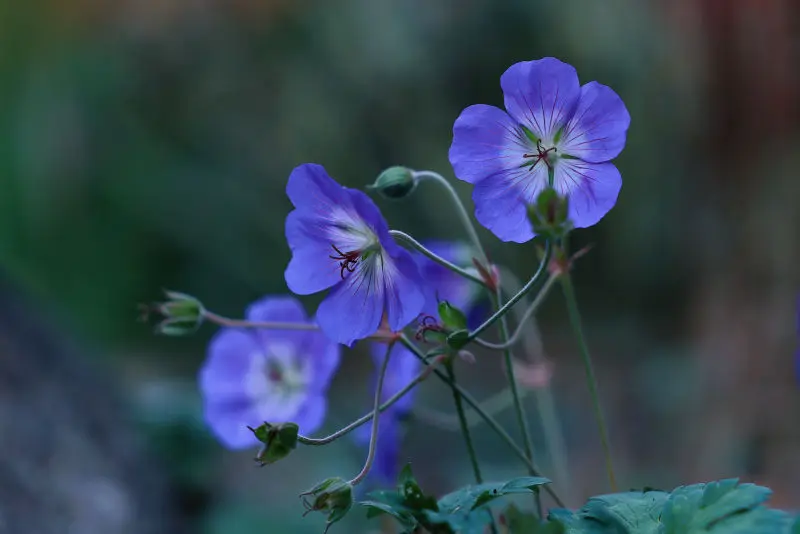
Hardy Geranium Rozanne
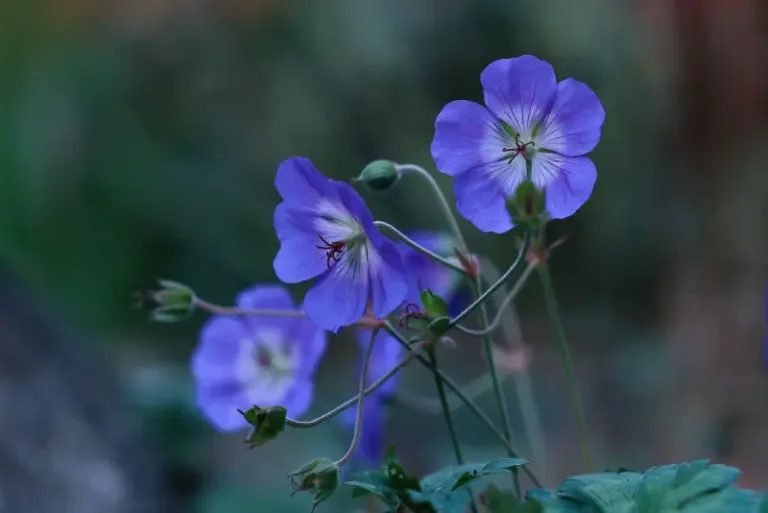
Hardy Geranium Rozanne

Geranium 'Gerwat'

Herbaceous PerennialPerennialFull SunJune and July bloom

Hardy Geranium Rozanne is a vigorous, spreading clump-forming perennial with violet-blue flowers and white centres. It suits borders, ground-cover planting and containers, offering a long flowering display from June into October where soil stays moist but drains freely.

User photos from their gardens

Hardy Geranium Rozanne
Oct 27, 2026Delicate purple geranium blossoms bring vibrant color to the garden. Their fine, dark veins create an intricate natural pattern.Photo: Jean Carr

Plant at a glance

Plant typeHerbaceous Perennial
LifecyclePerennial
Hardiness5–8
LightFull Sun and Partial Shade
SoilMoist, Well Drained, Chalk, Clay, Loam, and Sand
Mature height30–60 cm
BloomsJune, July, August, September, and October
Flower colourViolet Blue, Purple, and White

What this plant is like

Sold as Hardy Geranium Rozanne, this cultivar is Geranium ‘Gerwat’. Its spreading habit can soften a border edge or cover ground, while its long flowering season keeps it useful well beyond early summer. The open flowers may provide accessible nectar and pollen for bees and other pollinating insects.

Where it grows best

Choose full sun or partial shade and soil that remains adequately moist without becoming waterlogged. It can grow in chalk, clay, loam or sand if drainage is suitable. Use it along border edges, as ground cover, or as a specimen in a container with free drainage.

Garden and wildlife value

The violet-blue flowers, white centres and extended flowering period make Rozanne a strong ornamental choice. Its open flowers can supplement forage for bees and other pollinating insects. This evidence does not establish it as a native plant or a replacement for regionally native habitat plants.

Before you plant

Confirm that the site is workable and not saturated, and that water will drain away from the crown. Allow room for a vigorous spreading habit, or choose a container with adequate drainage. In Canada, use local thaw and drainage conditions—not a fixed date—to decide when to plant. There is no approved province-specific hardiness guidance for this cultivar.

The main supported limitations are conflicting hardiness information and risk from winter wetness.

  • Hardiness Uncertainty: Available sources disagree on hardiness ratings; winter performance should not be predicted from a single zone claim or generalized across Canadian provinces.
  • Winter Wetness Caution: Poor winter drainage and crown wetness may be more consequential than cold alone; prevent pooling and avoid disturbing saturated or frozen soil.
  • Canada: Do not assign province or zone rules from the available evidence alone. Winter success depends on drainage, exposure, snow cover, and local conditions; avoid relying on an unverified hardiness rating.

Ecological and wildlife value

Useful as a supplementary pollinator plant; evidence does not establish native status or broader habitat value.

Everyday care

  • Canada: In Canada, check the root ball during establishment rather than following a fixed watering calendar; after establishment, water during prolonged dry periods and prevent winter pooling.
WateringEstablish roots and support growth during dry weather.

Timing: Planting season and the first growing season; thereafter during prolonged dry periods.

When to act

  • The root ball or surrounding soil is drying.
  • Hot, windy, or unusually dry weather persists.
  • Leaves wilt despite otherwise suitable conditions.

How: During establishment, check moisture at the original root ball and surrounding soil; water slowly and deeply when the root zone begins to dry. After establishment, adjust to rainfall, soil, and weather rather than a fixed schedule.

Caution: Avoid saturated soil and water collecting around the crown, especially over winter.

FeedingSupport steady growth without excessive leafy growth.

Timing: Spring, when new growth begins.

When to act

  • Growth is weak despite suitable moisture and drainage.
  • The planting has not received organic matter or fertilizer and soil fertility is poor.

How: Use a light spring top-dressing of compost or a balanced slow-release fertilizer according to the product label.

Caution: Avoid heavy feeding, which can promote foliage at the expense of flowers.

PlantingEstablish the cultivar with minimal transplant stress.

Timing: Spring after thaw and drainage, or early autumn while roots can establish before freezing.

When to act

  • The soil is workable and not saturated.
  • The plant is available as a container-grown specimen.

How: Moisten the root ball, set the plant at its original soil level, backfill with suitable soil, and water to settle it.

Caution: Do not work saturated or frozen soil; select a site that drains freely.

Seasonal actions

  • Canada: In Canada, plant after local thaw when soil drains, or in early autumn; cut back only after visible sprawling or decline rather than on a province-wide calendar.
DeadheadingTidy spent flowers and potentially prolong the display.

Timing: Throughout flowering when faded blooms are noticeable.

When to act

  • Spent flowers detract from appearance.
  • Flowering slows while weather remains suitable.

How: Remove faded flower stems and nearby spent blooms with clean scissors or fingers.

Caution: Deadheading is optional; do not remove healthy foliage unnecessarily.

Pruning and cutting backRenew compact foliage and may encourage another flush of growth and flowers.

Timing: After flowering or midsummer when the plant becomes straggly.

When to act

  • Foliage flops or opens in the centre.
  • The plant looks tired after its first flowering flush.

How: Shear back the outer growth after flowering or when midsummer foliage becomes open and untidy, leaving the crown intact.

Caution: Cut only when the plant is sprawling or tired; avoid cutting into the crown.

OverwinteringReduce winter crown and root damage.

Timing: Late autumn through winter, after growth naturally declines.

When to act

  • The ground is approaching freeze-up.
  • Winter conditions are wet or exposed.
  • Water is pooling near the crown.

How: Leave the crown in well-drained soil, keep winter mulch off the crown, and avoid work when soil is frozen or saturated.

Caution: Do not keep the crown wet or disturb frozen or saturated ground.

Regional note: Canadian winter outcomes vary by local exposure, drainage, snow cover, and cultivar stock; the reviewed sources do not establish province-specific protection rules.

Problems and symptoms

Possible concern: leaf spot or rustWhat to watch for: Leaves develop expanding spots, dark rings, or rust-like discoloration.

Check first

  • Inspect leaves for expanding spots, concentric rings, or rust-like pustules.

What to do

  • Water at the soil surface and remove plant debris; maintain good air circulation.
  • Remove and discard badly affected leaves and fallen debris; avoid spreading contaminated material during propagation.

When to get help

Escalate for diagnosis if spotting spreads rapidly, affects much of the plant, or stems develop rot or collapse.

Possible concern: basal stem or root rotWhat to watch for: The stem base becomes brown, water-soaked or black and may progress upward.

Check first

  • Inspect the base of stems and cuttings for brown, water-soaked or blackened tissue.

What to do

  • Use clean tools and sterile, well-drained propagation media; keep hose ends off the ground.
  • Remove and discard affected cuttings or plant parts; do not reuse contaminated media.

When to get help

Escalate for diagnosis if rot progresses up stems, rooted plants wilt or collapse, or multiple cuttings are affected.

Possible concern: insect feeding, including sawflies or capsid bugsWhat to watch for: Visible insects or irregular chewing and distortion appear on leaves or shoots.

Check first

  • Inspect stems, leaves and growing points for insects or feeding damage.

What to do

  • Inspect foliage and the crown regularly, especially during active growth.
  • Hand-remove visible insects or damaged material and monitor the plant closely before considering any further action.

When to get help

Escalate for identification if insects are numerous, new growth is distorted, or plant vigour declines.

Corrective and preventive care

The supported first response is to distinguish drought from excess wetness by checking the root zone and drainage.

  • Canada: If growth wilts or declines, first check root-zone moisture and drainage; correct watering and pooling before considering other causes.
WateringRespond to wilting or drought stress while preventing waterlogging.

Timing: When wilting or dry soil is observed.

When to act

  • Leaves wilt during dry weather.
  • The root ball is dry while nearby soil appears moist.
  • Water remains around the crown after irrigation.

How: Check moisture at the root ball and surrounding soil; water thoroughly only if the root zone is dry, then allow excess water to drain.

Caution: If soil remains wet, reduce irrigation and improve drainage rather than watering more often.

Garden and landscape value

  • long flowering season
  • violet-blue flowers with white centres
  • suitable for containers
  • border edge
  • ground cover
  • specimen container planting

Propagation

For a small number of true-to-type plants, divide an established clump in spring and replant the sections. For larger numbers, take basal softwood cuttings in early to mid spring and root them with bottom heat. Do not rely on seed to reproduce the cultivar accurately.

  • Best timing: Spring division; early to mid spring basal softwood cuttings.
  • Decision cue: Divide an established clump when more plants are wanted or the clump can be lifted without undue root damage.
  • division: Spring.. Lift and separate an established clump into smaller sections, then replant.
  • basal softwood cuttings: Early to mid spring.. Root with bottom heat using clean material and well-drained propagation medium.
  • Caution: Seed from cultivars will not reliably come true to type; use vegetative propagation to preserve 'Gerwat'.
  • Caution: Use clean propagation material and a well-drained, sanitary medium; discard cuttings showing basal rot.
  • Known limitation: The sources do not provide Canadian regional timing adjustments or detailed cultivar-specific division measurements.

Personalize for your garden

Your garden conditions

Tell us a little about your garden to see how this plant fits your zone, light and growing conditions. No account is required.

These garden conditions stay in this browser for Gardening Calendar. Sign in to keep your garden information with your account.

How this plant fits your garden

Enter your conditions above to see matches, cautions, and seasonal guidance.

References

Plant Definition last reviewed: October 27, 2026.