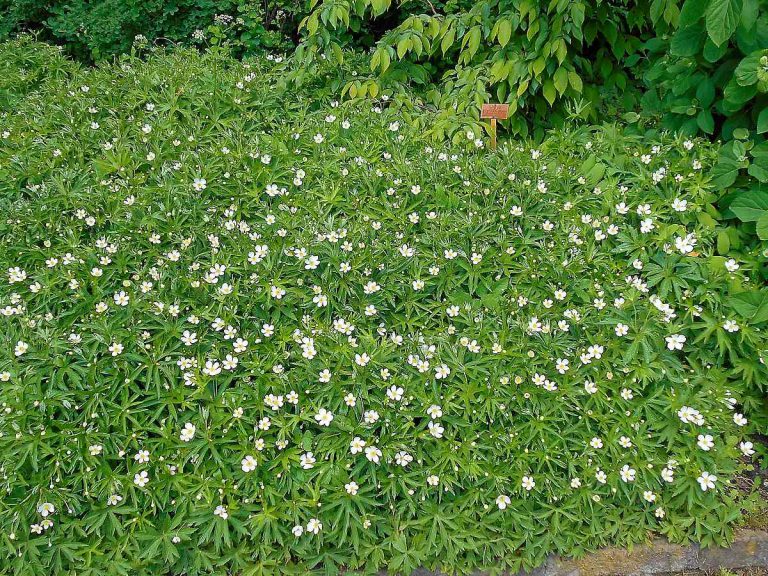
Canada anemone

Canada anemone

Anemonastrum canadense

GroundcoverPerennialFull Sun To Part SunSummer bloom

Canada anemone is a native perennial groundcover for moist to wet sites from full sun to part sun. It produces white summer flowers and can form a broad planting, making it useful for naturalized areas, pollinator-focused gardens and colour near water or other consistently damp ground.

Also known as: Anemonastrum canadensis, Meadow anemone or roundleaf anemone

Plant at a glance

Plant typeGroundcover
LifecyclePerennial
Hardiness1b–7b
LightFull Sun To Part Sun
SoilMoist, Wet, and Unknown
Mature height30–30 cm
Mature width91–91 cm
BloomsSummer
Flower colourWhite
WaterModerate

What this plant is like

Canada anemone (Anemonastrum canadense), also called meadow anemone or roundleaf anemone, is a spreading perennial groundcover. Its mature height is about 30 cm, while its spread can reach about 91 cm. White flowers appear in summer. It is native across all Canadian provinces and territories listed in the approved range.

Where it grows best

Choose a site with full sun to part sun and moist to wet soil. Moderate water availability suits it best. Its broad spread makes it a better fit for naturalized beds, damp garden areas and larger groupings than for small spaces where a spreading perennial would be difficult to accommodate.

Garden and wildlife value

Canada anemone supports native-plant and colour-focused garden goals, and its pollinator value is considered probable. It can be combined in mixed perennial displays with obedient plant, prairie sundrops, bee balm, goldenrods or asters. These pairings are most suitable where a spreading perennial composition is acceptable.

Everyday care

The approved information does not provide specific maintenance instructions. Plan around the plant’s moderate water requirement and keep its site within the preferred moist-to-wet range. No approved information confirms container suitability, edible parts, pet safety or wildlife resistance, so do not assume this plant is suitable for containers, pets or consumption.

Before you plant

Allow room for a mature spread of about 91 cm and avoid placing it where a broad groundcover could crowd nearby plants. Confirm that the planting area stays moist or wet rather than relying on a dry-site plan. Canada anemone is not listed in the checked federal or Ontario statutory invasive-plant lists, and no regulated status was found; this does not replace local planting guidance.…

Where it grows naturally

  • Ontario Native
  • Prince Edward Island Native
  • Manitoba Native
  • Northwest Territories Native
  • Nova Scotia Native
  • Nunavut Native
  • Alberta Native
  • New Brunswick Native

Plants that grow well with this one

  • Obedient plant (Visual or design companion): Reported as a compatible, similarly vigorous mass-planting associate; match it with Canada anemone where a spreading perennial composition is acceptable.
  • Prairie sundrops (Visual or design companion): Reported as a compatible companion for mass plantings and mixed perennial displays.
  • Bee balm (Visual or design companion): Reported as a compatible associate in mixed plantings with Canada anemone.
  • Goldenrods (Visual or design companion): Reported as compatible companions; useful for combining Canada anemone with other vigorous perennial forms.
  • Asters (Visual or design companion): Reported as compatible companions for mixed perennial plantings around shrubs or tall perennials.

Propagation

Preferred method: divide established rhizomes in early spring or fall. Replant viable divisions promptly and keep them moist. Seed may be surface-sown or only lightly covered; keep the medium moist. For seed production, maintain more than one genetic clone.

  • Best timing: Divide in early spring or fall; sow stored seed in late winter or early spring.
  • Decision cue: Use division when an established clump or rhizome is available and a reliable increase is wanted.
  • Decision cue: Use seed when genetic diversity or seed-grown plants are desired and cold-moist stratification can be provided.
  • seed: Stored seed: late winter or early spring; alternatively collect and sow when ripe if a suitable stratification regime is available. Surface sow or only just cover; keep moist. More than one genetic clone is needed for seed production.
  • spring cuttings: Spring. The Alberta guide reports spring cuttings as a vegetative option, but provides limited procedural detail.
  • Caution: Keep newly divided or planted material consistently moist while it establishes.
  • Caution: Seed production may require more than one genetic clone; division is the more dependable practical method.
  • Known limitation: The reviewed sources do not establish a single universally optimal division size, depth, or germination protocol for all Canadian conditions. The botanical name in the sources is commonly given as Anemone canadensis, while the approved record uses Anemonastrum canadense.

Read more on GardeningCalendar

Personalize for your garden

Your garden conditions

Tell us a little about your garden to see how this plant fits your zone, light and growing conditions. No account is required.

These garden conditions stay in this browser for Gardening Calendar. Sign in to keep your garden information with your account.

How this plant fits your garden

Enter your conditions above to see matches, cautions, and seasonal guidance.

References

Plant Definition last reviewed: September 29, 2026.