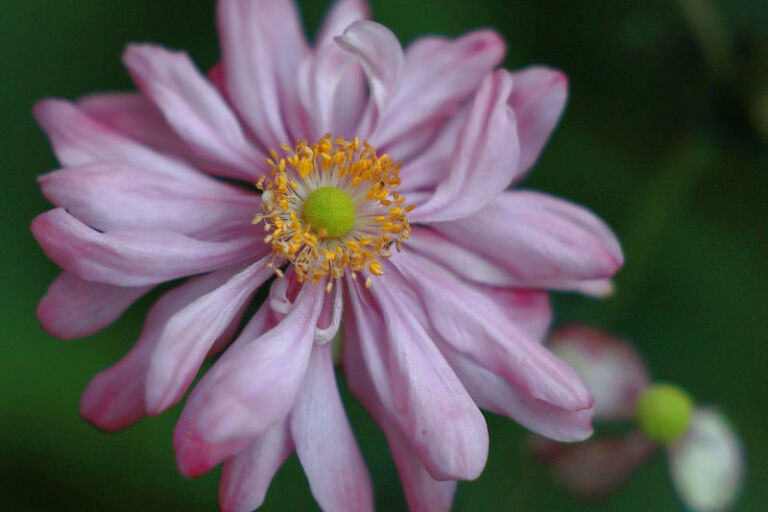
Late Fall Anemone

Late Fall Anemone

Eriocapitella

Herbaceous PerennialPerennialFull SunAugust and September bloom

Late Fall Anemone is a non-native, herbaceous perennial valued for white, pink, or rose flowers from late summer into autumn. It suits moist, well-drained borders and woodland-style plantings, but flowering can be unreliable in Alberta and other short-season gardens.

Also known as: Japanese Anemone

Plant at a glance

Plant typeHerbaceous Perennial
LifecyclePerennial
Hardiness4a–8b
LightFull Sun and Partial Shade
SoilMoist, Clay, Loam (silt), and High Organic Matter
Mature height60–120 cm
Mature width45–90 cm
BloomsAugust, September, and October
Flower colourWhite, Pink, and Rose
WaterRegular

What this plant is like

Also called Japanese Anemone, this clump-forming perennial dies back after flowering and returns in later seasons. It may spread by rhizomes, can be slow to establish, and may need staking. Plants can form colonies over time, so allow room for gradual expansion.

Where it grows best

Choose full sun or partial shade with dependable summer moisture and good drainage. Loam, clay, or soil high in organic matter can suit it, provided the planting area does not stay waterlogged. It performs poorly in hot, dry conditions. In Alberta and comparable short-season areas, use the warmest, most sheltered site available because plants may survive winter without flowering reliably.

Garden and wildlife value

Use it for late-season colour in cottage gardens, mixed borders, woodland plantings, and cut-flower gardens. Its flowers provide nectar and pollen for bees, butterflies, and hoverflies. It is deer resistant, but it is non-native to Canada and should be treated as an ornamental rather than a Canadian native or conservation plant.

Everyday care

Keep soil steadily moist during summer, especially through dry spells, while avoiding saturation. Monitor plants as they establish; a sheltered site can help limit heat-related leaf browning. Wear gloves when handling, since sap may irritate skin. No part is edible: ingestion may cause stomach upset and poisoning.

Moisture, drainage, and establishment guidance is supported; no Canada-specific routine schedule was verified.

Corrective and preventive care

Check soil moisture during hot weather and avoid planting in low, compacted areas that hold water. If wet-soil decline persists, improve drainage or move the plant in spring. If flowering repeatedly fails in Alberta or another short-season location, reassess the site and consider a perennial better suited to the available season.

General prevention and first-response guidance is supported, but no Canadian pest or disease prevalence was verified.

Before you plant

Confirm that the site can provide regular summer moisture without prolonged saturation. Plan for a plant that may take time to establish and gradually expand by rhizomes. Keep it away from eating areas and plan to wear gloves for planting and maintenance. In Alberta, spring planting, shelter, and winter protection are especially important.

Ecological and wildlife value

Late-season ornamental value is supportable; species-specific Canadian ecological benefits and spread risk need further verification.

  • Late Season Ornamental Role: Use as an ornamental late-season perennial; current evidence does not support presenting it as a Canadian native or conservation plant.

Seasonal actions

  • Canada: Use local thaw, flowering, dormancy, and freeze-up as cues instead of a fixed provincial calendar. Give new plants extra winter protection, especially in exposed gardens.
TransplantingRelocate plants that are poorly sited or spreading into unwanted space.

When to act

  • Shoots are emerging and the soil is workable.
  • The plant is outside its intended area or needs a better-drained site.

How: Lift and replant with the crown at the original soil level, firm soil gently, and water thoroughly after planting.

Caution: Moving plants can delay flowering; avoid working saturated soil or leaving roots exposed.

DeadheadingImprove appearance, extend the display, and reduce seed production where that matters.

Timing: During flowering, especially through late summer and September.

When to act

  • Flowers are fading or seed heads are beginning to form.
  • Volunteers are unwanted.

How: Remove spent flower heads and their stems before mature seed heads develop.

Caution: Wear gloves because sap may irritate skin. Deadheading may reduce self-seeding but does not by itself prevent rhizomatous spread.

Regional note: In short-season areas, prioritize flowers that have finished before autumn frost; timing varies with local flowering and frost dates.

Pruning and cutting backClear dormant top growth while preserving optional winter structure and protection.

Timing: Late autumn after decline, or late winter to early spring before new growth expands.

When to act

  • Foliage and seed heads have browned and declined.
  • The plant is dormant and old stems are obstructing spring growth.

How: Either leave healthy stems standing over winter and cut them near the base in spring, or cut back after foliage and seed heads have declined.

Caution: Leaving stems through winter can help catch snow and hold mulch; remove diseased material rather than composting it. Wear gloves when handling.

Regional note: In colder or snowy regions, leaving stems until spring may provide more winter cover; in milder areas, late-autumn cutting is also reported.

DivisionReduce crowding or control the size of an established clump.

Timing: Spring, as growth resumes.

When to act

  • An established clump is crowded.
  • Growth has spread beyond the intended planting area.

How: Lift an established clump in spring, separate healthy rooted sections, and replant promptly at the original depth.

Caution: Division is not necessary every year and may further slow establishment in young plants.

Regional note: Spring division is the most consistently supported timing; no province-specific schedule was verified.

OverwinteringReduce frost heaving and winter injury during establishment.

Timing: After freeze-up in late autumn; remove in spring.

When to act

  • The plant was planted this year or in the previous two seasons.
  • The site is exposed, frost-prone, or has repeated freeze-thaw cycles.

How: After the ground freezes, apply loose dry leaves or evergreen boughs. Remove or pull protection back in spring as growth emerges.

Caution: Do not trap winter moisture against the crown; avoid heavy, compacted cover. The exact protection needed depends on local exposure and the plant's confirmed identity.

Regional note: New plantings and colder, exposed gardens may benefit most; milder sheltered gardens may need less protection. Province- or zone-specific thresholds were not verified.

Problems and symptoms

Three observable issues are supported: unreliable flowering in short seasons, heat-related leaf browning, and decline associated with wet winter soil.

  • Alberta and comparable short-season Canadian gardens: In Alberta and other short-season areas, judge suitability by reliable flowering rather than survival alone; choose a warm, sheltered site and expect flowering to be less dependable.
Possible concern: Little or no floweringWhat to watch for: The plant produces leaves but few or no flowers before autumn frost.

Check first

  • Check whether buds were present before the first frost.

What to do

  • Choose a warm, sheltered location.
  • Use spring planting and protect new plants through their first winter.

When to get help

If the plant repeatedly survives but never flowers, reassess its site or replace it with a shorter-season perennial.

Possible concern: Brown or scorched leavesWhat to watch for: Leaf edges or surfaces turn brown during hot, dry weather.

Check first

  • Feel the soil several centimetres below the surface for dryness.

What to do

  • Use a sheltered part-shade location where summer moisture is dependable.
  • Check soil moisture during hot, dry periods.

When to get help

Seek further assessment if browning continues after heat and moisture stress have been corrected or if stems also collapse.

Possible concern: Weak growth in wet soilWhat to watch for: Growth is weak or declining after prolonged wet weather, especially over winter.

Check first

  • Inspect whether water remains around the crown after rain or snowmelt.

What to do

  • Plant in well-drained soil rather than a winter-wet depression.
  • Avoid irrigation when the soil is already saturated.

When to get help

Seek help for rapid whole-plant collapse or persistent decline after drainage is corrected.

Garden and landscape value

  • Provides reliable late-season flowers that support native bees and European honeybees.
  • Can tolerate more shade than many autumn perennials.
  • Can naturalize over time by forming colonies.
  • Shaded or woodland borders.
  • Cottage gardens and mixed plantings.
  • Naturalized plantings under light shade.
  • Middle or back of borders and cut-flower plantings.

Where it grows naturally

  • Himalayan region; China; Japan; broader East and Southeast Asia

Personalize for your garden

Your garden conditions

Tell us a little about your garden to see how this plant fits your zone, light and growing conditions. No account is required.

These garden conditions stay in this browser for Gardening Calendar. Sign in to keep your garden information with your account.

How this plant fits your garden

Enter your conditions above to see matches, cautions, and seasonal guidance.

References

Plant Definition last reviewed: October 31, 2026.