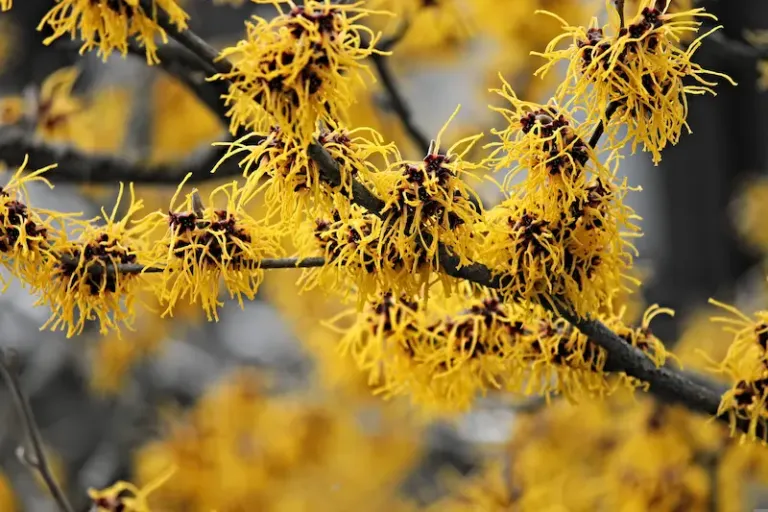
Witch hazel

Witch hazel

Hamamelis virginiana

Deciduous Shrub Or Small TreePerennial WoodyFull SunOctober and November bloomPollinator / wildlife value

Witch hazel is a native eastern Canadian shrub or small tree valued for fragrant yellow flowers in late fall, when few plants are blooming. Its open, spreading form suits woodland margins and naturalistic gardens, but it needs reliable moisture, good drainage, and plenty of room to mature.

Also known as: American witch hazel

Plant at a glance

Plant typeDeciduous Shrub Or Small Tree
LifecyclePerennial Woody
Hardiness4–7
LightFull Sun and Partial Shade
SoilMoist, Acidic, Humus Rich, Well Drained, Loam, and Clay
Mature height450–920 cm
Mature width457–610 cm
BloomsOctober, November, and December
Flower colourYellow
Wildlife valueAttracts Birds And Small Mammals; Wild Turkeys, Ruffed Grouse, And Fox Squirrels Consume The Seeds Or Fruit., Serves As A Larval Host For The Witch Hazel Dagger Moth (Acronicta Hamamelis)., and Flowers Are Pollinated By Noctuid Moths; Deer May Browse The Foliage And Twigs.
WaterModerate To High

What this plant is like

Hamamelis virginiana is a deciduous, multi-stemmed plant with an erect but open and spreading habit. Fragrant, strap-like yellow flowers appear from mid- to late October and may continue into December or winter. Fall leaves turn yellow, sometimes as flowering begins or follows leaf colour. Plants may flower only after several years of growth.

Where it grows best

Choose full sun to partial shade and moist, acidic, humus-rich, well-drained soil. Loam or clay can work. Avoid drought-prone locations, flooding, prolonged seasonal saturation, compacted soil, and exposure to deicing salt. In Canada, it is native to eastern regions, with documented occurrence from Quebec through New Brunswick and Nova Scotia and in Ontario.

Garden and wildlife value

Use it as a specimen, understory planting, woodland-margin shrub, screen, or tall hedge in a native, pollinator, winter-interest, or naturalistic garden. Its late flowers support nocturnal moth pollinators. Seeds and fruit provide food for birds and small mammals, including wild turkeys, ruffed grouse, and fox squirrels. Deer may browse the foliage and twigs.

What to do through the season

If shaping is necessary, prune in early spring. Remove only what is needed: cutting older stems can reduce the following autumn’s flower display. Remove suckers when they appear if you want to limit colonial spread.

Corrective and preventive care

Site the plant in well-drained soil and avoid repeated drying or saturation. If symptoms develop, assess soil moisture, drainage, airflow, and leaf wetness before taking corrective action. Occasional pests and diseases are usually not serious, but seek local diagnostic advice when decline persists, spreads rapidly, or causes substantial premature leaf loss.

The supported first-response issue is drought stress, managed by checking soil moisture and correcting inconsistent watering without creating saturation.

  • Drought Stress: Wilt or leaf scorch during dry weather indicates moisture stress; check soil moisture and restore deep, consistent watering while improving drainage if needed.

Before you plant

Allow generous space for a large shrub or small tree with a broad spread. Plan for seasonal privacy rather than year-round screening. Witch hazel is noninvasive, but deer browsing occurs. It is listed as non-toxic to dogs and cats, although eating plant material may still cause vomiting or gastrointestinal upset; concentrated products present separate risks.

Ecological and wildlife value

Its native habitat supports use as a tall understory or woodland-edge plant where adequate moisture is available.

  • Habitat Fit: Fits woodland margins, moist thickets, and other naturalistic settings with moisture-retentive but well-drained soil.

Everyday care

WateringSupport establishment and reduce drought stress.

Timing: During establishment and during extended dry periods.

When to act

  • The soil is dry below the surface around the root zone.
  • Leaves wilt or drought conditions persist.

How: Water slowly over the root zone so moisture reaches the developing root ball; check soil moisture below the surface before watering again.

Caution: Do not keep the root zone saturated; adjust for rainfall and drainage.

Regional note: No province-specific watering difference was directly supported.

Seasonal actions

  • Pruning Timing: Prune only when needed, in early spring; removing old stems may reduce the next autumn’s flowers.
  • Canada: If shaping is necessary, prune in early spring after winter conditions ease, accepting that removing older wood can reduce the next autumn’s flowers. No Canadian provincial timing difference was directly supported.

Problems and symptoms

Possible concern: Powdery mildew or leaf spotWhat to watch for: White powdery coating or conspicuous spotting and premature decline of leaves.

Check first

  • Inspect leaves for white powdery growth or expanding pale-to-brown patches.

What to do

  • Maintain reasonable air circulation and avoid unnecessary overhead wetting.
  • Remove and discard heavily affected leaves or shoots where practical; avoid spreading diseased material through compost if diagnosis is uncertain.

When to get help

Escalate for local diagnostic advice if symptoms spread rapidly, cause substantial premature defoliation, or recur despite improving airflow and siting.

Possible concern: Occasional chewing or sap-feeding insectsWhat to watch for: Visible insects, leaf chewing, mines, galls, or distorted leaves.

Check first

  • Inspect leaf undersides and new growth for aphids, scale, caterpillars, or leafminers.

What to do

  • Inspect new growth and leaf undersides regularly during the growing season.
  • Hand-remove accessible insects or damaged leaves and monitor for natural recovery; avoid routine chemical treatment without a confirmed diagnosis.

When to get help

Seek local diagnostic advice if active damage is increasing, new growth is being distorted, or the shrub is repeatedly defoliated.

Possible concern: Root or crown rotWhat to watch for: Persistent wilt, decline, or dieback despite moist soil, especially with dark or soft roots or crown tissue.

Check first

  • Examine roots and the crown for dark, soft, or decaying tissue if wilt occurs.

What to do

  • Improve drainage where feasible and avoid additional irrigation until soil moisture is assessed; remove severely declining material only after diagnosis where possible.

When to get help

Obtain a professional diagnosis if wilt persists despite correcting drainage, or if crown/root decay is evident.

Garden and landscape value

  • Fragrant yellow flowers appear in mid- to late fall, often after leaf drop.
  • Provides ornamental value as a large shrub or small tree for woodland gardens, shrub borders, naturalized plantings, and tall hedges.
  • Tolerates full sun to part shade, average medium-moisture well-drained soil, and heavy clay; little pruning is generally required.
  • Native to eastern North America, including Nova Scotia and the Great Lakes region.
  • Use in a native, woodland, winter-interest, pollinator, or naturalistic garden.
  • Plant along a woodland margin, at the edge of dry woods, or at the back of a garden border.
  • Use as a specimen shrub, understory planting, screen, or tall hedge.

Where it grows naturally

  • Canada from Quebec through New Brunswick and Nova Scotia
  • eastern United States from New England south to Florida
  • west through the Great Lakes and central United States to Nebraska, Arkansas, Oklahoma, and Texas

Pruning and deadheading

Let the shrub grow freely. After flowering, remove only selected unwanted shoots; if structural pruning is necessary, do it in early spring while dormant. Remove suckers at their origin.

  • Best timing: After flowering for selective maintenance; early spring if structural pruning is necessary.
  • Decision cue: Prune only to remove dead, damaged, congested, crossing, or weak shoots, or to maintain shape.
  • Decision cue: Remove suckers when they emerge from the base or root system.
  • minimal maintenance pruning: After flowering or in early spring when necessary.. Remove dead, damaged, congested, crossing, or weak shoots; preserve healthy old growth bearing flower buds.
  • sucker removal: Whenever observed during the growing season.. Cut suckers at their point of origin to limit unwanted colonial spread.
  • Caution: Prune sparingly because flowers form on old growth; substantial pruning can reduce the next flowering display.
  • Caution: Remove suckers promptly if colonial spread is not wanted.
  • Known limitation: No source-grounded deadheading requirement was identified; routine removal of spent flowers is therefore not recommended as a separate task.

Propagation

Sow ripe seed in containers in a cold frame as soon as it is ripe, or layer a suitable shoot in autumn and keep the layered section in contact with the growing medium until rooted.

  • Best timing: Seed: immediately when ripe. Layering: autumn.
  • Decision cue: Use seed when ripe if patient production of new plants is acceptable.
  • Decision cue: Use layering in autumn when an accessible flexible shoot can be brought into contact with soil.
  • seed: As soon as seed is ripe.. Sow in containers in a cold frame as soon as seed is ripe; allow for potentially prolonged germination.
  • layering: Autumn.. Layer a suitable shoot and maintain contact with the medium until rooting.
  • Caution: Seed may require up to two years to germinate.
  • Caution: Use only ripe seed or suitable layering material; the available source does not establish a reliable cutting protocol for the species.
  • Known limitation: The retrieved sources do not provide a sufficiently detailed, species-specific layering procedure or confirm dependable vegetative success rates. No Canadian propagation-specific guidance was identified.

Personalize for your garden

Your garden conditions

Tell us a little about your garden to see how this plant fits your zone, light and growing conditions. No account is required.

These garden conditions stay in this browser for Gardening Calendar. Sign in to keep your garden information with your account.

How this plant fits your garden

  • November is included in this profile’s recorded flowering months. Actual timing can vary with local conditions.

References

Plant Definition last reviewed: October 31, 2026.