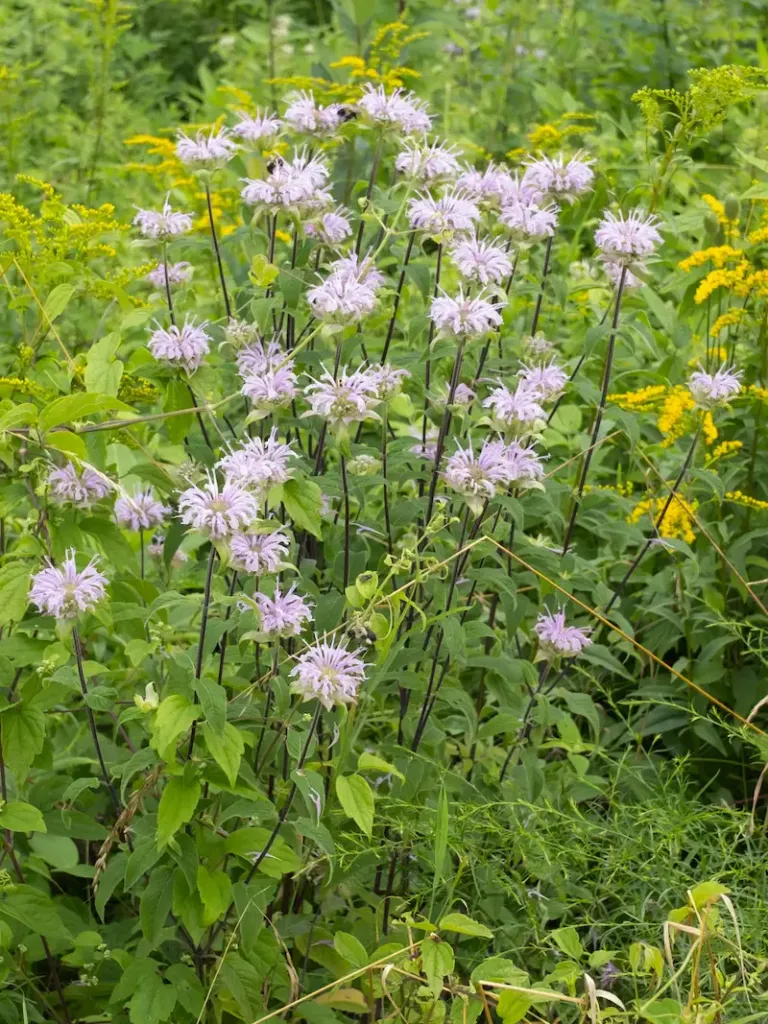
Wild bergamot

Wild bergamot

Monarda fistulosa

Perennial ForbPerennialFull SunJuly and August bloomPollinator / wildlife value

Wild bergamot is a hardy Canadian native perennial for sunny, naturalistic plantings. Its lavender, pink or purple flowers bring strong pollinator value from July into September. It suits dry to medium, well-drained soils, tolerates clay, and can spread into colonies that need occasional control.

Plant at a glance

Plant typePerennial Forb
LifecyclePerennial
Hardiness2b–8b
LightFull Sun and Partial Shade
SoilDry, Medium, Well Drained, Clay Tolerant, Sand, Loam, Clay, and Rocky
Mature height60–120 cm
Mature width60–90 cm
BloomsJuly, August, and September
Flower colourLavender, Pink, and Purple
Wildlife valuePollinator Nectar Source, Supports Bees, and Supports Butterflies
WaterMedium

What this plant is like

An upright, clump-forming perennial that adds mid- to late-summer colour. It is a good choice when you want a native plant with high pollinator value and low to moderate maintenance. In Canada, it is hardy from zones 2b to 8b and is native across much of southern Canada.

Where it grows best

Choose full sun or partial shade and dry to medium, well-drained soil. Wild bergamot grows in sand, loam, clay and rocky soil, but avoid sites that stay waterlogged. Once established, it tolerates dry spells; in very dry midsummer conditions, it may temporarily go dormant.

Garden and wildlife value

Use it in pollinator, butterfly and hummingbird gardens, herb gardens, perennial borders, naturalized areas, and shoreline or rain-garden plantings. Its flowers provide nectar for bees and butterflies, and it is deer resistant. Little bluestem, black-eyed Susan, New England aster, switchgrass and purple coneflower are approved planting companions.

Everyday care

Water regularly during the first year while the plant establishes. After that, water mainly during prolonged dry periods. Keep the planting open enough for air movement and avoid overhead watering, especially where summers are humid. Maintenance is generally low to moderate.

Wild bergamot prefers full sun and well-drained, dry to average soil. Keep soil evenly moist in the first season, then water mainly in droughts. Use a thin organic mulch and modest spring compost or fertilizer, avoiding heavy feeding.

What to do through the season

In Canada, flowering commonly peaks in mid- to late summer, with blooms often extending from July through September. Deadhead during flowering if you want to encourage a tidier display. Cut back dead stems in fall or early spring. Divide crowded clumps every few years, and use light winter mulch in colder regions.

Corrective and preventive care

Good spacing, full sun, suitable moisture and removal of affected plant material help keep foliage problems manageable. Monitor the edges of the planting and thin or divide when the colony becomes too dense. Within its Canadian native range it is not known to be invasive, but use extra caution near natural areas outside that range.

Main corrective and preventive needs for wild bergamot center on managing foliar fungal diseases, especially powdery mildew, through sun, spacing, moisture management, and sanitation, with rust occasionally affecting foliage as well.

  • Powdery Mildew Common On Foliage: Leaves often develop a gray‑white powdery coating in late summer, especially on stressed or crowded plants, and badly affected foliage may yellow, distort, or drop early.
  • Reduce Mildew Risk With Sun, Spacing, Moisture: Plant in full sun, space plants to allow air movement, divide congested clumps, and keep soil from drying out to limit powdery mildew and help foliage recover.
  • Fall Cleanup To Lower Mildew Carryover: After frost, remove and discard mildew‑infected stems and fallen leaves from around plants to reduce spores that survive winter and reinfect next year.
  • Rust Spots On Leaves: Rust may show as small orange‑brown pustules on leaves. Improve air flow, avoid overhead watering, and remove heavily spotted foliage to slow spread.

Before you plant

Allow room for the plant to form a colony rather than treating it as a permanently compact specimen. Choose a site where spreading is acceptable, or plan to contain it through edging and periodic thinning. Wild bergamot is generally considered non-toxic to pets, but evidence is limited; verify suitability for your animals.

Key limits and cautions for wild bergamot include its notable susceptibility to powdery mildew and its ability to spread into sizable patches by rhizomes and self‑seeding, with ecological caution advised outside its native range.

  • Relatively Mildew‑susceptible Monarda Species: Wild bergamot is among the more powdery‑mildew‑susceptible Monarda species, so expect cosmetic leaf damage in many sites, even with generally healthy plants.
  • Spreading Habit And Patch Formation: Plants spread by short rhizomes and self‑seeding and can form solid patches over time. Use edging, division, or pulling seedlings if you want a smaller clump.
  • Ecological Caution Outside Native Range: Where wild bergamot is not native, avoid planting near natural areas and monitor for spread into unmanaged land to prevent it from displacing local vegetation.

Ecological and wildlife value

Wild bergamot is a Canadian native perennial with high ecological value, offering long-season nectar and pollen to a wide range of pollinators, supporting specialist bees, resisting browsing, and helping stabilize soil in sunny, well-drained sites.

Seasonal actions

Plant wild bergamot in mid-spring or early fall. Deadhead through bloom to extend flowering, cut back dead stems in fall or early spring, and divide crowded clumps every few years. In colder regions, apply a light mulch after freeze for winter protection.

Problems and symptoms

Possible concern: Powdery mildewWhat to watch for: White, powdery fungal growth on upper leaf surfaces and stems, often starting in mid to late summer.

Check first

  • look for white, powdery coating on leaves and stems.

What to do

  • space plants to allow air movement and avoid overhead watering, especially late in the day.
  • remove and discard heavily infected leaves and stems to reduce fungus load and improve airflow around remaining foliage.

When to get help

If mildew covers most of the plant or spreads to nearby plants despite thinning and improved airflow, consult local extension or a qualified horticultural advisor for disease management options.

Possible concern: Root or stem rot (physiological/wilt complex)What to watch for: Stems yellow, then brown and collapse from the base, often in areas with standing water or heavy soils.

Check first

  • inspect stems for browning and wilting starting at the base.

What to do

  • plant in well-drained soils and avoid waterlogging around crowns.
  • improve drainage by loosening soil or adding organic matter and avoid overwatering; remove severely affected plants to prevent further decline.

When to get help

If wilting and stem death progress rapidly across clumps despite drainage improvements, seek diagnosis from local extension to rule out Verticillium or other wilt diseases.

Possible concern: Aggressive rhizome spread (management issue)What to watch for: New shoots and stems appearing beyond the original clump, forming a broad colony.

Check first

  • look for stems spreading beyond intended area.

What to do

  • periodically divide and thin clumps to keep plant within its allocated space.
  • edge or cut back advancing rhizomes and remove unwanted shoots to keep the colony within bounds.

When to get help

If spread becomes difficult to manage or crowds out other plantings, consider removing sections and seek advice on long-term containment from local native plant organizations.

Garden and landscape value

  • high pollinator attraction
  • adaptable to a wide range of soils
  • native to much of Canada
  • deer resistant
  • pollinator gardens
  • butterfly gardens
  • hummingbird gardens
  • herb gardens

Where it grows naturally

  • most of southern Canada
  • United States east of the Rockies

Plants that grow well with this one

  • Little bluestem (Ecological companion): Pairs well with wild bergamot in prairie-style plantings, providing structural grass contrast and sharing preference for dry, well-drained soils and full sun.
  • Black-eyed Susan (Pollinator succession): Commonly used with wild bergamot in pollinator and meadow plantings; both are native, sun-loving, and attract bees and butterflies.
  • New England aster (Pollinator succession): Provides late-season bloom complementing mid-summer flowering of wild bergamot in native pollinator gardens, sharing sun and moist to dry soils.
  • Switchgrass (Ecological companion): Native warm-season grass that stabilizes soil and complements wild bergamot in prairie and shoreline plantings with similar light and soil tolerance.
  • Purple coneflower (Pollinator succession): Frequently recommended with bee balms in pollinator gardens; both provide nectar to bees and butterflies and prefer full sun and well-drained soils.

Pruning and deadheading

Snip off spent flower heads and lightly shear stems back by one-third after main bloom to encourage rebloom and maintain shape; thin or remove overcrowded or mildew-affected stems to improve air circulation.

  • Best timing: Begin deadheading in mid-summer once flowers fade; perform thinning whenever mildew or overcrowding is observed.
  • Decision cue: spent flower heads no longer producing petals
  • Decision cue: stems showing significant powdery mildew or overcrowding
  • deadhead spent blooms: mid to late summer. Begin once the first flush of flowers fades and seed set is not desired.
  • thin diseased or crowded stems: during humid periods or when mildew appears. Remove stems showing heavy mildew or dense tangles to open the clump.
  • Pruning approach: selective thinning
  • Caution: avoid heavy pruning in late fall in cold regions to protect overwintering crowns
  • Caution: remove and dispose of mildew-infected stems rather than composting to limit spread
  • Known limitation: Specific pruning heights and schedules are not standardized across Canadian regions; guidance is general and should be adjusted to local conditions.

Propagation

Propagate wild bergamot by lifting and dividing established clumps or by sowing seed; divide in early spring or fall when soil is workable and plants are not in peak bloom, ensuring each division has several shoots and roots.

  • Best timing: Divide established clumps in early spring or fall; collect and sow seed after seed heads mature in late summer to fall.
  • Decision cue: well-established clump with multiple stems and evident rhizome spread
  • Decision cue: desire to increase plants or rejuvenate crowded patch
  • division of clumps: early spring or early fall. Use a spade or knife to separate outer portions of the clump.
  • seed collection and sowing: late summer to fall. Collect ripe seed heads after flowering and sow in prepared beds or pots.
  • Caution: divide only established clumps to avoid stressing young plants
  • Caution: replant divisions promptly and water to establish
  • Known limitation: Detailed seed stratification requirements for Canadian climates are not specified; division timing is based on general perennial practice.

Read more on GardeningCalendar

Personalize for your garden

Your garden conditions

Tell us a little about your garden to see how this plant fits your zone, light and growing conditions. No account is required.

These garden conditions stay in this browser for Gardening Calendar. Sign in to keep your garden information with your account.

How this plant fits your garden

Enter your conditions above to see matches, cautions, and seasonal guidance.

References

Plant Definition last reviewed: October 9, 2026.