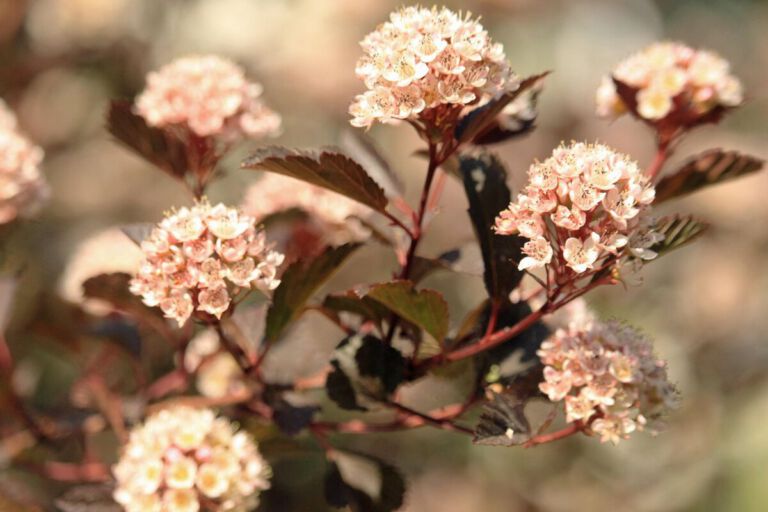
Common ninebark

Common ninebark

Physocarpus opulifolius

ShrubDeciduousFull SunApril and May bloomPollinator / wildlife value

Common ninebark is a hardy, native Canadian shrub with exfoliating bark, spring flowers and an adaptable nature. It suits informal hedges, screens, foundation plantings and naturalized areas, especially where soils may alternate between dry conditions and occasional flooding.

Plant at a glance

Plant typeShrub
LifecycleDeciduous
Hardiness2–7
LightFull Sun and Part Shade
SoilDry, Medium Moisture, Wet, Well Drained, Clay Soil, Dry Soil, Wet Soil, and Shallow Rocky Soil
Mature height152–305 cm
Mature width122–305 cm
BloomsApril and May
Flower colourWhite and Pink
Wildlife valueBirds and Pollinators
WaterDry To Medium Moisture; Tolerates Wet And Dry Sites

What this plant is like

Physocarpus opulifolius is a deciduous shrub with an upright, spreading form and arching branches. White to pink flowers appear in April and May, followed by seed clusters. Its exfoliating bark adds interest beyond the flowering season. The habit can become coarse and bulky, so allow it room to develop.

Where it grows best

Choose full sun to part shade and well-drained soil. Common ninebark tolerates clay, dry soil, wet soil and shallow rocky soil, including sites that shift between summer drought and short-term flooding once established. In Canada, it is especially well suited to naturalized hedges, stream edges, shorelines and mixed plantings across its native eastern and central range.

Garden and wildlife value

This native shrub is useful for hedges, screens, mass plantings, foundation beds and naturalizing. Spring flowers support bees and other pollinators. Seed clusters and dense growth offer food and cover for songbirds and small wildlife, while the foliage supports caterpillars. Its roots can also help stabilize slopes and shorelines.

Everyday care

Plant with the crown level with the surrounding soil, then water deeply during the first growing season when the upper soil dries. Once established, water mainly during prolonged drought. Apply 5–8 cm of organic mulch over the root zone, keeping it away from stems. Feed lightly in early spring only if soil is poor; in cold regions, stop by mid- to late summer. Avoid sites where water remains standing after rain.

  • Watering During Establishment: In the first growing season, water ninebark deeply when the top few inches of soil feel dry, aiming for about weekly in warm, dry weather.
  • Watering Once Established: After the first year, ninebark usually needs watering only in prolonged drought; allow the soil surface to dry between slow, deep soakings.
  • Planting And Establishment Basics: Plant ninebark with its crown level to the surrounding soil in a hole just wider than the roots, backfill firmly, and water well to settle out air pockets.
  • Mulching Practice: Spread 5–8 cm of organic mulch over the root zone to hold moisture and limit weeds, keeping mulch a few centimetres away from the stems.
  • Drainage And Overwatering Caution: Avoid planting ninebark where water stands after rain; consistently soggy soil and yellowing leaves signal overwatering or poor drainage.
  • Fertilizing Practice: If needed, apply a light, balanced slow-release shrub fertilizer or a thin layer of compost around the root zone in early spring only.
  • Fertilizing Timing In Cold Climates: In cold regions, stop fertilizing ninebark by mid to late summer so new growth has time to harden before winter.

What to do through the season

In most of Canada, plant in early spring once the soil is workable and severe frost has passed. Early-fall planting is also possible where soil drains well and reliable snow cover is expected, provided several weeks remain before freeze-up. Take softwood cuttings in late spring or early summer, or hardwood cuttings during late-fall or winter dormancy. Established plants generally need no winter wrapping; container plants benefit from an unheated, sheltered location.

Problems and symptoms

A shrub that becomes crowded, floppy or too bulky may be outgrowing its location or losing its intended shape. Yellowing leaves in persistently wet ground can indicate poor drainage or overwatering. Sparse growth may also occur where the plant receives too much shade.

Corrective and preventive care

Give the shrub enough room for its mature spread and maintain good air movement around the branches. Correct drainage problems rather than relying on frequent watering. If the form becomes congested, remove selected older stems close to the ground during dormancy, rather than repeatedly shearing the outer surface.

Common ninebark is usually durable but benefits from simple preventive actions against powdery mildew, branch dieback, and sap‑sucking insects, focused on spacing, sun, sanitation, and gentle first‑response steps rather than routine chemical use.

Before you plant

Confirm that the site can accommodate a broad shrub and that an informal, somewhat coarse habit fits the design. Use it where a low-maintenance hedge, screen, wildlife planting or shoreline shrub is wanted. Common ninebark is native in eastern and central Canada and is not known to be invasive in the approved sources.

Common ninebark is generally durable and not widely considered highly toxic, but cultivar choice, local native status, pet chewing, and hot, humid climates can limit where and how it is best used, especially in Canadian plantings.

Ecological and wildlife value

Common ninebark is a native Canadian shrub of stream banks and rocky woodland edges whose flowers support bees, its seeds and thickets shelter birds, and its roots help stabilize slopes and shorelines.

  • Native Range In Canada: Common ninebark is native in eastern and central Canada, recorded from Ontario and Quebec and west to at least Manitoba in riparian and woodland habitats.
  • Pollinator And Bird Value: Ninebark’s spring flowers feed a range of bees and other pollinators, and its seed clusters provide late-season food and cover for songbirds and small wildlife.
  • Erosion Control And Riparian Use: Deep, fibrous roots and tolerance of stream-bank conditions make ninebark useful for stabilizing slopes and shorelines where soils may be rocky or periodically scoured.
  • Larval Host Value: Ninebark foliage supports caterpillars of several moth species, adding food for birds and boosting insect diversity in mixed shrub plantings.
  • Site And Moisture Tolerance In Canada: In Canadian landscapes ninebark handles coarse or heavy soils, full sun to partial shade, and swings between summer drought and short-term flooding once established.

Seasonal actions

  • Pruning After Flowering: For shaping, prune ninebark soon after it finishes flowering in late spring or early summer, and avoid cutting heavily past mid-summer.
  • Renewal Pruning In Dormant Season: Every few years, older ninebark shrubs can be rejuvenated in late winter or very early spring by cutting a portion of the oldest, thickest stems back close to ground level.
  • Softwood Cuttings Timing: Take softwood cuttings of ninebark in late spring or early summer from pliable, non-flowering shoot tips and root them under cover for new plants.
  • Hardwood Cuttings Timing: For hardwood cuttings, use firm, leafless stems taken in late fall or winter while ninebark is dormant, then root them in a cool, sheltered medium.
  • Overwintering Established Plants: In Canadian gardens, in-ground ninebark usually overwinters without wrapping; focus on avoiding waterlogged soil, and move containers to a sheltered, unheated spot.

Garden and landscape value

  • hardy shrub
  • tolerates wet and dry sites
  • exfoliating bark
  • low maintenance
  • hedge
  • screen
  • foundation planting
  • massing

Where it grows naturally

  • eastern North America
  • central and eastern North America
  • Quebec to Minnesota south to Arkansas and Virginia

Plants that grow well with this one

  • Amsonia tabernaemontana (Similar growing conditions): Clemson lists Eastern bluestar as a rain-garden companion for ninebark, fitting the same sun-to-part-shade, mixed-border setting.
  • Veronica spicata (Visual or design companion): Clemson includes spiked speedwell among compatible rain-garden plants, which pairs well with ninebark in sunny mixed plantings.
  • Chionanthus virginicus (Visual or design companion): Clemson lists fringetree in the same rain-garden recommendation set, supporting a mixed shrub/small-tree planting scheme.
  • Iris sibirica (Visual or design companion): Clemson lists Siberian iris as a companion in the same planting context, useful where a lower layer is desired beneath shrubs.
  • Muhlenbergia capillaris (Visual or design companion): Clemson includes sweetgrass or muhlygrass for the same rain-garden palette, offering structural contrast beside ninebark.

Personalize for your garden

Your garden conditions

Tell us a little about your garden to see how this plant fits your zone, light and growing conditions. No account is required.

These garden conditions stay in this browser for Gardening Calendar. Sign in to keep your garden information with your account.

How this plant fits your garden

Enter your conditions above to see matches, cautions, and seasonal guidance.

References

Plant Definition last reviewed: September 10, 2026.