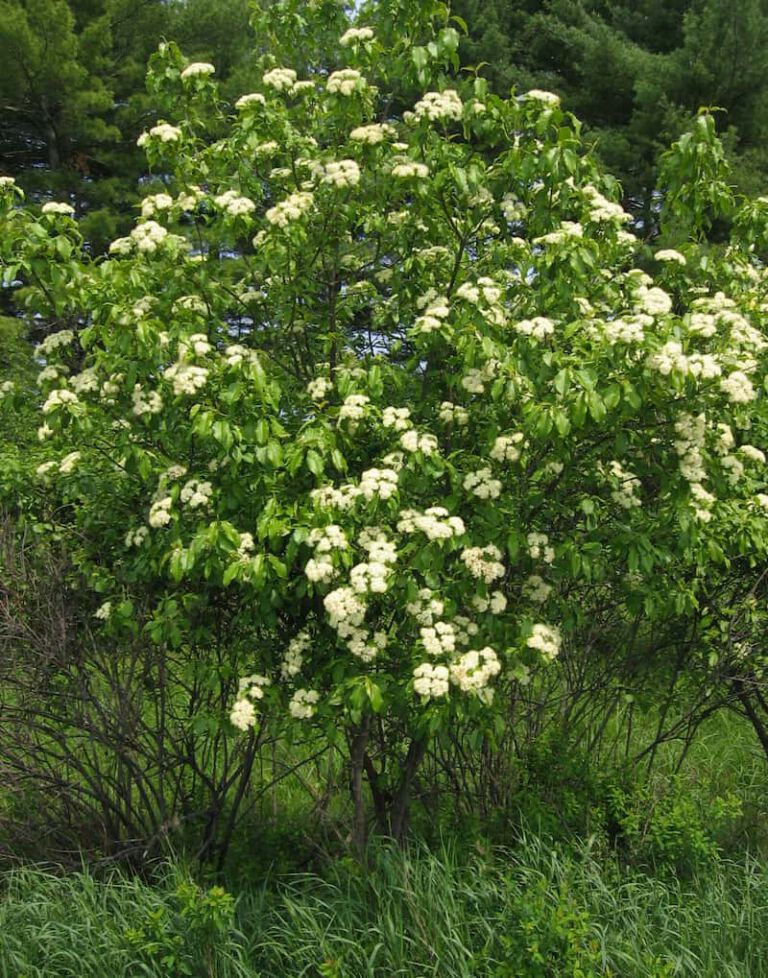
Nannyberry

Nannyberry

Viburnum lentago

ShrubDeciduousFull SunMay bloomPollinator / wildlife value

Nannyberry is a hardy native shrub for Canadian wildlife gardens, hedgerows and naturalized plantings. It produces white flowers in May, edible ripe fruit for people, and useful cover and food for wildlife. Its large mature form suits spacious sites, but avoid locations exposed to road salt or deicing spray.

Plant at a glance

Plant typeShrub
LifecycleDeciduous
Hardiness2–7
LightFull Sun and Partial Sun
SoilMoist, Average, Moderately Drained, Well Drained, Loam, Clay, Rich Moist Soils, and Average Garden Soil
Mature height600–900 cm
Mature width300–500 cm
BloomsMay
Flower colourWhite
Wildlife valueFood For Birds, Food For Mammals, and Cover For Wildlife
WaterMedium

What this plant is like

Viburnum lentago is a deciduous, upright, multi-stemmed shrub that can sucker and develop into a broad screening plant. It is a low-maintenance choice for gardeners who want a native shrub with a substantial presence rather than a compact container plant.

Where it grows best

Plant it in full sun or partial sun with moist to average, moderately drained or well-drained soil. It tolerates loam, clay, rich moist soil and average garden soil, with a soil pH from 5 to 7.5. It suits much of eastern and central Canada and is rated hardy from Canadian Zone 2 through Zone 7.

Garden and wildlife value

Nannyberry works well in wildlife gardens, naturalized plantings, hedgerows, windbreaks and screening. Its May flowers support pollinators, while the fruit feeds birds and mammals and the shrub provides wildlife cover. Ripe fruit is edible for humans, making it suitable for edible landscaping.

Everyday care

Water regularly during the first year after planting. Once established, water only during extended drought, because this shrub has limited drought tolerance. Its low maintenance needs make it useful where a large native planting can be allowed to develop with minimal routine attention.

What to do through the season

In spring, check that new plantings receive regular water as they establish. During summer drought, provide water when dry conditions are prolonged. Monitor shaded foliage during the growing season, especially where air movement and light are limited.

Problems and symptoms

Powdery mildew may affect foliage when the shrub receives too much shade. Road salt and deicing salts are another important risk, particularly beside treated roads, driveways and walkways. Wildlife browsing is generally expected to cause low damage.

Corrective and preventive care

Choose a site with adequate sun and avoid high-salt locations before planting. If foliage shows mildew symptoms, review whether the shrub is receiving too much shade. During extended drought, water established plants; do not rely on this shrub to tolerate prolonged dryness without help.

Before you plant

Allow room for a large shrub and possible suckering; it is not suited to small spaces or containers. Confirm that the site is not exposed to heavy deicing salt. Ripe fruit is edible for people, but the plant is mildly toxic to pets, so plan accordingly.

Garden and landscape value

  • extreme cold hardiness to USDA Zone 2
  • provides food and cover for wildlife
  • edible fruit for humans
  • tolerant of a variety of soils
  • wildlife garden
  • naturalized plantings
  • hedgerow and windbreaks
  • edible landscape

Where it grows naturally

  • eastern Canada
  • central Canada
  • northeastern United States
  • midwestern United States

Personalize for your garden

Your garden conditions

Tell us a little about your garden to see how this plant fits your zone, light and growing conditions. No account is required.

These garden conditions stay in this browser for Gardening Calendar. Sign in to keep your garden information with your account.

How this plant fits your garden

Enter your conditions above to see matches, cautions, and seasonal guidance.

References

Plant Definition last reviewed: September 10, 2026.