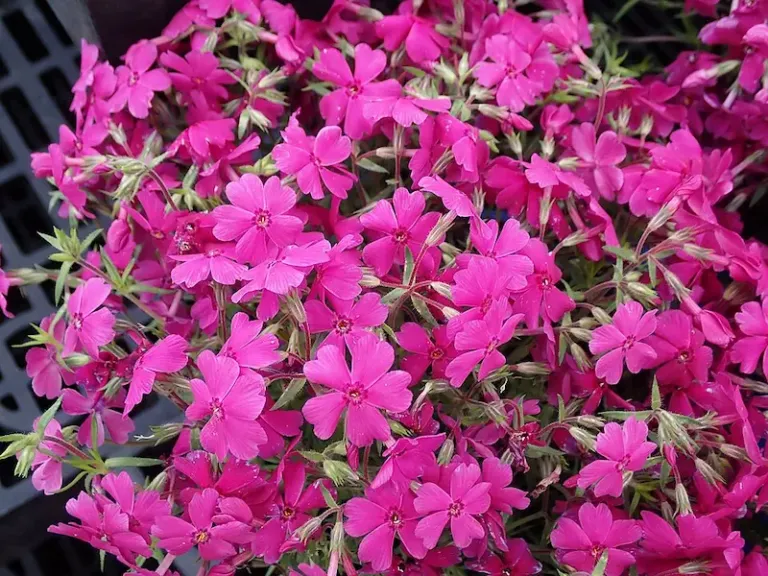
Creeping phlox

Creeping phlox

Phlox subulata

Evergreen GroundcoverPerennialFull SunMarch and April bloomPollinator / wildlife value

Creeping phlox (Phlox subulata), also called moss phlox, moss pink or mountain pink, is a low, evergreen perennial groundcover for sunny, well-drained sites. Its spreading mats bring early-to-late spring colour in pink, purple, blue, white or red and provide useful nectar for bees and butterflies.

Also known as: Moss phlox, moss pink, mountain pink

Plant at a glance

Plant typeEvergreen Groundcover
LifecyclePerennial
Hardiness3–9
LightFull Sun and Part Sun
SoilDry, Medium, Well Drained, Sandy, Gritty, Rocky, and Loamy
Mature height10–20 cm
Mature width60–100 cm
BloomsMarch, April, May, and June
Flower colourPink, Purple, Blue, White, and Red
Wildlife valueBees and Butterflies
WaterLow To Moderate
Care levelLow

What this plant is like

Creeping phlox forms a spreading, mat-like carpet about 10–20 cm tall and 60–100 cm wide. Its evergreen foliage provides year-round groundcover, while flowers appear in spring, with listed flowering months from March through June. Flower colours include pink, purple, blue, white and red. Maintenance is generally low, although mats may thin or become woody without occasional shearing.

Where it grows best

Grow it in full sun or part sun with well-drained, dry-to-average soil. Sandy, gritty, rocky or loamy soil can suit it when drainage is good; a listed soil-pH range is 5.0–8.0. Avoid wet, waterlogged or poorly drained sites, as well as heavy clay. It is suitable for Canadian gardening recommendation zones 3–9. It also grows well in containers, provided the growing medium drains freely.

Garden and wildlife value

Use creeping phlox in rock gardens, on slopes and banks, along edges, in border groundcover and for erosion control. Its low, spreading habit creates a spring-colour carpet, while evergreen foliage extends its visual contribution beyond bloom. Flowers offer high pollinator value, particularly for bees and butterflies. It is native to parts of eastern North America, but native status varies by Canadian province, so it should not receive a broad Canadian native designation.

Everyday care

Water to keep the soil slightly moist but not wet, allowing the top layer to dry between waterings. Avoid prolonged saturation, especially in containers. Good drainage and airflow are important. Once established, the plant has low-to-moderate water needs, but watering should still prevent prolonged drought stress. Trim after flowering when needed to maintain a dense, compact mat.

What to do through the season

Main flowering occurs in mid to late spring, with the broader listed window extending from March to June. Soon after flowering, lightly shear or trim green stems by about one-third to one-half to encourage dense regrowth. Do not cut into brown, woody centres, which regenerate poorly. Divide or transplant immediately after flowering or in early autumn so plants have time to re-establish before winter.

Problems and symptoms

Anthracnose may occasionally cause localized patches of stem and foliage dieback, dark lesions or cankers, and blighted foliage; disease problems are described as usually rare. Spider mites are a potential concern, especially when fine webbing, stippling or bronzing appears. Powdery mildew may show as white or gray growth on leaves or stems. These observations are not identified as province-specific problems.

Corrective and preventive care

Maintain well-drained soil and good air circulation, and shear dense mats after bloom. Avoid overhead irrigation that keeps foliage wet; water at soil level when possible. Remove and dispose of diseased stems, affected patches and fallen debris promptly. For suspected anthracnose, improve drainage and airflow and seek diagnostic help if dieback progresses or does not improve. During hot, dry conditions, monitor for mites, rinse foliage with a firm stream of water when practical, and maintain appropriate moisture without saturation. Remove heavily mildew-affected tissue and reduce foliage humidity.

Before you plant

Choose a sunny or partly sunny location where water will not collect. Plan for a mature height of 10–20 cm and spread of 60–100 cm, and allow the mat to occupy its intended area. It is a spreading groundcover and is not suited to privacy screening. The plant is not listed as regulated, and no applicable Canadian restriction was identified in the reviewed sources. Exact-species veterinary pet-safety status is unknown, so avoid assuming it is pet-safe.

Garden and landscape value

  • Early Spring Colour
  • Evergreen Foliage
  • Tolerates Poor Rocky Soils If Well Drained
  • Good Pollinator Support
  • Rock Gardens
  • Slopes And Banks
  • edging
  • Groundcover For Borders

Where it grows naturally

  • Native to eastern North America, especially rocky or sandy slopes and open areas from Pennsylvania south into the Appalachian region, including parts of North Carolina and Tennessee.

Pruning and deadheading

Shear or trim creeping phlox shortly after its main spring bloom flush to maintain a dense, compact mat. Use hedge shears or sharp hand pruners to remove roughly the top 1–2 inches or up to one-half of the green stem growth evenly across the clump, focusing on soft green tissue and avoiding cuts into brown, woody centers. Remove winter-damaged or dead patches and trim any runners that have spread beyond the desired area. In very cold climates, concentrate heavier shearing right after bloom so plants have the growing season to rebuild foliage before winter.

  • Best timing: Main shearing should occur once, immediately after the spring bloom period; lighter grooming and removal of damaged or encroaching stems can be done as needed through the growing season.
  • Decision cue: Flowering flush has finished and most blossoms are spent.
  • Decision cue: Mats show thinning or woody patches in the center or uneven height along edges.
  • Decision cue: Stems are encroaching beyond intended borders, over paving, or into other plantings.
  • Pruning approach: post-bloom shearing
  • Pruning approach: light grooming and edge trimming
  • Pruning approach: post-bloom shearing of mats
  • Pruning approach: light grooming and removal of winter-damaged or diseased patches
  • Caution: Avoid cutting into brown, woody centers because regrowth from mature woody stems is limited.
  • Caution: Do not prune heavily in late fall in very cold regions; focus main shearing just after spring bloom to allow time for regrowth before winter.
  • Caution: Use clean, sharp tools to reduce risk of disease entry when shearing mats.
  • Known limitation: Deadheading individual flowers is generally optional and mainly used to slightly extend bloom duration; it is less critical than broad shearing for mat health. Evidence for fall-only pruning without post-bloom trimming is weaker, so guidance prioritizes immediate post-bloom shearing.

Propagation

Propagate creeping phlox primarily from division and vegetative cuttings taken from established, healthy mats. For division, lift portions of the mat with well-rooted sections immediately after flowering or in early autumn, separate into smaller clumps, and replant in well-drained soil at the same depth, watering to settle roots. For stem cuttings, select healthy, non-flowering tips in spring, cut 4–5 cm sections, remove lower leaves, and insert into a porous, well-drained propagation mix under moderate moisture until roots form. Root cuttings can be taken from vigorous plants and set in similar media. Layering works by pinning trailing stems to the soil surface in late spring, covering lightly so nodes contact soil, then severing and transplanting once roots develop.

  • Best timing: Use division immediately after flowering or in early autumn; take stem and root cuttings in late spring through the growing season; carry out layering from late spring with transplanting in early autumn.
  • Decision cue: Existing mats have filled their space and you want to create new plants or rejuvenate thinning areas.
  • Decision cue: Healthy, non-flowering stems are available for cuttings or layering.
  • Decision cue: Plants have just finished flowering or conditions are cool and moist enough (spring or early autumn) to support establishment.
  • division of established mats: Immediately after spring flowering or in early autumn before hard frosts.. Most efficient method for home gardeners; divisions re-establish quickly under cool, moist conditions.
  • stem cuttings (tip cuttings): Late spring (approximately April–May) in temperate climates when plants are in active vegetative growth.. Use healthy, non-flowering tips; keep propagation media porous and only slightly moist.
  • root cuttings: During the growing season when plants are actively growing, often aligned with division periods (post-bloom or early autumn).. Take sections of healthy roots from vigorous plants; plant in well-drained propagation mix.
  • layering of trailing stems: Pin stems in late spring (around May); sever and transplant rooted layers in early autumn (around September).. Pin stems to soil and lightly cover; allow 6–8 weeks for rooting before severing and transplanting.
  • Caution: Ensure all divisions and cuttings are taken from healthy, disease-free plants to avoid spreading pathogens such as anthracnose.
  • Caution: Maintain good drainage in propagation media; avoid waterlogged conditions that creeping phlox does not tolerate.
  • Caution: In colder regions, schedule outdoor transplanting so new divisions or rooted cuttings have several weeks to establish before hard frost.
  • Caution: Use clean, sterilized tools when dividing clumps or taking cuttings to reduce infection risk.
  • Known limitation: Seed propagation is not emphasized for named cultivars due to variability and is not covered in the cited sources, so it is omitted. Exact substrate recipes and misting regimes are described for commercial production but simplified here to avoid unsourced technical detail.

Personalize for your garden

Your garden conditions

Tell us a little about your garden to see how this plant fits your zone, light and growing conditions. No account is required.

These garden conditions stay in this browser for Gardening Calendar. Sign in to keep your garden information with your account.

How this plant fits your garden

Enter your conditions above to see matches, cautions, and seasonal guidance.

References

Plant Definition last reviewed: September 9, 2026.