Fragrant sumac ‘Gro-Low’
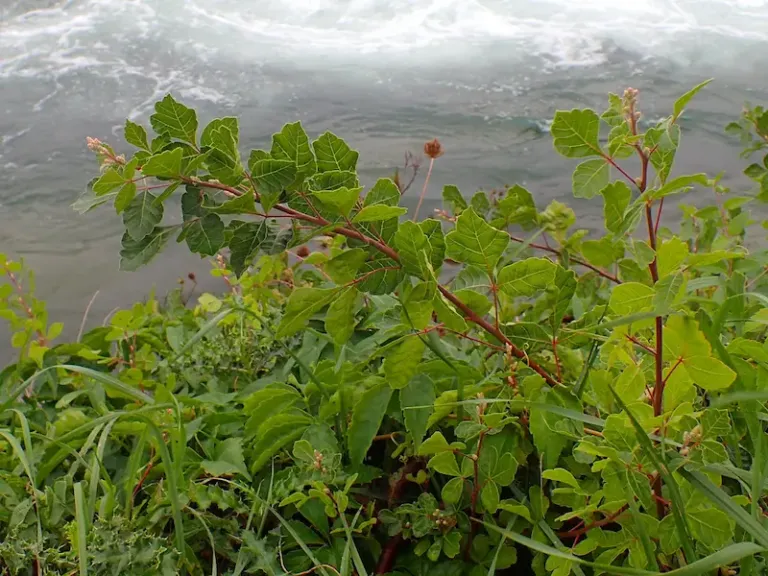
Fragrant sumac ‘Gro-Low’

Rhus aromatica ‘Gro-Low’

Deciduous Groundcover ShrubPerennialFull SunSpring bloom

Fragrant sumac ‘Gro-Low’ is a low, spreading deciduous shrub for sunny to partly sunny Canadian gardens. It forms durable groundcover in dry to average, well-drained soil and needs room to expand. Its spring flowers and seasonal colour add interest, while its low-maintenance habit suits difficult sites.

Also known as: Aromatic sumac, Rhus aromatica 'Gro-Low'

Plant at a glance

Plant typeDeciduous Groundcover Shrub
LifecyclePerennial
Hardiness3–8
LightFull Sun and Part Sun
SoilDry To Average and Well Drained
Mature height60–90 cm
Mature width180–245 cm
BloomsSpring
Flower colourYellow, Orange, and Red
WaterLow To Moderate

What this plant is like

This perennial cultivar grows wider than tall, creating a broad, spreading carpet rather than a privacy screen. It is a cultivar of a Canadian native species, with native range recorded in Alberta, Ontario, Quebec, and Saskatchewan. The plant’s strongest landscape role is practical groundcover with added colour.

Where it grows best

Choose a sunny or partly sunny site with dry to average, well-drained soil. It is suited to Canadian hardiness Zones 3 through 8. Avoid locations that remain saturated, and leave enough open ground for outward spread and suckering. It is not considered suitable for container growing.

Garden and wildlife value

Spring flowers may be yellow, orange, or red, and the plant provides moderate pollinator value. It can help cover dry or difficult ground where a broad, low shrub is appropriate. Its privacy value is low, so use it for ground-level coverage rather than screening.

Everyday care

Keep routine care low-input. During establishment, provide deep watering, then avoid keeping the soil continually wet. Maintain good drainage, use limited mulch, and do not routinely fertilize unless a deficiency has been supported. Watch the edges so spreading stems and suckers do not move into unwanted areas.

What to do through the season

Plan planting around local Canadian conditions rather than a single national calendar. Seasonal work is generally limited: assess the plant’s spread, use selective late-winter renewal when needed, and prepare for winter by keeping drainage clear. Any naturally rooted stems should be handled carefully if they are being used elsewhere.

Corrective and preventive care

Good spacing, airflow, well-drained soil, and observation help reduce common problems. If symptoms spread rapidly, recur, or involve major stems, seek diagnostic confirmation. Remove clearly affected material where practical, correct persistent drainage issues, and avoid moving suspect soil or plant material. Exact-cultivar pet safety remains unknown.

Use observation-led prevention and first response; the main practical risks are poor drainage, minor foliage problems, and unwanted spread.

Before you plant

Reserve adequate space for a shrub that spreads outward by stems and suckers. Do not choose a confined bed unless its expansion can be managed. Confirm that the site drains well and that a broad groundcover is wanted. Although no applicable Canadian restriction was identified in the reviewed sources, check local requirements where spread could be a concern.

The principal limits are vigorous outward spread, intolerance of persistently wet soil, and unresolved exact-cultivar safety or local regulatory questions.

Ecological and wildlife value

Its strongest landscape value is durable, spreading groundcover for dry or difficult sites, with space reserved for expansion.

Seasonal actions

Seasonal work is limited to local planting timing, selective late-winter renewal, careful use of naturally rooted stems, and drainage-focused winter preparation.

Problems and symptoms

Possible concern: Leaf spotWhat to watch for: Gray or brown leaf spots, sometimes with darker margins, that may merge into scorched-looking areas.

Check first

  • Inspect leaves for discrete spots, merging lesions, or premature browning.

What to do

  • Maintain spacing and avoid routine overhead wetting where practical.
  • Remove and dispose of heavily affected leaves or stems where practical; avoid unnecessary shearing during active symptoms.

When to get help

Seek diagnostic confirmation if symptoms spread rapidly, recur across seasons, or affect major stems or plant survival.

Possible concern: Scale insects or aphidsWhat to watch for: Small insects or scale-like coverings on stems or leaves, possibly accompanied by sticky residue or distorted foliage.

Check first

  • Inspect leaves and stems closely for insects, waxy deposits, or sticky honeydew.

What to do

  • Inspect plants regularly and maintain adequate spacing for monitoring.
  • Rinse accessible foliage with water and prune out badly affected localized growth if practical; reassess before escalating.

When to get help

Obtain identification if populations increase, branches decline, or the organism is uncertain before taking further action.

Possible concern: Vascular wilt or root-associated declineWhat to watch for: One or more stems wilt and die, or the plant shows persistent yellowing and decline despite adequate moisture.

Check first

  • Inspect roots and lower stems for damage and assess whether the soil remains saturated.

What to do

  • Plant in well-drained soil and avoid prolonged saturation.
  • Remove and dispose of clearly dead or infected-looking stems; correct persistent drainage problems and avoid moving suspect soil or plant material to new sites.

When to get help

Promptly seek a plant-diagnostic service if wilt progresses, multiple stems die, or replanting is being considered.

Where it grows naturally

  • alberta
  • ontario
  • quebec
  • saskatchewan

Pruning and deadheading

Use selective removal of unwanted, damaged, or overextended stems for routine control. If substantial rejuvenation is needed, cut the plant close to the base in late winter or early spring, then allow vigorous regrowth to refill the groundcover.

  • Best timing: Late winter or early spring for major pruning; prune sooner only to remove damaged or encroaching stems.
  • Decision cue: Prune when the plant has outgrown its allotted space or has become sparse and leggy.
  • Decision cue: For rejuvenation, cut the spreading framework close to the ground in late winter or early spring, before active growth.
  • selective_pruning: Late winter to early spring, or promptly when damaged or obstructive growth is observed.. Remove unwanted or damaged stems at their base; use this for space control.
  • rejuvenation_cutback: Late winter or early spring, before active growth.. Cut the established plant close to the ground; expect regrowth from the remaining root system.
  • Caution: Because the cultivar flowers in spring, avoid routine pruning before flowering if preserving flowers matters.
  • Caution: Wear gloves when pruning; remove only the amount needed because the plant can resprout vigorously.
  • Known limitation: The reviewed sources support species-level or cultivar-level pruning guidance but do not establish a precise annual pruning schedule or deadheading requirement. No deadheading is needed for foliage-groundcover function; remove fruiting stems only for design or containment reasons.

Personalize for your garden

Your garden conditions

Tell us a little about your garden to see how this plant fits your zone, light and growing conditions. No account is required.

These garden conditions stay in this browser for Gardening Calendar. Sign in to keep your garden information with your account.

How this plant fits your garden

Enter your conditions above to see matches, cautions, and seasonal guidance.

References

Plant Definition last reviewed: October 9, 2026.