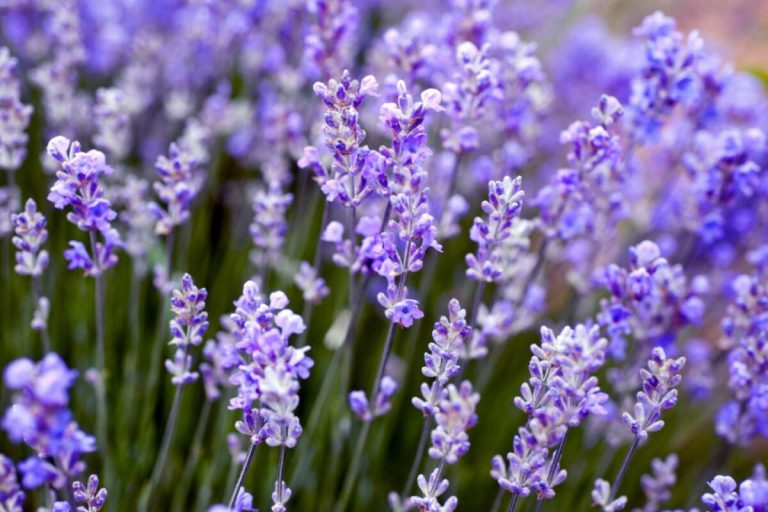
Lavender

Lavender

Lavandula angustifolia

SubshrubPerennialFull SunSummer bloom

Lavender is a fragrant, introduced perennial subshrub for sunny, dry gardens. It suits pollinator plantings and containers when roots stay out of wet soil. Its purple, blue, or white summer flowers add colour, but winter exposure and poor drainage can limit success in Canada.

Also known as: English lavender, true lavender

Plant at a glance

Plant typeSubshrub
LifecyclePerennial
Hardiness5–8
LightFull Sun
SoilDry and Excellent
Mature height45–100 cm
Mature width60–150 cm
BloomsSummer
Flower colourPurple, Blue, and White
WaterLow

What this plant is like

Lavender, also called English lavender or true lavender, is a perennial subshrub from the Mediterranean region. It has a moderate maintenance level and a low water requirement once established. It is suitable for containers and offers edible flowers and leaves. Its Canadian hardiness range is zones 5 to 8.

Where it grows best

Choose full sun and soil with excellent drainage. A site that remains dry is more suitable than one that holds water. Lavender is especially useful where a gardener can control drainage, including raised or container plantings. Winter wet and exposure may still limit survival, particularly near the colder edge of its recommended Canadian range.

Garden and wildlife value

Lavender has high pollinator value and brings summer colour to ornamental or dry, sunny plantings. It is introduced rather than native, so use it as part of a planting that includes native plants when habitat value is the main goal. Its privacy value is low.

Everyday care

Keep watering restrained and focus on preventing persistently wet roots. Routine care is mainly establishment watering, drainage management, and keeping plants open enough for air movement. Feeding should remain restrained rather than routine or heavy.

Routine care is mainly controlled establishment watering and prevention of persistently wet roots; feeding should remain restrained and evidence-led.

What to do through the season

Use plant condition and local weather rather than a fixed Canada-wide calendar. Plant when spring soil is workable. Deadhead after flowering, and prune when spring growth appears. Summer is the supported season for propagation. Protect the plant from winter wet.

Corrective and preventive care

Drainage is the main preventive priority. Avoid standing water and persistently wet soil, and respond early to decline. Inspect troubled plants rather than assuming a cause. If several plants decline or crowns and roots are discoloured, remove affected plants and seek diagnosis before replanting lavender in the same soil.

The clearest supported problems are wet-root decline and leaf spotting. Start with drainage, restrained watering, sanitation, and air movement rather than routine pesticide use.

Before you plant

Lavender is introduced and is not listed as invasive in the reviewed sources; no applicable Canadian restriction was identified. ASPCA lists lavender as toxic to dogs and cats, so consider household pets before planting. Choose a reliably sunny, sharply drained location and account for winter wet and exposure.

The main limits are winter exposure, winter wet, and unresolved conflicting pet-safety information. Do not generalize zone or province boundaries without direct evidence.

Ecological and wildlife value

Lavender can serve as an introduced flowering herb and ornamental in dry, sunny pollinator plantings, but it should not replace native plants where habitat value is the goal.

Seasonal actions

Use observable triggers rather than a fixed national calendar: plant in workable spring soil, deadhead after flowering, prune when spring growth appears, propagate in summer, and protect against winter wet.

Problems and symptoms

Possible concern: Root and crown rotWhat to watch for: Wilting, yellowing, dieback, or sudden plant death; affected roots may be brown or black and the crown may be discolored.

Check first

  • Inspect the crown and roots after lifting a declining plant for brown or black root tissue.

What to do

  • Plant in very well-drained soil and avoid sites prone to standing water.
  • Stop excess irrigation and improve drainage where feasible; do not keep the root zone wet or allow standing water.

When to get help

If multiple plants decline, die suddenly, or show crown/root discoloration, remove affected plants and seek diagnostic confirmation before replanting lavender in the same soil.

Possible concern: Aphids or spittlebugsWhat to watch for: Small insects on young growth or leaves, or conspicuous frothy spittle masses; possible localized leaf distortion or feeding damage.

Check first

  • Inspect leaf undersides and young growth for insects or white frothy spittle masses.

What to do

  • Regularly inspect new growth and maintain open, uncrowded plants.
  • Wash pests from the plant with a strong stream of water when practical; reassess before considering any further action.

When to get help

Escalate for diagnosis if feeding is extensive, recurring, or accompanied by systemic decline rather than isolated minor damage.

Where it grows naturally

  • Mediterranean Region

Pruning and deadheading

Remove faded flower spikes. Once established, lightly shorten the plant into green leafy growth to maintain a compact shape and encourage branching; remove dead or damaged stems in spring. Do not shear into bare wood.

  • Best timing: Deadhead after flowering fades; shape only into green growth, preferably at spring green-up or with conservative post-flowering pruning.
  • Decision cue: Deadhead when flower spikes have faded.
  • Decision cue: For annual shaping, prune when green growth emerges in spring or lightly after flowering, depending on local winter risk.
  • deadheading: After flowers fade during the flowering season.. Cut off faded flower spikes and a short portion of leafy stem.
  • annual shaping: When new green growth appears in spring, or lightly after flowering where winter conditions permit.. Lightly reduce green leafy growth; remove dead or damaged stems.
  • Pruning approach: light shaping
  • Pruning approach: removal of dead or damaged stems
  • Caution: Do not cut into leafless woody stems; lavender may not regrow from old wood.
  • Caution: Avoid routine heavy late-season pruning where winter injury is a concern; retain green growth.
  • Known limitation: The reviewed sources do not establish one pruning date suitable for all Canadian regions or cultivars. Existing hardiness data alone should not be used to infer a pruning calendar.

Propagation

Take a healthy non-flowering side shoot just below a leaf node. Remove the lower leaves and insert the cutting into moist, sterile, well-drained propagation media. Keep it evenly moist, not saturated, until roots form; then pot up and acclimate gradually.

  • Best timing: Prefer non-flowering stem cuttings after flowering or during summer vegetative growth.
  • Decision cue: Take cuttings from healthy, non-flowering side shoots.
  • Decision cue: Begin when the plant has finished flowering or during the recommended summer vegetative-growth window.
  • stem cuttings: After flowering or during summer vegetative growth; Colorado State reports rooting in about three weeks under suitable conditions.. Use vegetative, non-flowering side shoots; remove leaves from the lower portion and root in moist sterile media.
  • seed: Not specified by the reviewed sources.. Possible for the species, but less conservative when preserving a named cultivar or uniform plant characteristics.
  • Caution: Use non-flowering shoots and sterile, well-drained rooting media; excessive moisture increases rot risk.
  • Caution: Seed may not reliably preserve cultivar characteristics; vegetative cuttings are the conservative choice for true-to-type plants.
  • Known limitation: The reviewed evidence supports cuttings but does not establish a single Canadian calendar or a cultivar-specific rooting protocol for every growing environment.

Personalize for your garden

Your garden conditions

Tell us a little about your garden to see how this plant fits your zone, light and growing conditions. No account is required.

These garden conditions stay in this browser for Gardening Calendar. Sign in to keep your garden information with your account.

How this plant fits your garden

Enter your conditions above to see matches, cautions, and seasonal guidance.

This plant can be found at

References

Plant Definition last reviewed: October 9, 2026.