Gaillardia aristata
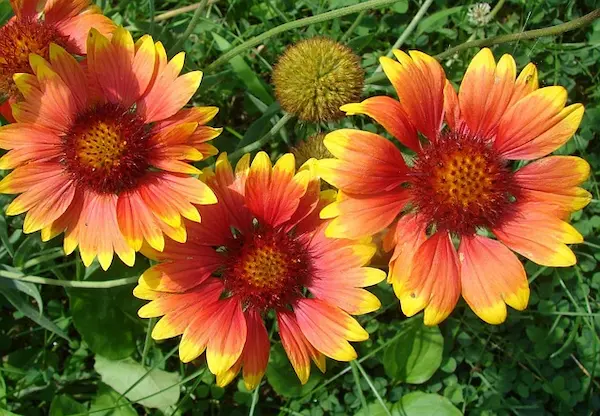
Gaillardia aristata
Gaillardia aristata
Gaillardia aristata, or blanketflower, is a cold-hardy, clump-forming perennial wildflower native to western and central North America, including parts of western Canada. Its red, orange and yellow flowers brighten sunny gardens from June through September. Once established, it needs little water, but reliable drainage is essential because wet soil can cause root rot.
Share
Plant at a glance
What this plant is like
Blanketflower forms loose clumps or tufts of erect to somewhat spreading stems. It typically reaches 40–75 cm tall and 35–60 cm wide. Red, orange and yellow flowers appear from early summer into early fall, usually from June through September, depending on region. It is a full-sun, herbaceous perennial with a low-maintenance habit and strong drought tolerance once established. It is hardy across zones 3–10.
Where it grows best
Choose full sun and well-drained soil. Sandy, loamy or gravelly conditions suit this species, including lean soils, dry slopes, rocky sites, meadows and prairie-style plantings. Avoid wet, poorly drained or chronically saturated locations, where root rot may develop. In western and prairie regions of Canada—including parts of British Columbia, Alberta, Saskatchewan, Manitoba, the Northwest Territories and Yukon—blanketflower reflects its native dry-meadow and grassland habitats. In these regions, it generally emerges in spring after frost risk declines and begins flowering in early summer; a prolonged, cool spring may delay flowering slightly.
Garden and wildlife value
Use blanketflower in perennial borders, pollinator gardens, naturalized meadows, prairie plantings, native-plant gardens, dry or rocky slopes, wildlife habitat plantings and containers. Its flowers provide nectar and pollen for bees, butterflies and pollinating beetles. The plant is also a larval host for specialist moths, and can provide cover and minor forage for wildlife and livestock.
Everyday care
Water sparingly in well-drained soil. After establishment, provide occasional deep watering during extended hot, dry periods rather than frequent irrigation. Keep the site sunny and avoid routine watering that leaves the crown and roots continually moist. The plant is generally low-maintenance when its site matches these conditions.
PlantingInitial establishment of Gaillardia aristata plants or direct-sown seed in garden or restoration settings.
Timing: Plant established nursery stock or transplants in spring after local frost danger has passed and soils are workable; in milder regions of southern Canada, fall planting is possible where winters are reliably cold but not subject to repeated freeze–thaw heaving, provided the site is well‑drained.
When to act
- Local frost‑free date has passed and soils are no longer waterlogged.
- Site offers full sun and well‑drained, lean to moderately fertile soil typical of prairies, meadows, or dry slopes.
- Need to establish new pollinator, meadow, or native‑plant plantings using Gaillardia aristata.
How: Set container-grown plants into well‑drained, low to moderately moist soil in full sun once soils have thawed and the risk of hard frost has passed; ensure the crown sits at or slightly above the surrounding soil level, and firm soil gently to eliminate air pockets without compacting the site. For restoration or meadow plantings, sow seed into a prepared, weed‑reduced, well‑drained seedbed, pressing lightly into the surface or covering very shallowly so light can reach the seeds.
Caution: Do not treat the broad zone 3–10 hardiness narrative as evidence that all Canadian provinces share identical planting windows; local frost dates and soil thaw timing must be confirmed from regional sources or experience.
Regional note: Sources describe the species as native or naturalized in western and prairie provinces (e.g., Alberta, British Columbia, Saskatchewan, Manitoba, Northwest Territories, Yukon) and generally distributed in southern Canadian provinces, but they do not provide province‑by‑province planting calendar dates; guidance remains generalized to ‘after frost danger has passed’ and must be aligned with local climate data.
What to do through the season
During the blooming season, remove spent flowerheads to encourage continued flowering and maintain a tidy appearance. In early spring, before new growth emerges, remove winter-killed or tattered stems. Seed is the supported propagation method; sow outdoors after frost danger has passed or sow lightly covered seed in cells. Germination may be erratic, and cold stratification is not needed.
Problems and symptoms
The main documented disease concern is root rot associated with poorly drained or chronically wet soil. Declining plants may show general weakness, chlorosis, wilting or collapse; affected roots or crowns may be dark, soft or decomposed. Leaves, buds and petals may also have minor chewing or holes from insects. Some feeding is part of the plant’s role as a host and pollinator resource, rather than evidence of a specific pest.
Possible concern: Root rot associated with poorly drained or chronically wet soilWhat to watch for: Plants in poorly drained or chronically wet spots may exhibit general decline, chlorosis, wilting, and eventual collapse; roots and crown tissues may…
Check first
- Inspect roots and crown of declining plants by gently lifting or exposing a small portion of the root system to look for dark, soft, or foul-smelling tissues indicative of rot rather than….
What to do
- Plant Gaillardia aristata only in well-drained sites, such as sandy or gravelly soils, dry slopes, or raised beds; avoid low-lying areas where water collects.
- Maintain low to moderate watering, allowing soil to dry between waterings; avoid routine irrigation in native-type, dry meadow plantings.
When to get help
If multiple plants show sudden wilt and collapse in persistently wet or poorly drained soil, and roots appear dark and soft, consider consulting a local horticulture extension service or plant local extension….
Corrective and preventive care
Prevent root problems by planting in well-drained soil and avoiding low spots where water pools. Check soil after rain or irrigation for prolonged standing water, reduce frequent watering and improve drainage around affected plants. Severely collapsed plants may need removal before replanting in a better-drained location. Tolerate minor insect feeding, maintain diverse plantings and avoid broad-spectrum insecticides around pollinator gardens. Seek local diagnostic advice if several plants suddenly collapse in wet soil or herbivory becomes severe.
Before you plant
Confirm that the location receives full sun and drains freely. Plan for a mature size of approximately 40–75 cm high by 35–60 cm wide. This plant is best suited to dry or moderately moist conditions, not wet ground. Its native Canadian range is concentrated in western and prairie regions, although the approved hardiness range extends from zone 3 to zone 10.
Ecological and wildlife value
Ecological interaction: General insect herbivory associated with pollinator and host-plant interactions
What you may notice: Leaves, buds, or ray petals may show minor chewing, notches, or holes from visiting insects; some larvae, including specialist moth caterpillars, may feed on flowers or foliage as part of their life….
Seasonal actions
- Canada (general, with contrast between drier western/prairie and more humid garden regions): Across Canada, align planting of Gaillardia aristata (whether as plugs or direct‑sown seed) with local spring frost‑free dates, as no province‑specific calendars are provided in the literature. In western and prairie regions where summers are relatively dry and sunny, the species can perform as a long‑lived perennial under lean, well‑drained conditions, whereas in more humid…
Pruning and cutting backSeasonal removal of old flowering stems to tidy plants and renew growth without compromising winter survival.
Timing: Late winter to early spring, after severe cold has passed and when new green basal growth can be seen at the crown.
When to act
- Visible winter‑killed, bleached, or tattered stems from the previous year.
- Emergence of new basal foliage indicating active growth.
- Desire to improve appearance or reduce lodging of old stems before the main growing season.
How: After the coldest part of winter, once new basal foliage rosettes are visible, cut old, winter‑killed or tattered stems back to just above the crown using clean pruners, taking care not to injure emerging shoots. In naturalized meadow plantings, a higher cut height (leaving short stubble) may be used to retain some structure and habitat.
Caution: Do not remove all standing stems in late fall in colder Canadian climates; extension and native‑plant guidance emphasize that herbaceous perennials in prairie and meadow settings benefit from leaving some stems for crown protection and wildlife habitat, with major cutback deferred until late winter or early spring.
Regional note: No province‑specific cutback timing is given; guidance to cut back in late winter or early spring after the coldest weather has passed and when new basal growth is visible should be interpreted relative to local winter severity and spring onset.
Garden and landscape value
- Long blooming period from early summer into fall
- High drought tolerance once established
- Excellent nectar and pollen resource for a wide range of native bees and other pollinators
- Cold-hardy native wildflower adapted to prairie and meadow conditions
- Performs well in lean, well-drained soils and full sun
- Perennial borders
- Pollinator gardens
- Naturalized meadows and prairie plantings
Where it grows naturally
- Native to western and central North America, including much of western Canada (e.g., British Columbia, Alberta, Saskatchewan, Manitoba, Northwest Territories, Yukon) and the northern Great Plains and Rocky Mountain region of the United States from the Dakotas and Montana south to Colorado and west to Washington and Oregon.
Other plants to consider
These alternatives share a similar garden role or botanical relationship, with some important differences.
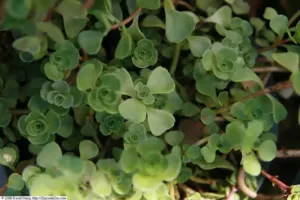
Sedum spurium ‘John Creech’
Sedum spurium ‘John Creech’
Choose this if: Your plant area has gravely soils
Zones 3–8 · Up to 15 cm · Full Sun
Propagation
Propagate Gaillardia aristata primarily from seed. Sow seeds outdoors in situ once the danger of frost has passed in spring, pressing them lightly into the soil surface so they are in good contact but only thinly covered; use a well-drained seedbed to reduce damping-off and rot.[15] Alternatively, sow seeds in cells or trays indoors or in a greenhouse, covering them lightly and maintaining temperatures around 70°F (approximately 21°C) until germination.[15] Water gently to keep the medium just moist but not saturated. Expect germination to be somewhat irregular, with seedlings emerging over a span of time; transplant carefully once seedlings are established and the outdoor conditions are suitable.
- Best timing: Primarily propagated by seed sown in spring after frost danger has passed, either directly in the garden or in cells/trays at approximately 21°C (70°F).
- Decision cue: Need to produce new plants for restoration, meadow, or pollinator plantings.
- Decision cue: Availability of fresh, viable seed collected from existing plants or purchased from reputable sources.
- Decision cue: Suitable spring temperatures (around 20–21°C / 68–70°F) and frost-free conditions for sowing.
- Direct sowing seed outdoors: Spring after local frost danger has passed, typically late spring in colder Canadian regions.. Sow into prepared, well-drained soil; press seed lightly into the surface and cover only lightly. Ensure frost danger has passed to protect emerging seedlings.
- Sowing seed in cells or trays under protection: Late winter to spring under protected conditions, timed so seedlings are ready for transplanting after outdoor frost risk has passed.. Sow seeds in a free-draining medium; cover lightly and maintain temperatures around 70°F (about 21°C). Transplant seedlings once they are established and outdoor conditions are suitable.
- Caution: Do not bury seeds deeply; authoritative guidance specifies only light covering or pressing into the soil surface to ensure adequate light and contact for germination.[15]
- Caution: Because germination can be erratic, avoid assuming complete failure after a short period; continue monitoring the seedbed for staggered emergence.[15]
- Caution: Cold stratification is not required for Gaillardia aristata based on available evidence; avoid unnecessary long stratification treatments unless locally recommended.[15]
- Known limitation: Available authoritative sources focus on seed propagation and do not provide detailed protocols for vegetative methods such as division or stem cuttings specific to Gaillardia aristata; therefore these methods are not included.[5][12][15] Timing recommendations are generalized to spring sowing after frost based on a single detailed fact sheet, and may need adjustment in some Canadian regions depending on local frost dates.
Personalize for your garden
Tell us a little about your garden to see how this plant fits your zone, light and growing conditions. No account is required.
These garden conditions stay in this browser for Gardening Calendar. Sign in to keep your garden information with your account.
How this plant fits your garden
Enter your conditions above to see matches, cautions, and seasonal guidance.
Did you find what you were looking for?
Let us know what was useful or what this plant profile is missing.
References
- Gaillardia aristata - Plant Toolbox - NC State University
- Gaillardia aristata - Wikipedia
- Gaillardia aristata (blanketflower) - Identification & Care Guide
- Blanket Flower: Native Wildflower for Pollinators
- [PDF] Blanketflower (Gaillardia aristata) - USDA Forest Service
- Www.ag.utah.gov/farmers/conservation-division/pollinator-program
- Plants for Pollinators: Blanketflower
- Great Blanket-flower (Gaillardia aristata) | Native Plant Guide
- Blanketflower (Gaillardia aristata) Plant Guide - USDA
- Blanketflower — Batten Blooms
- Blanket Flower, Gaillardia spp. - Wisconsin Horticulture
- Blanketflower Gaillardia aristata: A Native Conservation Wildflower for Use in Montana and Wyoming
- cwelwnp.usu.edu
- montana.edu
- frontrange.wildones.org
- westernforbs.org
- wildflower.org
- inaturalist.ca
Plant Definition last reviewed: September 9, 2026.
Add Gaillardia aristata to My Garden
Save plants you grow and receive personalized guidance shaped by your garden, location, season and weather.
Already have My Garden?
Sign inNew to My Garden?
My Garden Brief provides personalized briefings and saved plants. My Garden Plus adds personalized browsing across Plant Profiles.