Sedum spurium ‘John Creech’
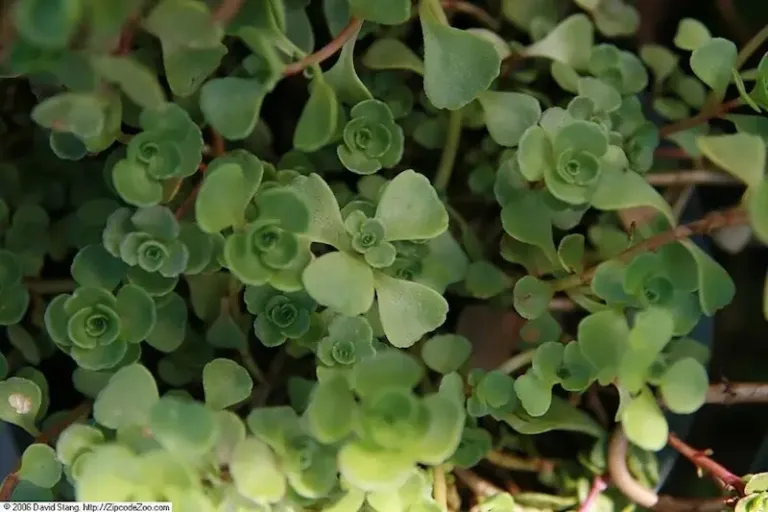
Sedum spurium ‘John Creech’

Sedum spurium ‘John Creech’

Summer and Late Summer bloomPollinator / wildlife value

Sedum spurium ‘John Creech’ is a compact, spreading, mat-forming groundcover with semi-evergreen foliage and pink to red-pink flowers in summer or late summer. It suits dry, well-drained, sandy or gravelly soil and works well in rock gardens, on slopes, along edges, in containers, and in small spaces.

Plant at a glance

SoilDry To Medium, Well Drained, Excellent Drainage, Sandy, and Gravelly
Mature height2.5–15 cm
Mature width15–30 cm
BloomsSummer and Late Summer
Flower colourPink, Pink Shades, and Red Pink
Wildlife valuePollinators, Butterflies, and Bees

What this plant is like

This low-growing perennial forms a spreading mat, typically reaching about 2.5 to 15 cm tall and spreading 15 to 30 cm wide. Its foliage is evergreen or semi-evergreen, depending on conditions, and its pink, pink-shaded, or red-pink flowers appear in summer to late summer. The plant is compact, drought-tolerant, heat-tolerant, and suited to low-maintenance groundcover planting.

Where it grows best

Plant it in full conditions that provide dry to medium moisture and excellent drainage. Sandy or gravelly soil is suitable, with a broad supported soil-pH range of about 6.5 to 8. Avoid wet or poorly drained locations, including sites where moisture remains around the roots. It can be used in rock and alpine gardens, on slopes, for erosion control, as edging, in containers, or in massed groundcover plantings.

Garden and wildlife value

The dense, spreading growth can help smother weeds and cover small areas with relatively little maintenance. Its flowers provide value for pollinators, including bees and butterflies. Its compact habit makes it useful for small spaces, containers, edging, and areas where a low mat is preferred over a tall perennial.

Everyday care

Keep the soil well drained and avoid overwatering. Once established, the plant is described as drought-tolerant and heat-tolerant, but it should not be placed in persistently wet conditions. Richer, moister sites may encourage more vegetative growth and fewer flowers. Trimming after flowering can help maintain its shape.

What to do through the season

Division is supported in spring. Softwood cuttings are supported in early summer, and stem cuttings are also listed as a propagation method. After flowering, trim the plant if needed to maintain a tidy shape. Its semi-evergreen character may vary with growing conditions; no additional regional winter guidance is provided in the approved data.

Problems and symptoms

The main limitation is intolerance of wet or poorly drained soil. Excess moisture, including winter wetness, can impair growth. Plants in richer, moister conditions may be less floriferous. The spreading habit may also require trimming if the plant loses its intended shape after flowering.

Corrective and preventive care

Choose a sandy or gravelly, well-drained site and avoid locations that stay wet. If growth is weak in a moist or rich planting area, review drainage and moisture conditions before adding amendments or water. Trim after flowering when needed to restore a compact outline. Division, stem cuttings, and softwood cuttings can be used for propagation.

Before you plant

Confirm that the site drains freely and is not prone to standing water or persistent winter moisture. Allow room for a mat approximately 15 to 30 cm wide and up to 15 cm tall. Choose it where a low, spreading, drought- and heat-tolerant groundcover is useful, such as a rock garden, slope, edging, container, alpine garden, or small-space planting.

Garden and landscape value

  • drought-tolerant
  • heat-tolerant
  • evergreen or semi-evergreen
  • weed-smothering groundcover
  • low maintenance
  • groundcover
  • rock garden
  • edging

Pruning and deadheading

Trim back after flowering to maintain shape; deadheading is optional rather than essential. For public guidance, describe this as post-bloom tidying rather than a strict requirement.

  • Best timing: after flowering in summer
  • Decision cue: Flowering has finished
  • Decision cue: Mats are becoming too loose or untidy
  • Decision cue: A compact shape is desired
  • Pruning approach: post-flowering trim
  • Pruning approach: optional deadheading
  • Caution: Do not assume deadheading is required; the plant is mainly maintained by trimming back after flowering.
  • Caution: Avoid generalizing from unrelated sedums with different pruning needs.
  • Known limitation: Evidence supports post-flowering trimming for shape, but not a species-specific deadheading requirement or a precise calendar date beyond the bloom period.

Propagation

Propagate by division in spring or by softwood stem cuttings in early summer. Use healthy, actively growing stems for cuttings and divide established mats when they are large enough to split cleanly.

  • Decision cue: Planning spring division
  • Decision cue: Taking healthy non-flowering stems for cuttings
  • Decision cue: Establishing new plants from mature clumps
  • division: spring. Divide established clumps.
  • Caution: Do not add leaf-cutting propagation because the captured sources do not directly support it for this cultivar.
  • Caution: Use only methods directly supported for the species/cultivar.
  • Known limitation: The captured evidence does not support leaf cuttings or a cultivar-specific propagation timetable beyond spring division and early-summer softwood cuttings.

Personalize for your garden

Your garden conditions

Tell us a little about your garden to see how this plant fits your zone, light and growing conditions. No account is required.

These garden conditions stay in this browser for Gardening Calendar. Sign in to keep your garden information with your account.

How this plant fits your garden

  • The current season is included in this plant’s recorded flowering season. Local timing can vary.

Sources used for this profile

Plant Definition last reviewed: August 23, 2026.