Panicle hydrangea

Panicle hydrangea

Hydrangea paniculata

Full SunJuly and August bloomPollinator / wildlife value

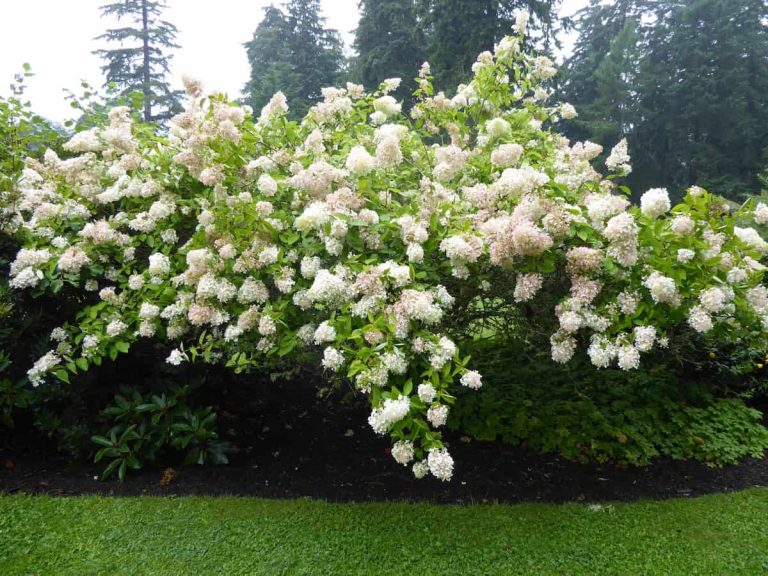
Panicle hydrangea (Hydrangea paniculata) is an upright, multi-stemmed shrub known for summer panicles that may open white or cream and mature through green, pink, mauve or red tones. It prefers evenly moist, well-drained soil and is valued for strong stems, new-wood flowering, urban tolerance and cold hardiness.

Plant at a glance

Hardiness3a–8b
LightFull Sun and Partial Shade
SoilMoist, Well Drained, Loam, Clay, Average Garden Soil, Organically Rich Soil, and Rich In Organic Matter
Mature height180–240 cm
Mature width180–240 cm
BloomsJuly, August, and September
Flower colourWhite, Cream, Pink, and Green
Wildlife valuePollinators, Bees, and Butterflies
WaterArray
Care levelArray

What this plant is like

Panicle hydrangea is an upright, multi-stemmed shrub that can also be trained as a small single-trunk tree. Mature size varies among cultivars, so no single species-wide height or width is provided here. Large flower panicles appear from July through September, spanning mid-summer, late summer and early autumn. Flowers may be white, cream, green, pink, mauve or red, depending on the cultivar and floral development. The species blooms on new wood, giving pruning a flexible timing window compared with hydrangeas that flower on older growth. It is considered adaptable and low-maintenance, although watering and pruning may be needed to maintain performance and size.

Garden and landscape value

Grow panicle hydrangea for its long summer-to-early-autumn display and its range of flower colours and aging tones. Strong stems are a notable feature, and the plant can be maintained as a shrub or trained into a small tree form. It is described as tolerant of urban conditions, cold-hardy and adaptable to average garden soil when drainage is good. Its easy-care character is balanced by the need for moisture management and occasional pruning, particularly when controlling its size.

Where it grows best

Provide moist, well-drained soil. Panicle hydrangea can grow in loam, clay or average garden soil, with organically rich soil also suitable. Clay is acceptable when drainage is good. Keep the soil evenly moist, water deeply during establishment and provide supplemental water during prolonged heat or dry spells. Avoid allowing the soil to dry out completely, especially during bloom. Do not plant it in wet, waterlogged or poorly drained locations, where root rot can occur. The species has broad tolerance of acidic to alkaline conditions, but alkaline soil may contribute to foliar chlorosis. Prune in late winter or early spring, or in late fall after dormancy.

Ecological and wildlife value

Blooming generally runs from July through September, covering mid-summer to early autumn. The large panicles are commonly white or cream at opening and may develop green, pink, mauve or red tones as the display progresses; exact colour depends on the cultivar. The approved information identifies pollinators, bees and butterflies as values associated with the plant, although the supplied notes caution that species-specific pollinator documentation is limited. Flowers may brown during drought or heat, making consistent moisture important while the plant is in bloom.

Regional guidance

Panicle hydrangea is presented as cold-hardy and tolerant of urban conditions, making those strengths relevant to Canadian gardens. Its flowers develop on new wood, and pruning is recommended in late winter or early spring, with late fall after full dormancy also listed as an option. Cultivar size varies considerably, so gardeners should confirm the mature dimensions of a selected form rather than rely on a single species-wide measurement. Good drainage remains important in all locations.

Everyday care

  • water deeply during establishment
  • keep soil evenly moist
  • water during prolonged heat or dry spells
  • avoid letting the soil dry out completely
  • late winter
  • early spring
  • late fall after dormancy
  • softwood cuttings

Before you plant

  • susceptible to root rot in wet soils
  • foliar chlorosis in alkaline soils
  • can require pruning to maintain size
  • flowers may brown in drought/heat

Pruning and deadheading

Prune in late winter or early spring before active growth; it flowers on the current season’s growth

  • Decision cue: Plant still dormant; buds beginning to become apparent; active extension growth has not begun.
  • Pruning approach: Heading cuts above healthy buds; remove or shorten last year's growth as appropriate for desired size.
  • Caution: Confirm that the plant is Hydrangea paniculata—different hydrangea species have different pruning rules.

Propagation

Panicle hydrangea can be propagated by softwood cuttings in early summer or hardwood cuttings in winter. The species can also be propagated from seed sown in spring.

  • Decision cue: For softwood cuttings, the useful cue is young, soft current growth; RHS describes softwood cuttings as being taken from young shoots and gives the practical preparation method.
  • Decision cue: For hardwood cuttings, the useful cue is current-season growth that has become woody while still pliable; RHS places hardwood-cutting collection from mid-autumn through late winter.
  • seed: early to mid fall. when the spent flower heads have completely faded, turned brown, and feel papery to the touch
  • Known limitation: this is species-level guidance and cultivar-specific restrictions/differences should be handled by cultivar records

Personalize for your garden

Your garden conditions

Tell us a little about your garden to see how this plant fits your zone, light and growing conditions. No account is required.

These garden conditions stay in this browser for Gardening Calendar. Sign in to keep your garden information with your account.

How this plant fits your garden

  • August is included in this profile’s recorded flowering months. Actual timing can vary with local conditions.

Related Gardening Calendar articles

Sources used for this profile

Plant Definition last reviewed: August 27, 2026.