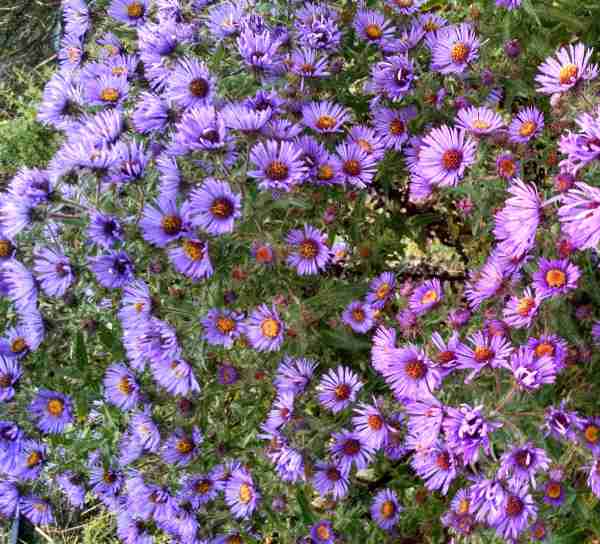
New England aster

New England aster

Symphyotrichum novae-angliae

PerennialFull Sun To Part SunLate Summer and Fall bloomPollinator / wildlife value

New England aster is a tall, upright perennial for moist, well-drained sites. Its purple, pink, rose, lavender, or magenta flowers brighten late summer and fall, providing a valuable late-season food source for bees, butterflies, moths, and other pollinators.

Also known as: New England aster, Aster novae-angliae, Symphyotrichum novae-angliae, Hardy aster

Plant at a glance

Plant typePerennial
LifecyclePerennial
Hardiness3b–7b
LightFull Sun To Part Sun
SoilMoist, Free Draining, Well Drained, Moderately Drained, Sandy, Loamy, and Clay
Mature height91–183 cm
Mature width30–91 cm
BloomsLate Summer, Fall, August, September, and October
Flower colourPurple, Pink, Rose, Lavender, and And Magenta
Wildlife valueBees, Butterflies, Moths, Pollinators Generally, Birds, Native Bees, and Larval Host Value Is Not Established In The Supplied Sources
WaterModerate
Care levelArray

What this plant is like

New England aster forms an upright clump and produces showy flower heads in late summer and fall, commonly from August through October and until frost. Flower colour ranges from purple and pink to rose, lavender, and magenta. It is a Canadian-hardy perennial suited to naturalistic plantings.

Where it grows best

Choose full sun where possible, with part sun also suitable. Plant it in rich, moist but free-draining soil; sandy, loamy, and clay soils can work when moisture is dependable. It suits rain gardens, meadows, prairie-style plantings, naturalized areas, and other open sites. It performs poorly in drought, so avoid locations that regularly dry out.

Garden and wildlife value

This native perennial adds strong late-season colour when many plants are finishing. Its flowers support bees, butterflies, moths, and pollinators generally, while birds may use the plant or its seed. It is especially useful in pollinator gardens and native plantings across much of central and eastern Canada, including Manitoba, Ontario, Quebec, New Brunswick, Nova Scotia, and parts of British Columbia.

Everyday care

Keep the soil evenly moist without leaving the root zone waterlogged. Water when the top few centimetres begin to dry, particularly during extended dry periods. Maintain good spacing and airflow, since dense growth can increase the risk of powdery mildew in warm, humid conditions. Container plants need a large, deep vessel, reliable drainage, and consistent moisture.

Problems and symptoms

Tall stems may become floppy, especially when the plant is not cut back early enough. A recurring white coating on leaves points to powdery mildew risk. Wilt despite moist soil, or soft, dark stem bases, signals declining growth that needs attention.

Before you plant

Plan for a moderately maintained perennial rather than a drought-tolerant plant. Its height can make staking or early-season cutback useful, and its mature clump needs room to remain open. Division, seed, and softwood or stem cuttings are approved propagation options. Pet safety is unknown.

Seasonal actions

  • Early Season Cutback: Pinch or cut stems back by about one-third to one-half in spring or early summer, before flower buds develop, to reduce flopping.
  • Post Flowering Cleanup: Cut old stems close to the ground in late autumn after flowering and foliage decline.
  • Canada: Across Canada, use plant condition rather than a fixed province calendar: divide when spring growth begins, cut back after autumn dieback, and apply any winter covering only after freeze-up.
Pruning and cutting backReduce flopping and produce a shorter, bushier plant.

Timing: Spring to early summer, before flower buds develop.

When to act

  • Stems are becoming tall or likely to flop.
  • A shorter, bushier form is wanted before flowering.

How: In spring or early summer, pinch or cut stems back by about one-third to one-half. Leave enough foliage for continued growth.

Caution: Cutting back can delay flowering; do not remove all stems during active growth.

DivisionMaintain vigour, control clump size, and improve airflow in crowded growth.

Timing: Spring; repeat approximately every three years or when the clump becomes crowded.

When to act

  • The centre becomes weak or sparse.
  • Powdery mildew recurs in dense lower growth.
  • The clump has outgrown its space.

How: Lift the clump, separate vigorous young outer shoots with roots, and replant them at the original depth. Discard weak or damaged pieces.

Caution: Replant vigorous outer sections promptly and keep divisions from drying during the operation.

OverwinteringProtect the crown from exposed winter conditions without encouraging crown rot.

Timing: After freeze-up in autumn; check again in spring.

When to act

  • The planting site is exposed to drying winter wind.
  • The crown is in a newly planted or unusually open location.

How: After the soil freezes, apply a light layer of loose mulch around, not tightly over, the crown. Remove or thin it in spring as growth resumes.

Caution: Do not add a thick, wet mulch layer against the crown; winter protection requirements are not established as province-specific for this species.

Regional note: No supported province-specific treatment was identified; use only a light, loose covering where the site is exposed after the ground has frozen.

Corrective and preventive care

Provides observation-led first responses for the two consequential problems supported by the reviewed sources, without asserting a diagnosis or pesticide schedule.

  • White Coating On Leaves: For recurring white powdery leaf coating, improve airflow, avoid wetting foliage, remove badly affected leaves, and divide crowded growth in spring.
  • Persistent Wilt Or Stem Collapse: If stems wilt despite moist soil or bases become soft and dark, remove declining material, improve drainage, and seek help if decline continues.
Pruning and cutting backReduce powdery mildew risk when lower leaves develop a white coating or plants are crowded.

Timing: At first observation of recurring white leaf coating; structural correction during spring division.

When to act

  • White powdery coating appears on leaves.
  • Lower foliage is repeatedly affected in dense growth.

How: Improve spacing and airflow, remove badly affected leaves, and divide crowded clumps during the recommended season. Water at the soil surface.

Caution: Avoid overhead watering and do not compost heavily diseased foliage.

Garden and landscape value

  • late-season pollinator resource
  • native range in Canada and the northeastern/central U.S.
  • showy autumn color
  • pollinator garden
  • native plant garden
  • meadow or prairie planting
  • rain garden
  • naturalized area

Where it grows naturally

  • British Columbia Ephemeral
  • Nova Scotia Native
  • Saskatchewan Excluded
  • Manitoba Native
  • Quebec Native
  • New Brunswick Native
  • Ontario Native
  • Newfoundland and Labrador Excluded

Read more on GardeningCalendar

Personalize for your garden

Your garden conditions

Tell us a little about your garden to see how this plant fits your zone, light and growing conditions. No account is required.

These garden conditions stay in this browser for Gardening Calendar. Sign in to keep your garden information with your account.

How this plant fits your garden

  • October is included in this profile’s recorded flowering months. Actual timing can vary with local conditions.

References

Plant Definition last reviewed: October 14, 2026.