Giant fleeceflower
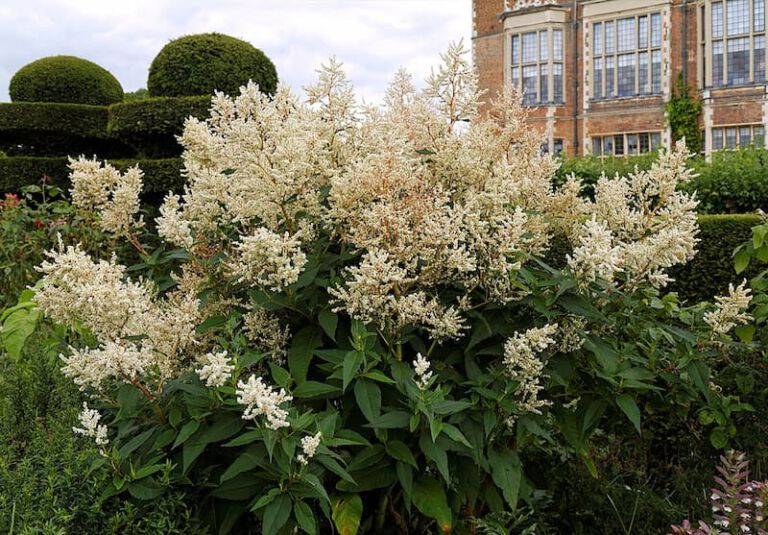
Giant fleeceflower
Persicaria polymorpha Ledeb.
Giant fleeceflower is a bold, upright herbaceous perennial that forms a broad clump of rhizomatous stems. It reaches about 120 to 240 cm tall and 90 to 300 cm wide, with white to creamy-white summer flower plumes from June through August. It suits moist, well-drained garden sites and supports butterflies.
Also known as: persicaria polymorpha, Polygonum polymorphum, Aconogonon polymorphum, giant fleeceflower
Plant at a glance
What this plant is like
Persicaria polymorpha Ledeb. is a clump-forming, rhizomatous herbaceous perennial, also known as great white fleece flower and white dragon knotweed. Its upright growth gives it a strong architectural presence. Mature plants are commonly 120 to 240 cm tall and 90 to 300 cm wide. White or creamy-white flowers appear in summer, generally from June through August, followed by showy seed heads. The species is native to the Himalayas, Japan and China.
Where it grows best
Plant giant fleeceflower in moist to medium, well-drained soil. It tolerates varied soils, including loam and sandy loam, but dry conditions can cause wilting, particularly in afternoon sun. Water availability is important even after establishment, especially during hot, dry weather. Its substantial size makes it suitable for borders, foundation or perimeter planting, informal and cottage gardens, and mass plantings.
Best suited to sunny to partly shaded sites with moisture-retentive but draining soil.
- Light And Soil: Best in full sun to partial shade and moist, well-drained soil.
- Moisture Fit: Prefers regular moisture; established plants may tolerate some dryness, but sustained drought can reduce vigor.
- Landscape Use: Useful as a background, border, or specimen perennial in larger garden beds.
Garden and wildlife value
This is a bold, long-blooming perennial for gardeners who want height and structure without a highly demanding care routine. Its white flower plumes provide a strong summer display, while the seed heads remain ornamental. It is pollinator-friendly and attracts butterflies. Sources describe it as not considered invasive, although older plants may sucker.
Everyday care
Provide regular to frequent watering, with moderate water overall. Water deeply during dry weather and keep the plant well watered in hot, dry conditions. Care is generally low to moderate. At maximum height, some plants may need staking. Spent blooms can be removed to promote rebloom.
PlantingEstablish giant fleeceflower in a site matching its moisture and light needs.
Timing: General spring or early fall planting is a reasonable inference for perennials, but not directly supported by the supplied Canada-specific sources.
When to act
- New plant purchase or division available.
- Site has full sun to partial shade.
- Soil can be kept moist but not waterlogged.
How: Plant in moist to medium, well-drained soil in full sun to partial shade; enrich soil with organic matter if the site is lean or prone to drying.
Caution: No region-specific planting window for Canada was directly supported in the supplied sources; use general perennial planting timing only with local frost awareness.
Regional note: No province-level timing supported in the supplied sources; regional differences in frost-free period are not directly sourced.
WateringMaintain vigor, flower performance, and leaf quality.
Timing: During dry spells, after planting, and through hot periods; establishment phase needs the most consistent watering.
When to act
- Topsoil begins to dry.
- Leaves wilt in afternoon heat.
- Plant is newly planted or recently divided.
- Site is in full sun or faster-draining soil.
How: Water deeply during dry weather and keep soil consistently moist, especially in hot or sunny exposures; reduce frequency after establishment only if the site remains evenly moist.
Caution: Avoid prolonged drying; some sources describe drought tolerance once established, but others note best performance with regular moisture.
MulchConserve moisture and reduce drying in summer.
Timing: After planting and refreshed as needed in the growing season.
When to act
- Site dries quickly.
- Plant is growing in sun.
- Soil organic matter is low.
How: Apply an organic mulch layer around the root zone, leaving space around the stems.
Caution: Keep mulch off the crown to reduce rot and stem damage; overly thick mulch can hold too much moisture at the base.
What to do through the season
Cut the plant to the ground in late fall or early spring, or cut it down once the foliage begins to yellow. Remove dead stems and leaves as the plant becomes dormant. Divide established plants in early spring or fall. Division, stem cuttings and seed are supported propagation methods; available guidance for seed and cuttings is limited.
Problems and symptoms
Giant fleeceflower can wilt when soil becomes too dry, especially in afternoon sun. Its tall growth may require staking. Plants can sucker as they age. Aphids, Japanese beetles, slugs and snails may damage the plant.
Possible concern: Low soil moistureWhat to watch for: Leaves or stems wilt during hot afternoons.
Check first
- Check soil moisture several inches below the surface.
When to get help
If wilting persists despite adequate moisture, reassess site drainage, root establishment, and exposure.
Possible concern: Heavy flower headsWhat to watch for: Flowering stems lean or collapse after bloom.
Check first
- Look for bending at the base after flowering.
When to get help
If lodging is severe, cut back after bloom and evaluate whether the site provides enough sun and support.
Possible concern: Natural clump enlargementWhat to watch for: The clump broadens gradually with age.
Check first
- Observe whether new shoots are emerging from the crown beyond the original clump.
When to get help
If spread becomes unwieldy, plan spring division or edging.
Corrective and preventive care
Maintain consistent soil moisture and water deeply during hot or dry periods to help limit drought-related wilting. If stems become unstable, staking may be needed at full size. Remove spent flowers, damaged growth and dormant stems as appropriate. Monitor for aphids, Japanese beetles, slugs and snails, and respond with site-appropriate control measures.
Prevent problems with a moist, roomy site, moisture conservation, and timely cutback or division.
- Site Selection: Choose a site with moist, fertile, well-drained soil and enough space for a large clump.
- Stem Management: If stems flop, remove spent or weak stems after flowering; otherwise perform routine cutback in late fall or spring.
- Size Control: Use division to control clump size if the plant becomes too wide or crowded.
Before you plant
Allow generous room for a mature plant that may reach up to 240 cm tall and 300 cm wide. Choose a site that does not dry out readily and can be watered during hot, dry weather. Consider its strong vertical presence in relation to nearby plants and structures. Although it is not considered invasive, its rhizomatous habit and possible age-related suckering make ongoing observation worthwhile.
Main cautions are conflicting drought/hardiness claims and a lack of province-specific Canadian evidence.
- Drought Tolerance Conflict: Treat drought tolerance as limited and conditional; the plant performs best with consistent moisture.
- Hardiness Variation: Hardiness is reported variously from zone 3 to 9 in several sources, but one source claims a much broader range; use caution when applying zone data to Canadian sites.
- Regional Guidance Gap: No province-specific planting, winter protection, or timing guidance was directly supported in the supplied sources.
- Canada: Treat drought tolerance as limited and condition-dependent: once established it may handle some dryness, but performance is better with consistent moisture. Hardiness is reported variably across sources, so avoid using zone alone to infer Canadian regional suitability.
Ecological and wildlife value
Offers ornamental and pollinator value; wildlife-resistance claims are source-specific.
- Pollinator Value: Has pollinator value, with butterflies noted in Canadian horticultural material.
- Wildlife Resistance: Some nursery and society listings describe it as deer resistant and rabbit resistant.
- Seasonal Interest: Provides long summer bloom and decorative late-season plumes/seed heads.
Seasonal actions
Pruning and cutting backManage flopping stems and seasonal dieback.
Timing: Summer after flowering if needed; late fall after yellowing foliage; or early spring before growth resumes.
When to act
- Stems flop after the first bloom.
- Foliage yellows in fall.
- Plant has died back for winter.
- Old stems remain before spring growth.
How: Remove old stems in summer if the plant flops after flowering; otherwise cut back to the ground when foliage yellows or in early spring before new growth begins.
Caution: This is a herbaceous perennial, not a woody shrub; pruning is mainly seasonal cutback and removal of spent stems.
DivisionPropagate the plant and manage clump size.
Timing: Early spring as new growth emerges, or in fall.
When to act
- Clump is oversized.
- Need new plants.
- Plant has become crowded.
How: Lift and split established clumps, keeping a portion of stem and root mass with each division when possible.
Caution: Division is supported, but detailed division size and aftercare were not well documented in the supplied sources.
PropagationIncrease plant numbers.
Timing: Division in spring or fall; seed in spring; cuttings timing not well specified.
When to act
- Need to reproduce the plant.
- A suitable division window is available.
- Seed or cuttings are being trialed.
How: Use division as the primary method; seed sowing in spring and stem cuttings are secondary options with limited protocol support.
Caution: Seed and stem cuttings are mentioned in sources, but details are thin; division is the best-supported method.
OverwinteringProtect dormant crowns and reduce winter damage.
Timing: Late fall through early spring.
When to act
- Plant has gone dormant.
- Hard freeze is approaching.
- Soil remains wet through winter.
How: Allow the plant to die back naturally, then leave or remove top growth in late fall or cut it down in spring; maintain good drainage through winter.
Caution: No Canada-specific winter-protection protocol was directly supported; the plant is hardy in colder zones in the supplied sources, but local snow cover and drainage still matter.
Regional note: Hardiness is reported variably from zone 3 to 9 in the supplied sources, but no province-by-province Canadian guidance was directly supported.
Garden and landscape value
- bold architectural perennial
- long-blooming
- not considered invasive
- strong upright clump
- pollinator-friendly
- showy seed heads
- border
- foundation planting
Where it grows naturally
- Himalayas
- Japan
- China
Plants that grow well with this one
- Hydrangea paniculata (panicle hydrangea) (Visual or design companion): Pleasant Run Nursery notes that giant fleeceflower grows almost shrub‑like and pairs well with Hydrangea paniculatas that bloom at the same time, creating a complementary mixed border of large, mid‑summer flowering shrubs and perennials.[10]
- Sambucus nigra 'Black Beauty' (black elder) (Visual or design companion): Great Plant Picks reports that giant fleeceflower combines well with Sambucus nigra 'Black Beauty' and large perennials and ornamental grasses, offering bold contrast between dark elder foliage and light fleeceflower plumes.[6]
- Hydrangea (general hydrangea group) (Visual or design companion): Missouri Botanical Garden and Pleasant Run Nursery both describe Persicaria polymorpha as a tall, bold perennial that works well with hydrangeas, including panicle forms, in mixed borders by matching height and bloom season.[10][11]
- Ornamental grasses (tall forms) (Visual or design companion): A step‑by‑step guide on planting giant fleeceflower notes that these tall plants make excellent backdrop companions to colourful perennials and ornamental grasses, using the fleeceflower as a bold architectural backdrop to finer grass textures.[3]
- Joe Pye weed (Eutrochium spp.) (Similar growing conditions): A practical planting guide states that giant fleeceflower pairs well with moisture‑loving plants such as Joe Pye weed, which share similar moisture preferences and provide complementary tall, pollinator‑friendly summer blooms.[3]
Personalize for your garden
Tell us a little about your garden to see how this plant fits your zone, light and growing conditions. No account is required.
These garden conditions stay in this browser for Gardening Calendar. Sign in to keep your garden information with your account.
How this plant fits your garden
Enter your conditions above to see matches, cautions, and seasonal guidance.
Did you find what you were looking for?
Let us know what was useful or what this plant profile is missing.
This plant can be found at
References
- giant fleeceflower
- Persicaria polymorpha (White Fleece Flower)
- Persicaria polymorpha
- Persicaria polymorpha
- Persicaria polymorpha
- Persicaria polymorpha | . west coast island blooms .
- Persicaria polymorpha
- Persicaria polymorpha | Garden Foreplay
- I Love Persicaria polymorpha aka Giant Fleece Flower
- PlantNET
- Persicaria polymorpha
- Persicaria polymorpha - Alaska State Fair
- Persicaria polymorpha - Chicago Botanic Garden
- Giant Fleeceflower - Conservation Garden Park
- Giant Fleece flower - Surfing Hydrangea Nursery, Inc.
- Giant fleeceflower - Fine Gardening
- Giant Fleeceflower – A Hardy Perennial Gaining Popularity
- Giant Fleeceflower – Persicaria polymorpha
- Persicaria polymorpha - GardensOnline
- Growing Giant Fleeceflower
- Great Plants for Northern Gardens: Giant Fleece Flower
- Mayflower August 2012 email version (1).pdf
- 5 Companions to Boost Your Giant Fleeceflower's Growth 🐝
- Persicaria in the Mixed Border
Plant Definition last reviewed: September 29, 2026.
Subscribe free
Get seasonal gardening guidance, nearby events and plant inspiration from Gardening Calendar.
Add Giant fleeceflower to My Garden
Save plants you grow and receive personalized guidance shaped by your garden, location, season and weather.
Already have My Garden?
Sign inNew to My Garden?
My Garden Brief provides personalized briefings and saved plants. My Garden Plus adds personalized browsing across Plant Profiles.