Peony (herbaceous types)

Peony (herbaceous types)
Paeonia (herbaceous hybrids and cultivars)
Herbaceous peonies are long-lived, clump-forming perennials valued for large flowers and excellent cut blooms. They emerge in early spring and usually flower in May or June, with cultivar and local climate affecting timing. They grow in Canadian gardens from hardiness Zones 2–8 when planted in fertile, well-drained soil with moderate, even moisture.
Also known as: herbaceous peony, garden peony, Paeonia hybrids, Paeonia cultivars
Share
Plant at a glance
What this plant is like
Herbaceous peonies (Paeonia hybrids and cultivars) form clumps about 60–90 cm tall and 75–90 cm wide. Their showy flowers may be white, pink, red, magenta, coral, yellow or bi-coloured. Plants emerge in early spring, bloom from late spring into early summer, and retain attractive foliage through summer when moisture is adequate. Stems and leaves naturally decline and blacken after autumn frost. These are long-lived perennials, commonly used as border plants, specimen clumps, foundation plantings, mixed-bed plants and cut flowers.
Where it grows best
Choose full sun, with partial shade acceptable. Deep shade can reduce flowering. In warmer southern and western regions, afternoon shade or a cooler site with morning sun may help flowers last longer and foliage remain attractive. Plant in humus-rich, fertile loam that is well drained and moderately moist, with a preferred soil pH of 6.5–7.5. Avoid waterlogged sites, standing water, heavy clay and very sandy, rapidly draining soil. Herbaceous peonies are rated for Canadian hardiness Zones 2–8 and require winter chill to flower well.
Garden and wildlife value
Large flowers provide strong ornamental interest and are excellent for cutting. Flowers may be visited by bees, hoverflies and butterflies. Ants commonly visit the buds for nectar, although they do not pollinate the flowers. Herbaceous peonies are not native to North America and are primarily cultivated hybrids and cultivars derived from Eurasian Paeonia species. They are generally deer-resistant or rarely damaged.
Everyday care
Keep soil evenly moist, especially in spring and early summer, without creating standing water. Once established, water deeply during dry periods rather than using frequent light sprinkling. Increase irrigation during hot spells or when plants are grown in containers, where drying risk is moderate. Routine care is generally low to moderate. Staking or another support system may be useful where stems could flop.
What to do through the season
In spring, monitor moisture as shoots emerge and flower buds form. During late spring flowering, deadhead spent blooms promptly and remove fallen petals from around the plant. After the first hard frost, cut herbaceous stems and all foliage close to ground level, then remove the debris to reduce fungal disease carry-over. In warmer climates, cut back in late autumn to support dormancy. Divide or transplant dormant plants in fall.
Problems and symptoms
Wet conditions can increase the risk of botrytis and other fungal diseases. Poor drainage, waterlogging and heavy clay can cause poor performance and root problems, while very sandy soil may drain too quickly. Plants may flop, particularly when flower heads are heavy or conditions are wet. Flowering may be reduced in deep shade. Drought can also reduce performance, especially during active growth, bud formation and flowering.
Corrective and preventive care
Start with a well-drained planting site and avoid standing water. Maintain moderate, even moisture, then water deeply during dry periods and hot spells. Provide support as stems emerge if flopping is a concern. Remove spent flowers and fallen petals, and cut and remove all foliage after frost rather than leaving diseased material in the bed. In warm regions, provide morning sun and afternoon shade and maintain regular deep irrigation.
Before you plant
Allow about 75–90 cm between plants for mature clumps. Confirm that the site receives full sun or suitable partial shade, has fertile loam with good drainage, and can maintain moderate moisture without becoming waterlogged. Consider the plant’s mature size, need for winter chill and possible support. For propagation or renewal, plan division of crowns in fall while plants are dormant.
Garden and landscape value
- long-lived perennial
- large showy flowers
- excellent cut flower
- deer-resistant or rarely damaged
- cold hardy in Canadian climates
- Border Planting
- Mixed Perennial Beds
- Cut Flower Gardens
Where it grows naturally
- Primarily cultivated hybrids and cultivars derived from Eurasian Paeonia species; not native to North America.
Other plants to consider
These alternatives share a similar garden role or botanical relationship, with some important differences.
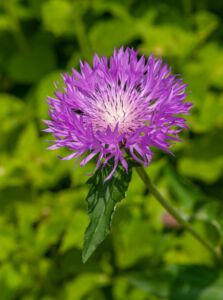
Persian cornflower
Centaurea dealbata
Choose this if: You want a plant with a similar garden role and compatible growing conditions.
Zones 3–8 · Up to 60 cm · Full Sun
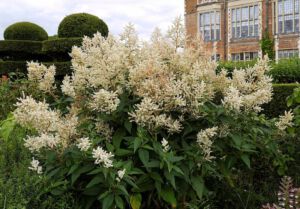
Giant fleeceflower
Persicaria polymorpha Ledeb.
Choose this if: You want a plant with a similar garden role and compatible growing conditions.
Zones 3–9 · Up to 240 cm · Full Sun / Partial Sun
Pruning and deadheading
For herbaceous garden peonies, deadhead individual flowers as they fade in late spring or early summer, cutting the stem just above the first set of healthy leaves or leaf node and removing fallen petals from around the plant. Leave all foliage intact through summer so the plant can photosynthesise and store energy. After a hard autumn frost has killed and collapsed the leaves, typically in October or November in much of Canada, cut all herbaceous stems down to near ground level (about 2–3 cm above the soil) and remove the foliage from the bed to help limit overwintering fungal diseases.
- Best timing: Deadhead during the bloom period in late spring to early summer, and perform major cutback in fall after the first hard frost when foliage has completely died back.
- Decision cue: Individual flowers have finished blooming and petals are dropping or turning brown.
- Decision cue: Foliage has been killed by a hard frost and turned yellow, brown, or black, usually in fall.
- Decision cue: Presence of diseased or blackened stems or leaves during the growing season.
- Pruning approach: deadheading_spent_blooms
- Pruning approach: cut_back_after_frost
- Pruning approach: sanitation_removal_of_diseased_tissue
- Caution: Do not cut back foliage immediately after flowering; allow leaves to remain through summer to recharge the crown.
- Caution: Always use clean, sharp tools to reduce risk of spreading botrytis and other fungal diseases.
- Caution: Dispose of removed foliage and stems away from the garden or compost only if your compost reaches disease‑killing temperatures.
- Known limitation: Sources focus on herbaceous peonies and Itoh hybrids; guidance does not apply to woody tree peonies. Exact calendar dates vary regionally, so timing should follow local frost and foliage condition rather than the specific month.
Propagation
Propagate herbaceous garden peonies primarily by division of established crowns in fall when plants are dormant. After cutting stems back to soil level, dig up the clump carefully, wash or gently shake off soil, and use a clean, sharp knife or spade to divide the crown into sections, each with several healthy eyes and roots. Replant divisions promptly at the correct depth in well‑prepared, well‑drained soil and water to settle them in.
- Best timing: Best done in fall during dormancy, after cutting stems back to soil level and before soil freezes.
- Decision cue: Existing clumps have become crowded or need to be rejuvenated.
- Decision cue: Gardener wishes to create new plants from established peonies.
- Decision cue: Fall dormancy has begun, with foliage declining or cut back.
- division_of_crowns: fall_dormant_season_after_cutback. Perform division after stems have been cut back in fall, when plants are dormant and soil is workable. This timing minimises stress and allows roots to establish before winter.
- Caution: Division is best done on well‑established clumps; newly planted peonies should not be divided for several years.
- Caution: Each division should have several healthy eyes (buds) and adequate roots; very small divisions may establish slowly and flower poorly for years.
- Caution: Plant divisions at correct depth, with eyes no more than a few centimetres below the soil surface, to avoid poor flowering.
- Caution: Dividing and replanting outside the dormant period can stress plants and reduce flowering the following year.
- Known limitation: Authoritative sources consulted focus on division in fall; they do not provide detailed guidance on other propagation methods such as seed for named cultivars. This capability therefore only covers division and not seed propagation or micropropagation.
Read more on GardeningCalendar
Personalize for your garden
Tell us a little about your garden to see how this plant fits your zone, light and growing conditions. No account is required.
These garden conditions stay in this browser for Gardening Calendar. Sign in to keep your garden information with your account.
How this plant fits your garden
Enter your conditions above to see matches, cautions, and seasonal guidance.
Did you find what you were looking for?
Let us know what was useful or what this plant profile is missing.
References
- How to Grow Peonies in the South
- How to Grow and Care for Peonies: A Complete Guide
- The Beloved Peony - Penn State Extension
- Herbaceous peony
- Growing Peonies in USDA Zones 8 and 9
- Planting and Growing Paeonia (Herbaceous Peony)
- How To Grow Peonies - Your Complete Guide
- How do I plant my peony? - NYBG Mertz Library Reference
- [PDF] Peonies - Cornell Cooperative Extension Nassau County
- Should You Cut Peonies Back After Blooming? Here's What Experts Say
- Peony | Home Garden Education Office | College of Agriculture ...
- Peony - Wisconsin Horticulture
- Printable Perennial Pruning Guide – Double-Sided
- Planting/ Care/Drying/ Cutting /Storing - Canadian Peony Society
- When to Cut Back Peony: Herbaceous & Tree Peony Pruning Guide
- When to Cut Back Peonies: Why You Should Time Your Pruning
- 2013 How to Deadhead an Herbaceous Peony
- When To Cut Back Peony - Expert Tips For Pruning Your Garden - PeonyGuru
- Pruning - Primrose Hall Peonies
- medium.com
- naturehills.com
- homesandgardens.com
Plant Definition last reviewed: September 9, 2026.
Add Peony (herbaceous types) to My Garden
Save plants you grow and receive personalized guidance shaped by your garden, location, season and weather.
Already have My Garden?
Sign inNew to My Garden?
My Garden Brief provides personalized briefings and saved plants. My Garden Plus adds personalized browsing across Plant Profiles.