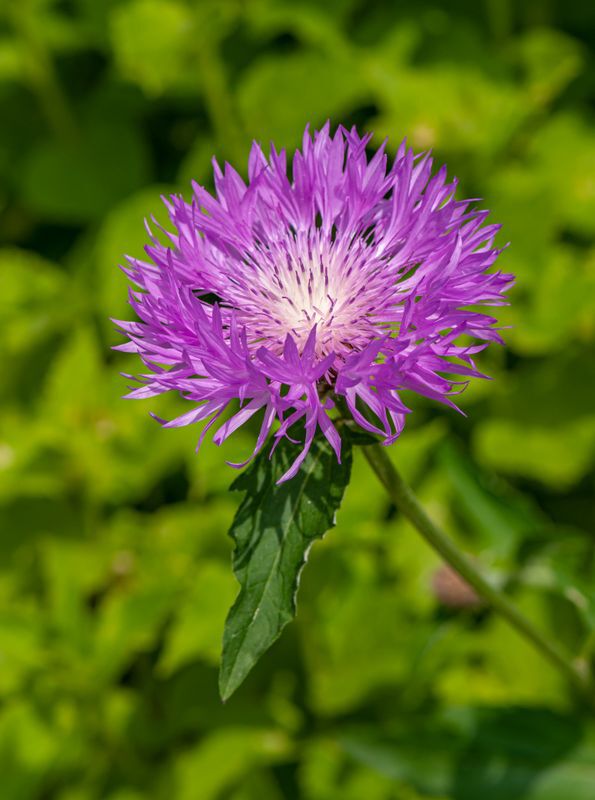
Persian cornflower

Persian cornflower

Centaurea dealbata

Herbaceous PerennialPerennialFull SunMay and June bloomPollinator / wildlife value

Persian cornflower is an easy-care, clump-forming perennial for sunny Canadian gardens. Its pink to lavender flowers, white centres and pollinator appeal suit borders, cottage gardens and meadow-style plantings. It is cold-hardy, but winter drainage matters: roots can suffer where soil stays cold and saturated.

Also known as: Persian cornflower, perennial cornflower, Centaurea dealbata, Psephellus dealbatus

Plant at a glance

Plant typeHerbaceous Perennial
LifecyclePerennial
Hardiness3–8
LightFull Sun
SoilDry, Medium, Moist, Well Drained, Loam, Sandy Loam, and Gritty
Mature height45–60 cm
Mature width45–75 cm
BloomsMay, June, and July
Flower colourPink, Lavender, and White Center
Wildlife valueBees, Butterflies, and Pollinators
WaterModerate
Care levelEasy

What this plant is like

Centaurea dealbata forms a tidy perennial clump with showy flower stems. Blooms appear from late spring into summer, generally from May through July. The plant dies back to its crown in winter and returns in spring. It is also called perennial cornflower or whitewash cornflower.

Where it grows best

Choose full sun and well-drained loam, sandy loam or gritty soil. Moisture can range from dry to moist, but avoid wet, poorly drained or waterlogged ground. A slightly raised or sloping site is useful in areas with wet winters. Neutral to alkaline soil is suitable. It performs best where summers are relatively cool; hot-summer sites may give less satisfactory growth.

Garden and wildlife value

Use it in perennial borders, cottage gardens, wildlife gardens, meadow-style plantings or a cut-flower garden. Bees and butterflies visit the flowers, giving this non-native Canadian garden perennial high pollinator value. It is considered deer resistant and tolerates poor soils when drainage is good.

Everyday care

Water newly planted or recently divided plants as needed while they establish. Once established, water mainly during prolonged dry summer spells: soak deeply, then let the soil surface dry slightly before watering again. Do not keep the soil constantly saturated. Staking may be needed if stems flop, especially where the plant receives less than ideal growing conditions.

What to do through the season

Deadhead faded flowers regularly if you want to encourage further side shoots and extend the display. Leave selected flower heads if you want seed. After the main flowering period, lightly trim or cut back the clump to refresh its appearance and encourage new foliage. Divide congested clumps in spring or autumn if vigour declines.

Problems and symptoms

Floppy stems can occur when the plant does not receive full sun or when growth needs support. Poor flowering or reduced performance may occur in hot summer conditions. Persistent wetness, particularly through winter, is a serious concern because the roots dislike cold, saturated soil. The plant may self-seed.

Possible concern: Powdery mildewWhat to watch for: White, powdery growth on leaves or stems.

Check first

  • Inspect leaf surfaces and stems for a white powdery coating.

What to do

  • Provide adequate spacing and air movement; remove old foliage and tidy around plants in winter.
  • Remove and discard badly affected leaves or stems rather than composting visibly diseased material if local composting guidance is uncertain.

When to get help

Escalate if symptoms spread rapidly, affect most foliage, or recur despite improved spacing and sanitation.

Possible concern: AphidsWhat to watch for: Small clustered insects on stems or leaf undersides, often with distorted new growth.

Check first

  • Inspect young leaves and stems, especially undersides, for clusters of small soft-bodied insects.

What to do

  • Maintain appropriate watering and avoid excessive nitrogen that promotes soft, lush growth.
  • Wash small colonies from foliage with a firm water spray and remove heavily infested tips if practical.

When to get help

Escalate if colonies cover growing tips, cause substantial distortion, or persist after repeated water washing and removal of affected growth.

Possible concern: SlugsWhat to watch for: Irregular holes or ragged edges on young leaves.

Check first

  • Inspect fresh spring foliage for irregular holes or ragged feeding damage.

What to do

  • Remove old leaves and tidy around plants in winter to reduce shelter.
  • Hand-pick visible slugs and remove hiding debris around the clump; protect young plants with a physical barrier where appropriate.

When to get help

Escalate if repeated feeding removes substantial new foliage or threatens establishment of young plants.

Corrective and preventive care

Site it where excess water can drain away, and avoid saturated or poorly drained beds. Remove spent stems to help maintain a compact appearance and reduce unwanted seeding; leave only selected heads when seed is desired. Cut back after flowering to refresh the clump. Divide an overcrowded plant in spring or autumn if its vigour declines.

Before you plant

Allow room for a clump that can reach about 45–75 cm wide. Choose it for sunny borders or informal plantings where early-to-mid-summer colour and pollinator activity are welcome. It is non-native to Canada, and its invasive or regulated status in Canada is not confirmed; check local requirements if self-seeding would be a concern.

Seasonal actions

  • Persian Cornflower Deadheading: Deadhead faded flowers regularly to help prolong flowering; leave selected heads if seed is wanted.
  • Persian Cornflower Autumn Cutback: Cut back in autumn, preserving the crown and any young growth.
DeadheadingProlong flowering and maintain a tidy plant.

Timing: During the flowering period, as flowers fade.

When to act

  • Flowers look faded or scruffy.
  • Seed is not wanted from that flower head.

How: As individual flowers become faded or scruffy, pinch or cut off the spent flower and its stalk just above the next bud or leaf.

Caution: Leave selected flower heads if seed is wanted; remove stems carefully without injuring nearby young growth.

Pruning and cutting backRemove finished growth while preserving the plant for the next season.

Timing: Autumn, after flowering and seasonal dieback begins.

When to act

  • Flowering has finished.
  • Stems are naturally declining or the plant requires seasonal cleanup.

How: After flowering and when growth is senescing, cut stems back while avoiding the crown and any new growth at its base.

Caution: Preserve the crown and any young basal growth. In regions where winter protection from standing stems is useful, postponing cleanup until spring is reasonable, but this species-specific source supports autumn….

DivisionIncrease plants or rejuvenate an established clump when division is appropriate.

Timing: Spring or autumn, outside active flowering.

When to act

  • The clump needs propagation.
  • A named form must retain its characteristics.

How: Lift and separate an established clump into healthy divisions, then replant promptly. Use division rather than seed when preserving a named form is important.

Caution: The reviewed sources confirm division as a propagation method and spring or autumn as suitable periods, but do not provide a species-specific Canadian calendar or detailed division procedure.

PropagationRaise new plants from seed or increase plants by division.

Timing: Seed: spring, using local frost and soil conditions. Division: spring or autumn.

When to act

  • More plants are wanted.
  • A particular flower colour or habit must be maintained.

How: Propagate by seed or division. Prefer division for maintaining a particular flower colour or plant habit; use seed when raising the species from seed is acceptable.

Caution: Species-specific Canadian sowing dates and detailed germination instructions were not directly supported by the authoritative results reviewed.

Garden and landscape value

  • Cold Hardy
  • Long Bloom Period
  • Pollinator Friendly
  • Tolerant Of Poor Soils
  • Deer Resistant
  • Perennial Borders
  • Cottage Gardens
  • Wildlife Gardens

Where it grows naturally

  • Caucasus region and northern Iran

Plants that grow well with this one

  • Echinacea purpurea (Visual or design companion): Provides contrasting upright, rose-pink flowers and suits a naturalistic perennial planting alongside Centaurea.
  • Nepeta 'Walker's Low' (Visual or design companion): Its billowing blue form provides textural and structural contrast in a layered planting.
  • Panicum 'Prairie Fire' (Visual or design companion): Upright, flame-tinted foliage adds vertical structure and seasonal contrast around the clump-forming cornflower.
  • Achillea millefolium (Visual or design companion): Its flat flower heads contrast with Centaurea's rounded flower form in a naturalistic or meadow-style planting.
  • Geranium (Visual or design companion): Geraniums are documented as suitable companions in herbaceous beds and borders with Centaurea.

Personalize for your garden

Your garden conditions

Tell us a little about your garden to see how this plant fits your zone, light and growing conditions. No account is required.

These garden conditions stay in this browser for Gardening Calendar. Sign in to keep your garden information with your account.

How this plant fits your garden

Enter your conditions above to see matches, cautions, and seasonal guidance.

References

Plant Definition last reviewed: October 9, 2026.