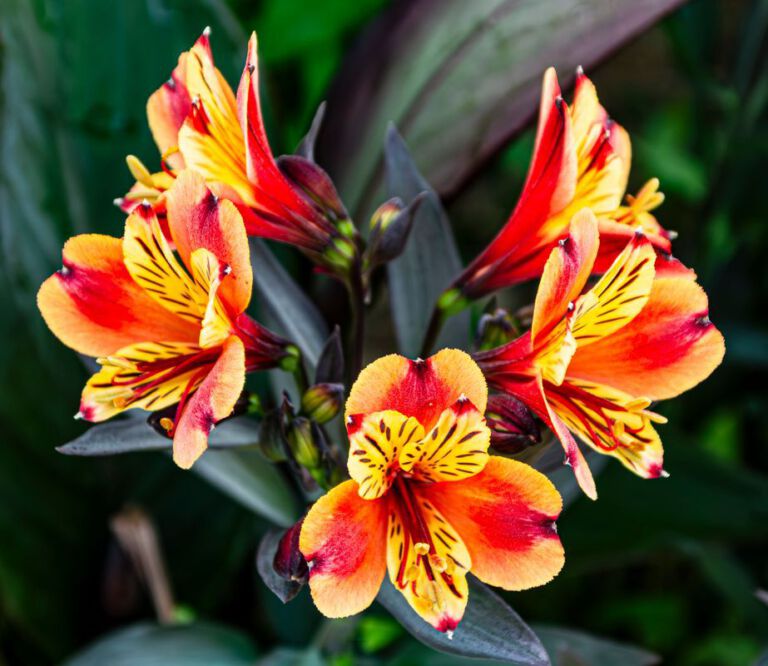
Alstroemeria

Alstroemeria

Alstroemeria spp.

Herbaceous PerennialFull SunLate Spring To Autumn bloomPollinator / wildlife value

Alstroemeria (Alstroemeria spp.), also called Peruvian lily or lily of the Incas, is a clumping herbaceous perennial valued for showy flowers from late spring through autumn. It suits sunny, well-drained gardens and containers, but is frost sensitive and can develop root problems in damp or waterlogged soil.

Also known as: Peruvian lily, Lily of the Incas, Alstroemeria, alstroemeria

Plant at a glance

Plant typeHerbaceous Perennial
LifecycleHerbaceous Perennial
Hardiness7–10
LightFull Sun and Partial Shade
SoilModerate, Well Drained To Sharply Drained, Loam, Organically Rich Soils, and Most Soil Types If Free Draining
Mature height0–0 cm
Mature width0–0 cm
BloomsLate Spring To Autumn
Flower colourWhite, Yellow, Orange, Pink, Red, Purple, and Bi Coloured
Wildlife valueDeer Resistant
WaterArray
Care levelArray

What this plant is like

Alstroemeria is a fleshy-rooted, clumping perennial with upright growth. New shoots emerge as soil warms in spring, followed by a long flowering season extending from late spring through summer and often into autumn. Flowers may be white, yellow, orange, pink, red, purple, or bi-coloured. Top growth dies back in winter while the fleshy roots persist. Modern cultivated selections provide a showy display, and the plant is considered deer resistant.

Where it grows best

Choose full sun or partial shade; light shade is tolerated, while afternoon shade can be useful in hot conditions. Plant in fertile, organically rich soil that drains freely to sharply. Loam and most soil types are suitable when they are free draining. Avoid waterlogged, soggy, damp, or poorly drained sites, including heavy clay without improvement. Alstroemeria is listed for hardiness zones 7–10 and is frost sensitive. In colder Canadian areas, grow it as a container plant or provide suitable winter protection rather than assuming it will survive exposed winter conditions.

Garden and wildlife value

Use Alstroemeria as a border perennial, container plant, cut flower, or mass planting in a sunny, well-drained site. Its long flowering season and range of flower colours make it useful for sustained ornamental interest. It generally tolerates light shade and offers deer resistance. No stronger wildlife or pollinator value is established in the approved information.

Everyday care

During active growth, water deeply when the top 2–5 cm of soil is dry, aiming for roughly 20–25 mm per week in the root zone. Let the surface dry slightly between waterings, but maintain regular moisture for best flowering. Established plants can tolerate brief dry spells, while small or exposed containers may dry more quickly. Ensure containers have effective drainage. Remove spent flower stems by pulling or cutting them at the base to encourage further blooms.

What to do through the season

Shoots emerge in spring as the soil warms. During the flowering season, water as needed and remove spent stems. After the first hard frost, cut dead foliage close to ground level and remove debris. In colder climates near the lower hardiness limit, apply loose winter mulch after the soil has cooled and avoid disturbing the crowns until spring growth resumes. The approved information does not provide a reliable month-by-month bloom schedule.

Problems and symptoms

Frost can damage this sensitive perennial, especially in cold or exposed sites. Damp or waterlogged soil can cause root rot, while warm, humid, stagnant conditions carry elevated fungal risk. Small or exposed containers have a moderate to high risk of drying. Division can damage the plant because its roots are fragile.

Corrective and preventive care

Prioritize free drainage and avoid soggy soil. Water deeply but only after the surface has dried slightly, and do not leave containers standing in water. Improve site conditions before planting where drainage is poor. Remove spent stems and clear dead foliage and debris after frost to reduce overwintering pests and fungal spores. Divide carefully only when needed, using the approved division method; seed is also supported as a propagation option.

Before you plant

Confirm that the site is in hardiness zone 7–10 or plan to grow the plant in a container or provide winter protection. Select a sunny to partly shaded location with moderate moisture and excellent drainage. Make sure the planting area will not remain damp after rain. Allow for a clumping, upright habit, but no reliable genus-wide mature height or width range is available in the approved information.

Garden and landscape value

  • long flowering season
  • showy flowers
  • good container performance with drainage
  • deer resistance
  • sun-loving but tolerant of light shade
  • border perennial
  • container plant
  • cut flower

Where it grows naturally

  • South America
  • Chile
  • Peru
  • Brazil
  • Argentina

Pruning and deadheading

Deadhead by removing spent flower stems right at the base during the flowering season to encourage more blooms. Cut back remaining old stems in early spring before new shoots appear; after frost, remove dead top growth and debris where winter cleanup is needed.

  • Best timing: During flowering for deadheading; early spring for removal of old stems; after frost for dieback cleanup.
  • Decision cue: Spent flower stems visible
  • Decision cue: Old stems remaining before new spring shoots appear
  • Decision cue: Foliage has died back after frost
  • Pruning approach: seasonal cutback
  • Pruning approach: deadheading spent stems
  • Caution: Roots are fragile, so avoid unnecessary disturbance when cutting back or cleaning up around crowns.
  • Caution: Do not generalize pruning guidance across unrelated Alstroemeria species with different habits; the public answer should stay genus-level and conservative.
  • Known limitation: The captured evidence supports deadheading and seasonal cleanup, but not detailed cultivar-specific pruning rules or any old-wood/new-wood framework beyond the genus-level growth cycle.

Propagation

Use division for the most reliable propagation of mature clumps. For seed, collect pods as they turn brown, keep them until they burst, then sow the seed immediately; RHS states autumn sowing is best. Handle divisions gently and replant promptly.

  • Best timing: Division in early spring/April; seed in autumn after pods brown and burst.
  • Decision cue: Mature clumps available for division
  • Decision cue: Seed pods have ripened and browned
  • Decision cue: New spring growth is beginning
  • division: April / early spring. Lift and divide mature clumps carefully; replant immediately.
  • seed: autumn; immediately after pod release. Collect pods as they brown, store until they burst, then sow immediately.
  • Caution: Division should be done carefully because roots are fragile.
  • Caution: Seed propagation is supported, but the source data here do not provide a fully vetted public timing for every climate zone beyond the basic sowing window.
  • Caution: Do not add tissue culture, stem cuttings, or other methods without direct source support.
  • Known limitation: The evidence is sufficient for division and seed, but not for a broader menu of propagation methods or climate-specific timing beyond the captured autumn/early-spring windows.

Personalize for your garden

Your garden conditions

Tell us a little about your garden to see how this plant fits your zone, light and growing conditions. No account is required.

These garden conditions stay in this browser for Gardening Calendar. Sign in to keep your garden information with your account.

How this plant fits your garden

Enter your conditions above to see matches, cautions, and seasonal guidance.

Sources used for this profile

Plant Definition last reviewed: August 13, 2026.